TL;DR:
- Lubbock's heat, humidity, and caliche soil promote turfgrass diseases like brown patch and root rot.
- Proactive lawn care practices are more cost-effective and durable than reactive treatments.
- Consistent mowing, watering, aeration, and professional diagnosis help prevent and manage lawn diseases.
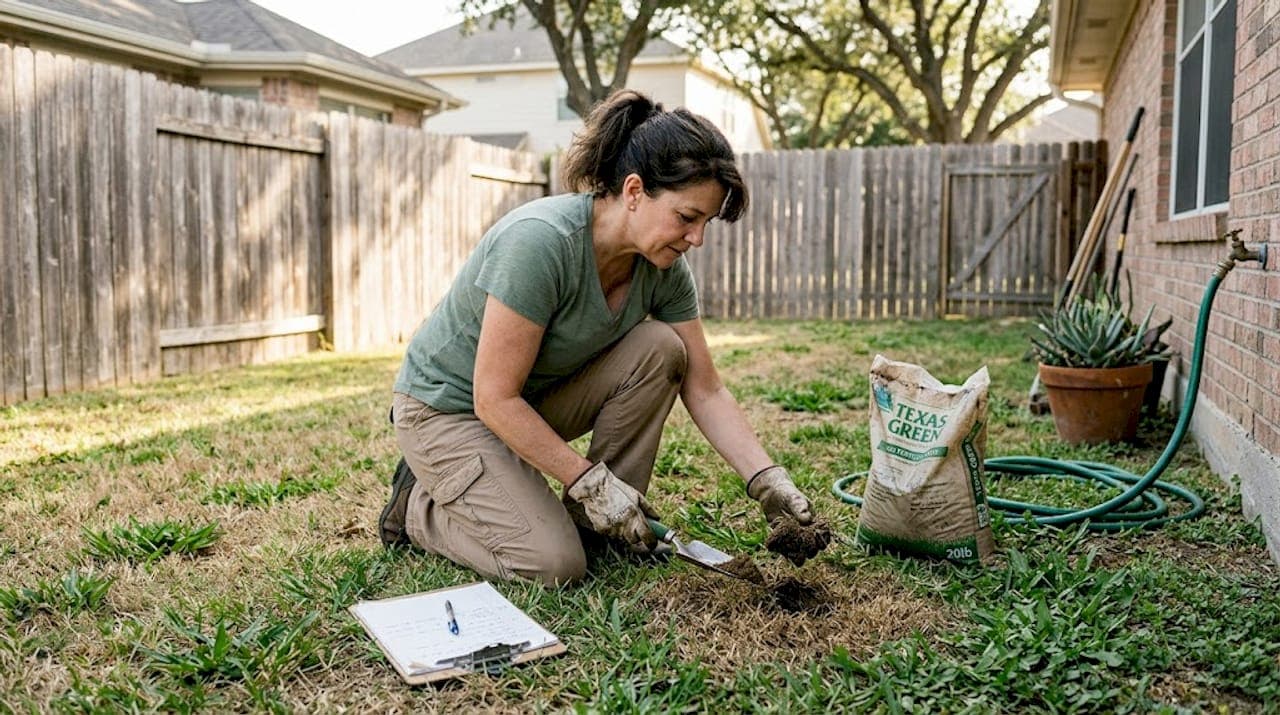
Lubbock homeowners who water and mow faithfully are often blindsided when brown patches appear overnight. The truth is that lawn diseases thrive in Texas conditions like high heat, humidity, and the alkaline caliche soil common across Lubbock. Routine maintenance keeps your yard looking neat, but it does not automatically protect against fungal infections, root rot, or the patchy damage that can cost hundreds to fix. Understanding what actually causes disease, and how to stop it before it starts, is the difference between a lawn that thrives and one that slowly falls apart season after season.
Table of Contents
- How Lubbock's climate and soil impact lawn disease risk
- The true cost of lawn diseases for homeowners
- Proven prevention strategies tailored for Lubbock lawns
- When to use fungicides and seek professional help
- A local expert's take: What most homeowners get wrong about lawn disease
- Get professional help for a healthier Lubbock lawn
- Frequently asked questions
Key Takeaways
| Point | Details |
|---|---|
| Local risks matter | Lubbock's climate and soil make lawn disease more likely, so homeowners need targeted prevention. |
| Prevention saves money | Proactive practices are less costly and labor-intensive than correcting lawn damage. |
| Core strategies work | Proper watering, mowing, soil care, and debris removal significantly reduce disease risk. |
| Only use fungicides when needed | Apply fungicides preventively only for problem lawns and always confirm disease with a pro first. |
| Professional help pays off | Lawn care experts offer diagnosis and customized disease prevention for long-term success. |
How Lubbock's climate and soil impact lawn disease risk
Lubbock sits in a region where summer temperatures regularly push past 95°F, and the soil beneath most yards is packed with caliche, a hard, alkaline layer that blocks drainage and traps moisture near the surface. That combination creates a breeding ground for fungal disease. When water cannot drain properly, it lingers around grass roots and creates exactly the warm, wet environment that pathogens love.
"Brown patch, dollar spot, gray leaf spot, and take-all root rot are among the most common diseases in Lubbock, driven by heat and caliche soil conditions." — Texas A&M AgriLife Extension
Brown patch and related diseases spread fast in these conditions, often appearing as circular dead zones that expand overnight. Large patch affects warm-season grasses like St. Augustine and zoysia during cooler, wet periods in fall and spring. Take-all root rot is especially sneaky because it damages the root system before you see anything above ground.
| Disease | Trigger conditions | Grass types affected |
|---|---|---|
| Brown patch | High heat, excess moisture | St. Augustine, bermuda |
| Large patch | Cool, wet weather | St. Augustine, zoysia |
| Take-all root rot | Alkaline soil, poor drainage | St. Augustine |
| Dollar spot | Low nitrogen, drought stress | Bermuda, zoysia |
| Gray leaf spot | Heat, humidity, excess nitrogen | St. Augustine |
Soil compaction makes all of this worse. Compacted caliche soil limits oxygen flow to roots, weakens grass, and prevents water from moving through the soil profile. Weak grass is far more vulnerable to infection. Reading a solid lawn care essentials guide can help you understand how soil health connects directly to disease risk.
Thatch buildup is another hidden culprit. A thick layer of dead organic material sitting between the grass blades and the soil traps moisture and harbors fungal spores. Reviewing a lawn dethatching guide specific to Lubbock can show you how often to remove that buildup and which tools work best on local soil types. Prevention starts with knowing what you are actually dealing with underground.
The true cost of lawn diseases for homeowners
A diseased lawn is not just an eyesore. It is a financial drain. When fungal infections go untreated, they spread quickly and kill large sections of turf. Replacing dead sod in Lubbock typically costs between $0.35 and $0.85 per square foot, and that does not include labor, soil prep, or the time your yard looks terrible while you wait for new grass to establish.
What reactive lawn care actually costs you:
- Sod replacement: $500 to $2,000+ for a mid-sized yard
- Fungicide treatments after infection: $80 to $200 per application
- Overseeding damaged areas: $150 to $400 depending on size
- Reduced curb appeal and potential property value impact
- Your own time and frustration managing recurring problems
Here is the comparison that matters most:
| Approach | Typical annual cost | Effort level | Long-term result |
|---|---|---|---|
| Proactive prevention | $200 to $500 | Low to moderate | Healthy, stable lawn |
| Reactive treatment | $600 to $2,500+ | High | Repeated cycles of damage |
The numbers are clear. Cultural practices outperform reactive fungicides, and healthy turf resists disease far better than turf that gets treated only after problems appear. Prevention is not just cheaper. It is more effective.
Curb appeal matters too. A patchy, brown lawn signals neglect to neighbors and potential buyers. Real estate professionals consistently note that landscaping condition affects perceived home value. Staying ahead of disease keeps your yard looking its best year-round.
Building a habit around seasonal lawn clean-up removes debris that harbors fungal spores and sets your lawn up for each new season. Pairing that with a solid lawn care checklist ensures you never miss the small steps that add up to big protection over time.
Proven prevention strategies tailored for Lubbock lawns
Good prevention is not complicated, but it does require consistency. The core strategies for St. Augustinegrass include proper fertilization, correct watering, correct mowing height, aeration, weed control, debris removal, and pH balance. Each one plays a specific role in keeping disease pressure low.
Watering the right way:
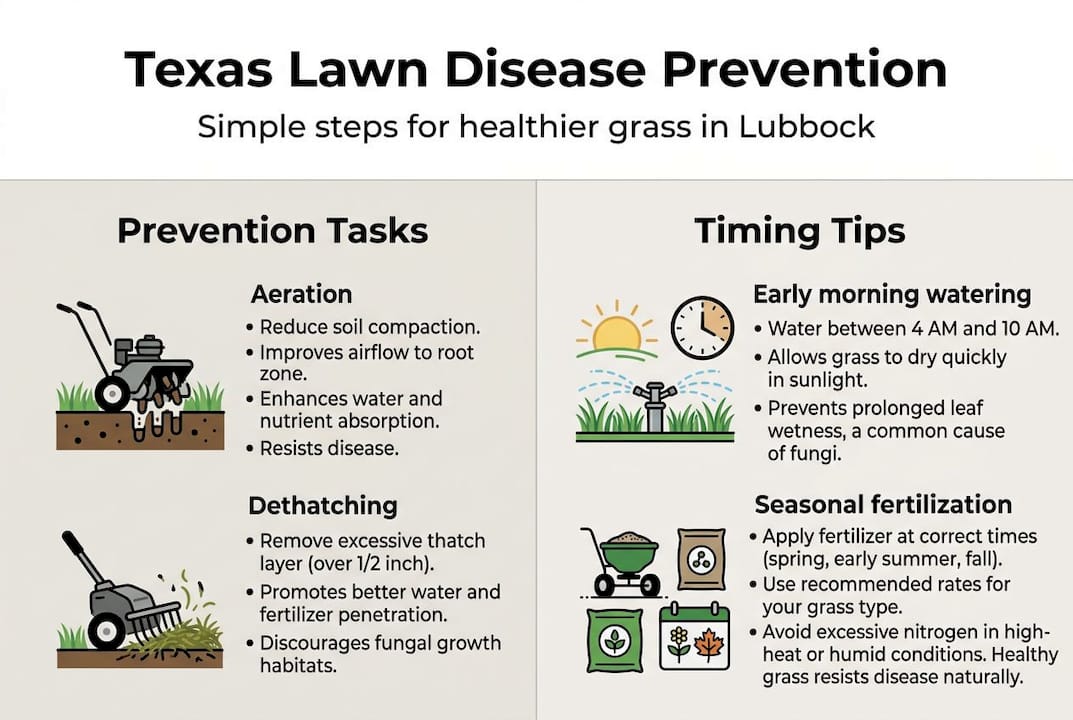
- Water deeply once a week, targeting about one inch total
- Always water in the early morning so grass dries before nightfall
- Avoid light, frequent watering, which keeps the surface wet and invites fungal growth
- Use a rain gauge or empty tuna can to measure actual output from your sprinkler
Mowing for disease resistance:
- Keep St. Augustine grass at 3 to 4 inches tall
- Never remove more than one-third of the blade in a single mow
- Keep mower blades sharp to avoid tearing grass, which opens wounds for pathogens
- Avoid scalping, especially in summer heat
Fertilization timing matters more than most homeowners realize. Excess nitrogen in late summer or fall pushes soft, lush growth that is highly susceptible to fungal attack. Stick to a balanced fertilization schedule and resist the urge to over-apply.
Pro Tip: Test your soil pH before fertilizing. Lubbock's caliche soil often reads above 7.5, which locks out nutrients and stresses grass. Adjusting toward a 6.0 to 7.0 range makes your lawn dramatically more resilient.
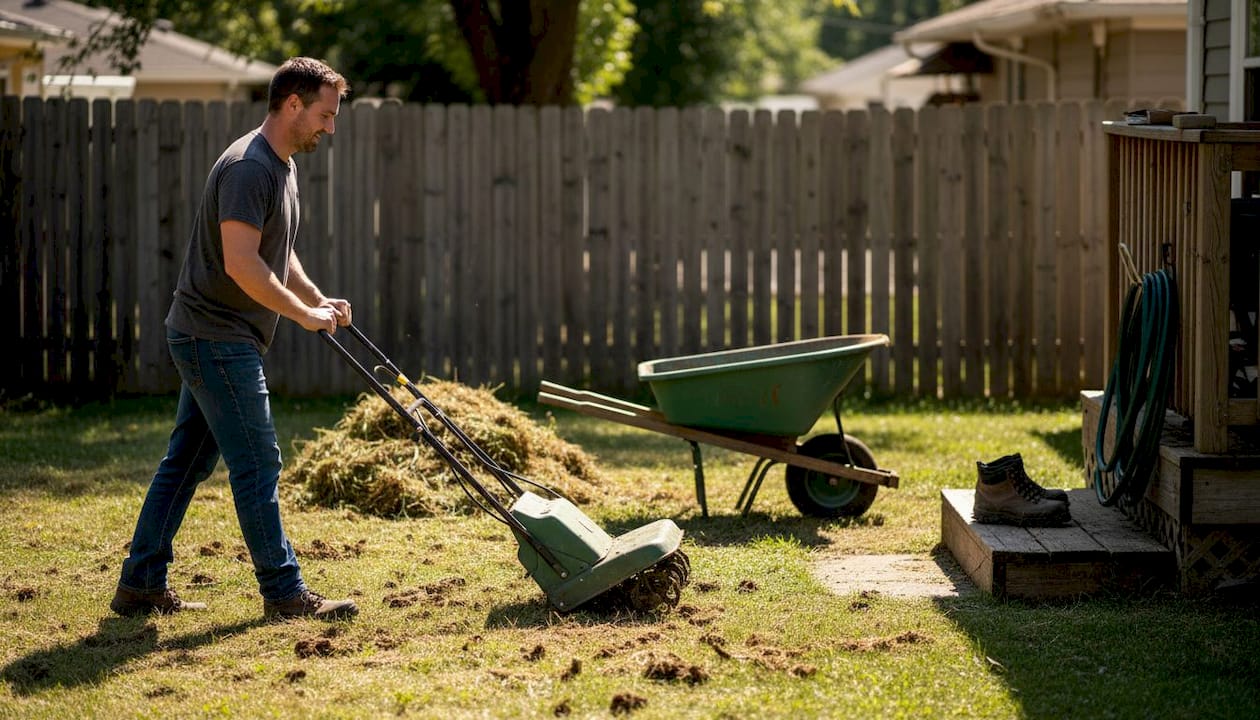
Aeration breaks up compacted caliche and allows water, oxygen, and nutrients to reach the root zone. Pair it with dethatching to remove the organic layer that traps moisture. Your outdoor maintenance guide can walk you through the best timing for both tasks in Lubbock's climate. For warm-season grasses, spring lawn care tips are especially valuable for setting up a strong, disease-resistant foundation before summer heat arrives. If you want to reduce chemical inputs, eco-friendly lawn care tips offer practical alternatives that still deliver strong results.
When to use fungicides and seek professional help
Fungicides are not a first resort. They are a last line of defense, and using them incorrectly wastes money and can actually make some problems worse. Fungicide use is justified only for lawns with a documented history of disease, and even then, a professional diagnosis should come first.
Here is a smart decision process for Lubbock homeowners:
- Identify the problem visually, noting the pattern, color, and location of damage
- Rule out other causes like grubs, drought stress, or chemical burn before assuming disease
- Contact a local lawn care professional for a proper diagnosis
- If fungal disease is confirmed, choose the correct fungicide for that specific pathogen
- Apply at the right time, late summer or fall application is most effective for large patch
- Never fertilize or overwater a diseased lawn, as both accelerate fungal spread
Pro Tip: Take photos of the affected area over several days before calling a professional. Tracking how the damage spreads, or does not spread, gives a lawn care expert critical information for an accurate diagnosis.
Misdiagnosis is a real problem. Homeowners frequently mistake drought stress or grub damage for fungal disease and apply fungicides that do nothing. That wastes money and delays the real fix. A seasonal landscaping guide can help you recognize what normal seasonal stress looks like versus what actually needs treatment. When in doubt, always call a professional before reaching for chemicals.
A local expert's take: What most homeowners get wrong about lawn disease
Here is the uncomfortable truth we see repeatedly in Lubbock yards. Homeowners reach for fungicides the moment they spot a brown patch, but they never ask why the disease appeared in the first place. The fungicide might suppress symptoms temporarily, but the underlying conditions, poor drainage, compacted soil, late-night watering, stay exactly the same. The disease comes back next season.
The real secret to a disease-free lawn is boring. It is consistent mowing at the right height, watering at the right time, and aerating on schedule. None of that feels like a solution when you are staring at a dead patch, but those habits are what prevent the patch from ever appearing.
We also see homeowners skip seasonal tracking entirely. Keeping a simple note on your phone about when problems appear, what the weather was doing, and what you did in response builds a pattern over time. That pattern is worth more than any product on a shelf. Understanding why lawn maintenance matters at a deeper level changes how you approach every season.
Get professional help for a healthier Lubbock lawn
Preventing lawn disease in Lubbock takes consistent effort, local knowledge, and the right timing for every task. That is a lot to manage on your own, especially when caliche soil and West Texas heat add extra complexity.

At Only Mow, we specialize in Lubbock lawn care services built around the specific conditions of this region. From seasonal maintenance and aeration to disease diagnosis and debris removal, our team handles the details so your lawn stays healthy year-round. As the official vendor for the City of Lubbock, we bring proven expertise to every yard we service. Ready to stop guessing and start protecting your lawn? Find a landscaper on our team and schedule your first visit today.
Frequently asked questions
What are the most common lawn diseases in Lubbock, Texas?
Brown patch, large patch, and take-all root rot are most frequently seen in Lubbock due to the combination of intense summer heat and alkaline caliche soil that limits drainage.
How often should I water my lawn to prevent disease?
Water deeply once a week, about one inch total, and always do it early in the morning so the grass surface dries completely before evening.
Does regular mowing help prevent lawn disease?
Yes. Mowing at the correct height, 3 to 4 inches for St. Augustine grass, keeps turf strong and reduces the stress that makes grass vulnerable to fungal infections.
When should fungicides be applied to a Lubbock lawn?
Apply preventively only for lawns with a disease history, and target late summer or fall for best results. Always confirm the specific disease before applying any product.
Should I hire a pro to diagnose lawn disease?
Absolutely. Professional identification prevents wasted money on the wrong treatments and ensures the real cause of damage gets addressed correctly the first time.