TL;DR:
- Lubbock landlords must follow strict fire and nuisance ordinances to avoid costly fines and property issues.
- Proper lawn care involves using the right tools, timing, mowing height, and post-mow cleanup for compliance.
- Professional lawn services can ensure consistent, compliant maintenance, reducing risk and tenant turnover.
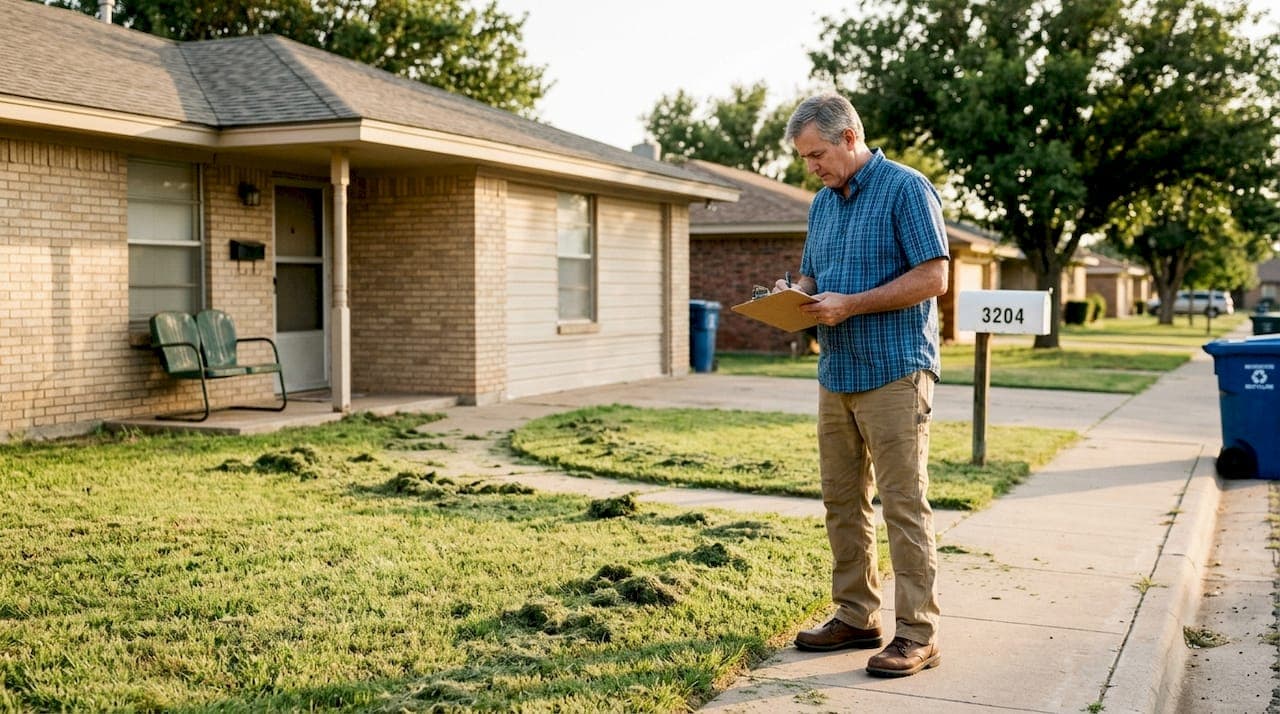
A neglected lawn at your Lubbock rental property is not just an eyesore. It can trigger city fines, scare off quality tenants, and even create fire hazards under Texas law. Lubbock's semi-arid climate, warm-season grasses, and specific municipal codes make lawn care a genuine legal and financial responsibility for landlords and property managers. This guide walks you through the rules, the right tools, a proven mowing routine, and post-mow steps that keep your properties looking sharp and fully compliant year-round.
Table of Contents
- Understand Lubbock's lawn mowing rules and risks
- Prepping your rental: Tools, timing, and mowing height
- How to mow: Step-by-step for safe, healthy results
- Post-mowing: Irrigation, cleanup, and legal checks
- Our take: Efficient lawn care is risk management for landlords
- Let Only Mow simplify your rental lawn care
- Frequently asked questions
Key Takeaways
| Point | Details |
|---|---|
| Know local rules | Lubbock landlords must clear dry grass within 30 feet or face steep fines. |
| Use proper mowing height | Bermuda and Zoysia grasses thrive when cut at the right seasonal height. |
| Avoid watering in cold | Irrigating during freezing or after rain is not allowed and risks penalties. |
| Finish with quality checks | Always inspect your work for debris and legal compliance to protect your investment. |
Understand Lubbock's lawn mowing rules and risks
With the stakes clear, let's break down the local legal landscape for lawn care in Lubbock.
Lubbock is not a city that looks the other way when rental properties fall into disrepair. The city enforces both nuisance ordinances and fire safety codes that directly affect how landlords manage vegetation on their properties. Ignoring these rules is not just risky. It is expensive.
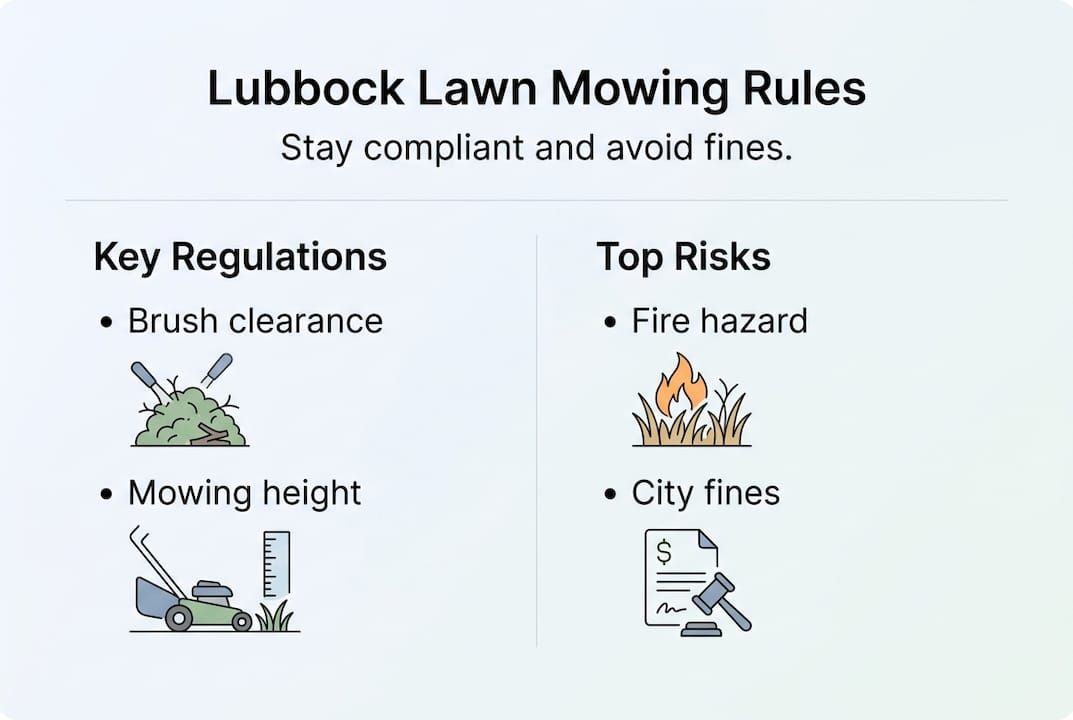
The most critical regulation involves dry vegetation near structures. Per Lubbock fire regulations, you must keep dry grass and weeds cleared within 30 feet of any structure to avoid fines and fire code violations. In a city where summer winds are strong and drought conditions are common, dry overgrown grass is a genuine fire risk. Penalties for non-compliance range from $500 to $5,000, and the city can clear the lawn at your expense and bill you for it.
Here is a quick comparison of key lawn-related ordinances Lubbock landlords should know:
| Regulation | Requirement | Consequence |
|---|---|---|
| Fire brush clearance | 30-foot dry vegetation clearance near structures | $500-$5,000 fine, city clearance |
| Nuisance vegetation | Grass/weeds above local height limits | Warning, then fines |
| Irrigation restrictions | No watering during freeze or heavy rain | Ordinance violation |
| Debris and clippings | Must not blow onto public streets | Nuisance complaint |
Common pitfalls landlords fall into include assuming tenants will handle mowing, skipping inspections between lease cycles, and not accounting for how fast Bermuda grass grows during Lubbock's hot summers. A lawn that looked fine at move-in can become a code violation within three weeks in July.
Proactive landlords use a Lubbock lawn care checklist to stay ahead of inspections and avoid surprise fines. Scheduling regular mowing visits, especially from May through September, is the most reliable way to stay compliant without scrambling.
Key reminder: City inspectors do respond to neighbor complaints. One call about overgrown grass can trigger a formal notice and start a fine clock. Don't wait for a complaint to act.
The financial case for staying ahead of lawn ordinances is simple. A $150 monthly mowing contract costs far less than a single $1,000 fine plus the reputational damage of a code violation on your property record.
Prepping your rental: Tools, timing, and mowing height
Staying compliant starts with the right prep work and tools.
Before you mow a single blade of grass, you need the right equipment and a clear plan. Landlords managing multiple properties in Lubbock benefit most from a consistent setup that works across different yard sizes and grass types.
Essential tools for rental property lawn care:
- Self-propelled gas or battery mower (21-inch deck minimum for most rental lots)
- String trimmer for edges and fence lines
- Handheld or walk-behind edger for curb lines
- Leaf blower for clipping cleanup
- Safety glasses, gloves, and closed-toe shoes
- Spare mower blade (sharp blades matter more than most landlords realize)
Grass type determines your mowing height. Lubbock's most common warm-season grasses are Bermuda and Zoysia. Texas A&M mowing recommendations provide clear guidance for both:
| Grass type | Recommended height | Mowing frequency (peak season) |
|---|---|---|
| Bermuda | 1 to 1.5 inches | Every 5-7 days |
| Zoysia | 1.5 to 2.5 inches | Every 7-10 days |
Timing matters as much as height. In Lubbock, summer temperatures regularly exceed 95°F. Mowing during the hottest part of the day stresses both the grass and the person doing the work. Early morning or early evening mowing is better, though you should avoid mowing when dew is still heavy on the grass.
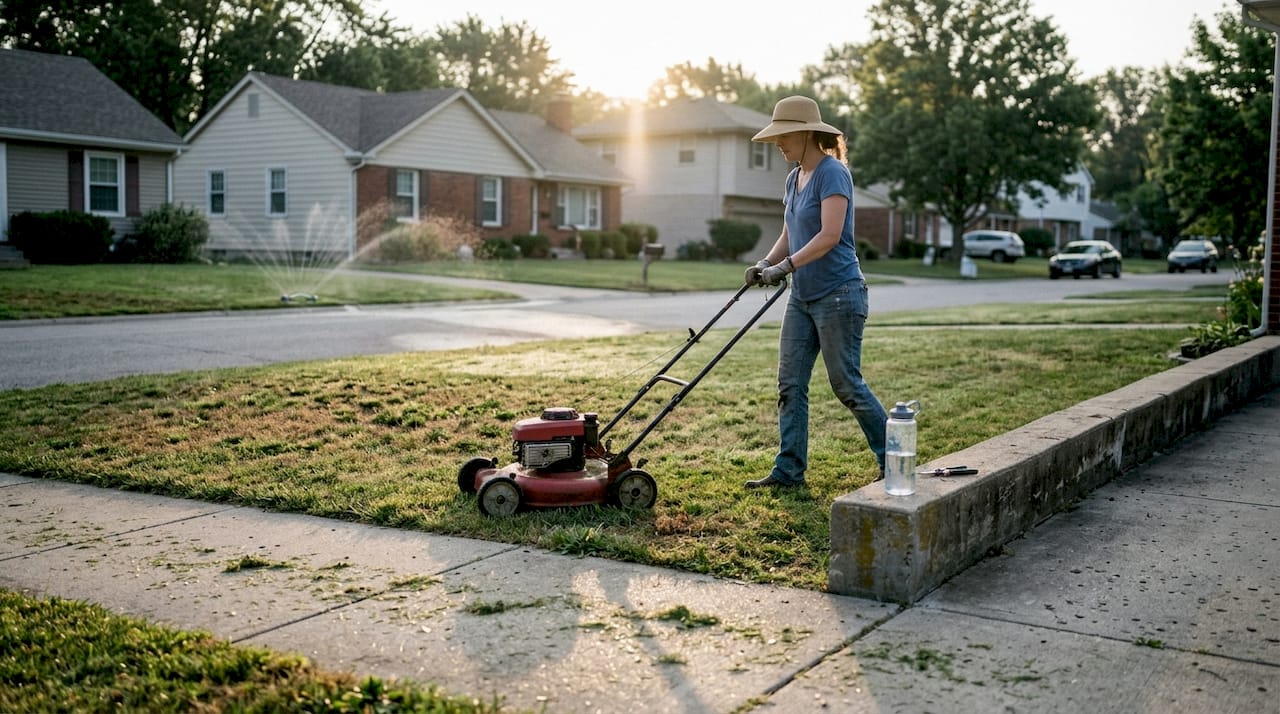
Drought conditions, which are common in Lubbock from June through August, change the mowing equation. When grass is stressed and barely growing, mowing too often or too short causes lasting damage. You can learn more about how to efficiently maintain rental lawns through seasonal adjustments that protect turf health.
For spring startup, spring lawn care tips can help you time your first mow correctly after winter dormancy, which is critical for Bermuda grass recovery.
Pro Tip: During Lubbock's hottest weeks, raise your mower deck by half an inch above your normal setting. Taller grass shades the soil, retains moisture longer, and recovers faster between mowings. This one adjustment can cut your summer water bill noticeably.
How to mow: Step-by-step for safe, healthy results
Once you're set up, follow these steps each time for consistently healthy results.
A good mowing routine is not complicated, but it does require discipline. Skipping steps leads to uneven results, lawn disease, and the kind of patchy appearance that makes tenants feel like the property is not well cared for.
- Inspect the lawn first. Walk the yard before starting. Look for debris, rocks, toys, or sprinkler heads that could damage your mower or become projectiles.
- Check blade sharpness. A dull blade tears grass instead of cutting it cleanly. Torn grass tips turn brown and invite fungal disease.
- Set the correct deck height based on grass type and current weather conditions.
- Mow in alternating patterns. Changing direction each visit prevents ruts and encourages upright grass growth.
- Follow the one-third rule. Never remove more than one-third of the grass blade in a single mow. Cutting too much at once shocks the plant.
- Avoid mowing wet grass. Mowing wet grass spreads disease and damages turf, so wait until the lawn is dry before you start.
- Trim edges and fence lines after mowing to create a clean, finished look.
- Blow clippings off hard surfaces and back onto the lawn or into a bag. Never leave clippings on sidewalks or streets.
In extreme heat, raise the deck. In cold snaps, raise it slightly as well, since Bermuda grass going into dormancy does not need a close cut. Zoysia is more tolerant of cold but still benefits from a slightly higher setting in late fall.
Pro Tip: Sharpen your mower blade at least once per season, and ideally every 20 to 25 hours of use. A sharp blade is the single easiest upgrade you can make for a healthier, better-looking lawn at your rental properties.
For a deeper look at Lubbock lawn essentials, including soil prep and fertilization timing, that resource covers the full picture for landlords who want to go beyond basic mowing.
Post-mowing: Irrigation, cleanup, and legal checks
Finishing the job right protects your property and reputation.
Mowing is only part of the equation. What you do after the mower stops running determines whether your property stays compliant and looks its best between visits.
Post-mow checklist for Lubbock rental properties:
- Remove all grass clippings from sidewalks, driveways, and curbs
- Check that clippings have not blown onto neighboring properties
- Edge along curbs, walkways, and garden beds for a clean finish
- Inspect the 30-foot clearance zone near structures for any remaining dry debris
- Verify overall grass height meets city standards before leaving
- Document the visit with a photo for your records
Irrigation after mowing is often where landlords run into unexpected trouble. Lubbock has a winter sprinkler ordinance that prohibits watering during freezing temperatures or when precipitation reaches 1/4 inch or more. Running sprinklers during a freeze can damage your system and result in an ordinance violation. It can also create ice hazards on sidewalks that become a liability issue.
Beyond seasonal restrictions, irrigation systems should never spray onto neighboring properties, sidewalks, or streets. Nuisance water spray is a real source of neighbor complaints, and those complaints can escalate quickly in dense rental neighborhoods.
Worth noting: The lawn maintenance importance goes beyond appearances. A well-maintained lawn signals to neighbors, city inspectors, and prospective tenants that the property is actively managed. That signal alone reduces the likelihood of complaints and code enforcement visits.
If you manage multiple properties, a simple photo log after each mow gives you timestamped proof of compliance. That documentation can be the difference between a dismissed complaint and a formal fine.
Our take: Efficient lawn care is risk management for landlords
Stepping back, here's what experience has taught us about lawn maintenance for rentals.
Most landlords think about lawn care in terms of aesthetics. We think about it in terms of risk. The biggest financial threat is not the $500 fine, though that stings. It is the tenant who decides not to renew because the yard looks abandoned, or the prospective renter who drives by and keeps going. Turnover costs in Lubbock can run $1,500 to $3,000 or more when you factor in vacancy, cleaning, and re-leasing. A neglected lawn contributes to that.
We also see landlords treat mowing as a simple DIY task they hand off to a tenant or handle themselves once a month. The results are almost always inconsistent. Bermuda grass in Lubbock during peak summer can double in height in two weeks. Irregular mowing creates a cycle of over-cutting and stress that degrades turf quality over time.
The landlords with the best-looking properties and the fewest code complaints treat curb appeal as a competitive advantage. They schedule consistent service, they know their grass type, and they don't cut corners on post-mow cleanup. Choosing Lubbock lawn services that understand local ordinances and grass types is a decision that pays for itself in avoided fines and stronger tenant retention.
Let Only Mow simplify your rental lawn care
If these steps sound time-consuming or you want worry-free compliance, consider local professional help.
Managing lawn care across multiple rental properties in Lubbock takes real time and local knowledge. At Only Mow, we handle the scheduling, the compliance checks, and the consistent results that keep your properties looking sharp and code-compliant year-round.

As the official lawn care vendor for the City of Lubbock, we know exactly what local inspectors look for and how to stay ahead of ordinance requirements. Our professional mowing services are easy to schedule online, and we work with landlords managing single properties and large portfolios alike. If you're ready to hand off the mowing and focus on what matters, hire Lubbock landscapers who already know the rules. Reach out today for a quote and let us take lawn care off your plate.
Frequently asked questions
What is the penalty for not complying with Lubbock lawn mowing codes?
The city may fine property owners $500 to $5,000 and clear the lawn at your expense if rules are not met. That bill gets added to your property account.
Which grasses are common in Lubbock rental properties?
Bermuda and Zoysia are the most common warm-season grasses in Lubbock, and both thrive in the region's hot, dry summers.
Is it okay to mow lawns after rainfall in Lubbock?
Mowing wet grass is discouraged because it spreads fungal disease and leaves uneven cuts that stress the turf. Wait until the lawn dries out.
Can I water lawns during the winter in Lubbock?
Irrigation is prohibited during freezing weather or when precipitation hits 1/4 inch or more. Running your system during those conditions violates the city's winter sprinkler ordinance.