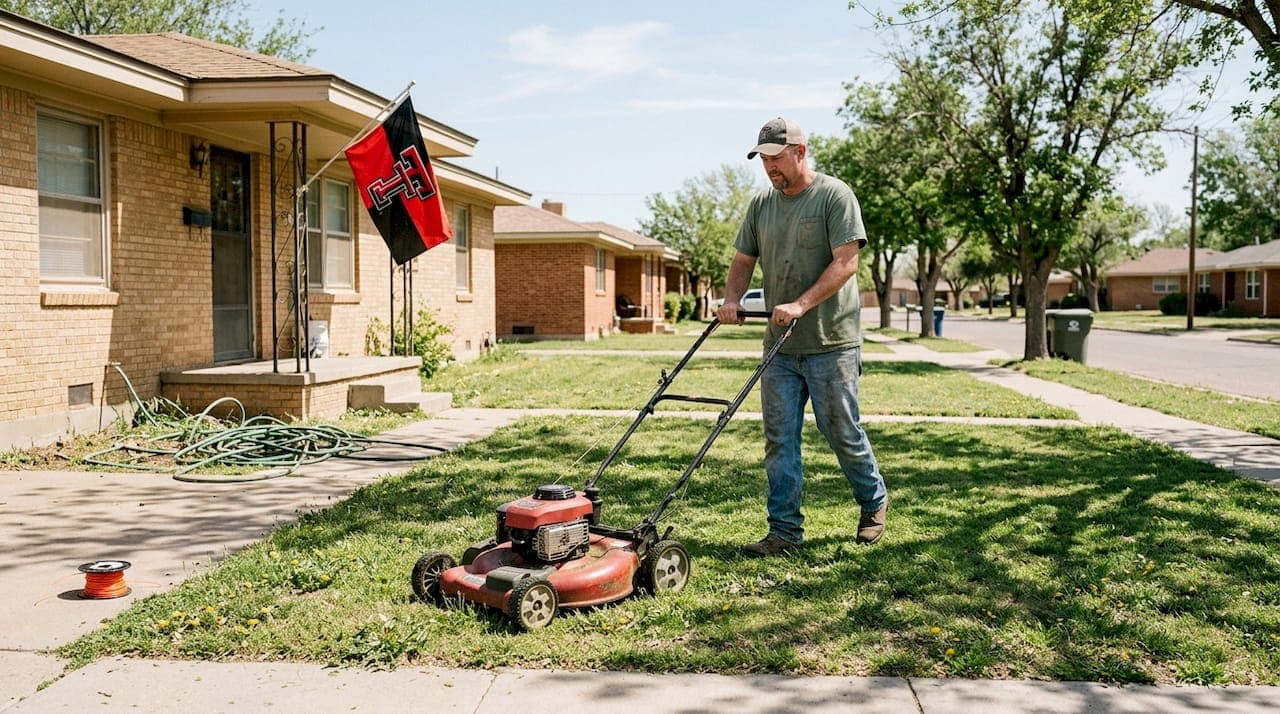
Lubbock summers are no joke. Between the scorching heat, unpredictable wind, and stretches of drought, keeping your lawn looking green and full can feel like a losing battle. Most homeowners assume the problem is watering or fertilizer, but the real culprit is often how and when they mow. Mow too short and you stress the roots. Mow too infrequently and you shock the grass. This guide walks you through every step of mowing your Lubbock lawn the right way, from identifying your grass type to cleaning up after the job, so you get consistent, healthy results all season long.
Table of Contents
- Know your grass type and optimal mowing height
- Prepare for mowing: Tools, timing, and weather
- Follow the right mowing technique: Step-by-step
- Clean up, mulch, and troubleshoot after mowing
- The overlooked local secret for resilient Lubbock lawns
- Take your lawn to the next level with local expertise
- Frequently asked questions
Key Takeaways
| Point | Details |
|---|---|
| Know your grass type | Identifying your lawn species is essential for choosing the right mowing height and approach. |
| Always follow the one-third rule | Never cut more than a third off the grass blade to avoid damaging roots and promoting stress. |
| Sharpen blades and mow dry | Using sharp blades and mowing in dry weather prevents lawn disease and yields cleaner cuts. |
| Mulch clippings for healthier lawns | Leaving clippings on the lawn recycles nutrients unless grass is diseased or extremely thick. |
| Adjust mowing height in heat | Cutting at the upper height range during hot Lubbock summers helps retain soil moisture and lawn health. |
Know your grass type and optimal mowing height
Before you start the mower, you need to know what you're working with. Lubbock yards are almost always planted with warm-season grasses, and each one has a different ideal mowing height. Cutting at the wrong height is one of the fastest ways to weaken your lawn, especially during summer heat.
The three most common grasses you'll find in Lubbock are Bermuda, Zoysia, and Buffalograss. According to the cutting height guide from Texas A&M AgriLife Extension, Bermuda, Zoysia, and Buffalograss have recommended mowing heights of 1.5 to 3 inches, 1 to 2.5 inches, and 2 inches to unmowed, respectively. These aren't arbitrary numbers. They reflect how each grass stores energy and recovers from being cut.
Here's a quick reference table:
| Grass type | Recommended mowing height | Notes |
|---|---|---|
| Bermuda | 1.5 to 3 inches | Lower for hybrid varieties |
| Zoysia | 1 to 2.5 inches | Slower growing, tolerates shade |
| Buffalograss | 2 inches or unmowed | Native; very drought tolerant |
Why does height matter so much? Taller grass blades shade the soil beneath them, which slows water evaporation and keeps roots cooler. In Lubbock's summer heat, that shade effect is significant. Shorter grass exposes the soil to direct sun, drying it out faster and forcing you to water more often.
Here's what to look for when identifying your grass:
- Bermuda grass: Fine, dense blades; spreads aggressively; goes dormant and turns tan in winter
- Zoysia: Slightly coarser than Bermuda; forms a thick mat; slower to establish
- Buffalograss: Soft, curly blades; grayish-green color; native to the Texas plains
If you're still unsure, check out these Lubbock lawn care essentials for a deeper breakdown of local grass varieties and what they need to thrive.
Pro Tip: During peak summer heat or in shaded areas of your yard, raise your mowing height by half an inch. This simple adjustment shades the soil, reduces moisture loss, and helps roots stay stronger through drought conditions.
Prepare for mowing: Tools, timing, and weather
Knowing your grass type is step one. Step two is making sure your equipment and timing are dialed in before you ever pull the mower out of the garage. Skipping this part leads to torn grass, uneven cuts, and problems that take weeks to fix.
Start with your mower choice. Reel mowers deliver a precise, scissor-like cut that works well for hybrid Bermuda and Zoysia kept at lower heights. Rotary mowers are more versatile and handle taller, thicker grasses better. Check the mowing equipment choices guide from Texas A&M to match your mower type to your specific grass.
| Mower type | Best for | Drawback |
|---|---|---|
| Reel mower | Hybrid Bermuda, Zoysia (low heights) | Struggles with tall or thick grass |
| Rotary mower | Buffalograss, taller Bermuda | Less precise cut at low heights |
Blade sharpness is non-negotiable. Dull blades tear grass rather than cut it cleanly, leaving ragged edges that turn brown and invite disease. Sharpen your blades at least once a month during the active mowing season, or after every 8 to 10 hours of use.
Timing matters too. Mowing wet grass causes uneven cuts, clumping under the deck, and raises the risk of fungal disease spreading across your yard. Always wait until the grass is dry, which usually means mid-morning after dew has burned off but before the afternoon heat peaks.
Here's a simple prep routine to follow before each mow:
- Check the weather forecast and avoid mowing if rain is expected within a few hours
- Inspect and sharpen mower blades if needed
- Set the mower deck to the correct height for your grass type
- Edge and trim along fences, beds, and sidewalks before mowing
- Clear debris like sticks or rocks from the yard
Edging first is a smart move. It gives you a clean border to work toward and lets the mower chop up any trimmings as you go. You can find more detail on getting organized in these lawn service preparation tips and seasonal lawn clean-up guides.
"A sharp blade and dry grass are the two things that separate a clean mow from a lawn full of brown tips."
Pro Tip: Keep a simple checklist on your phone or garage wall. Run through it before every mow. It takes two minutes and saves you from making avoidable mistakes that cost you weeks of recovery time.
Follow the right mowing technique: Step-by-step
With your tools ready and your yard prepped, it's time to mow. Technique matters more than most people realize. The way you move across your lawn, how much you cut at once, and even the direction you mow all affect how healthy your grass stays over time.
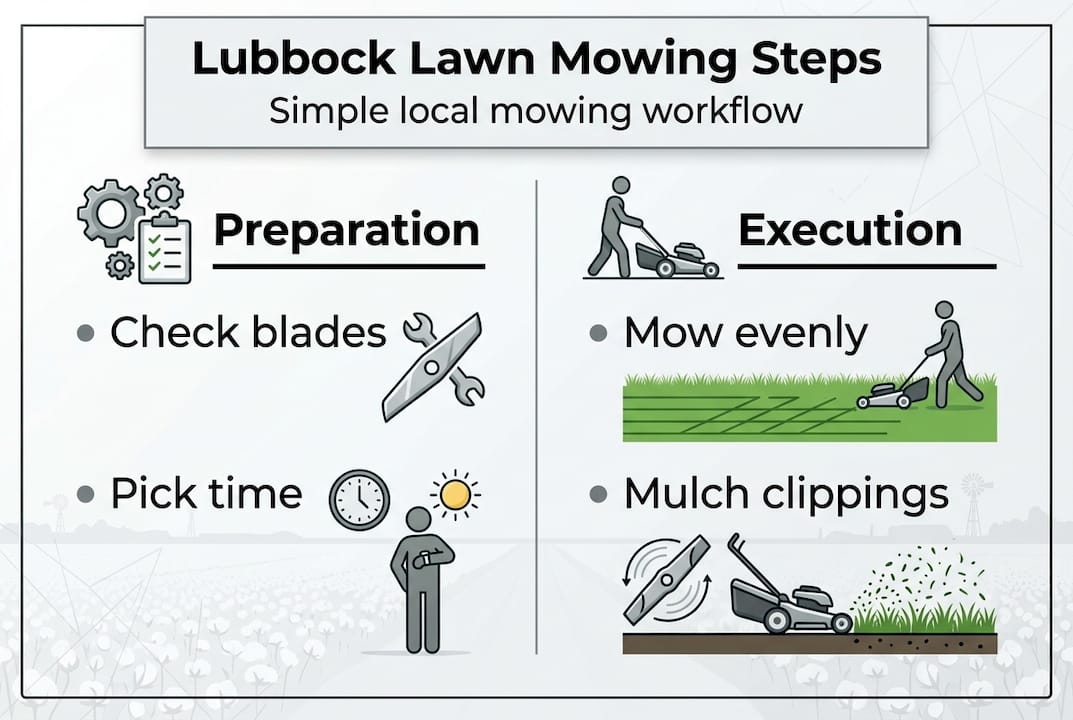
The single most important rule is the one-third rule: never remove more than one-third of the grass blade length in a single mow. Cut more than that and you shock the plant, forcing it to divert energy from root growth to blade recovery. For Bermuda grass kept at 2 inches, that means you should mow when it reaches about 3 inches tall.
Follow this step-by-step process for every mow:
- Trim edges first, then mow so the mower chops up the trimmings and reduces cleanup
- Set your deck height before starting, double-check it on a flat surface
- Mow in straight rows, overlapping each pass slightly to avoid missed strips
- Alternate your mowing direction each session (north-south one week, east-west the next)
- Slow down around curves and obstacles to maintain an even cut
- Finish with a final pass along the perimeter for a clean border
Alternating your mowing pattern guidance each session is more important than it sounds. Mowing in the same direction every time causes the grass to lean one way and can create ruts in the soil from repeated wheel paths. Changing direction keeps the blades upright and the soil from compacting.
Here are a few additional technique tips to keep in mind:
- Overlap each mowing row by about 2 to 3 inches to avoid thin strips of uncut grass
- Never mow during the hottest part of the day; early morning or evening is best
- If your grass is significantly overgrown, mow in stages over several days rather than cutting it all at once
For a full seasonal approach, the Lubbock lawn care checklist breaks down what to do month by month so you're never caught off guard by growth spurts or seasonal transitions.
Key stat: Mowing when grass reaches 1.5 times your target height keeps the one-third rule intact without requiring you to track exact blade length every week. It's a practical shortcut that works.
Clean up, mulch, and troubleshoot after mowing
The mowing is done, but your work isn't quite finished. What you do in the 15 minutes after you park the mower has a real impact on how your lawn recovers and how healthy it stays going into the next mow.
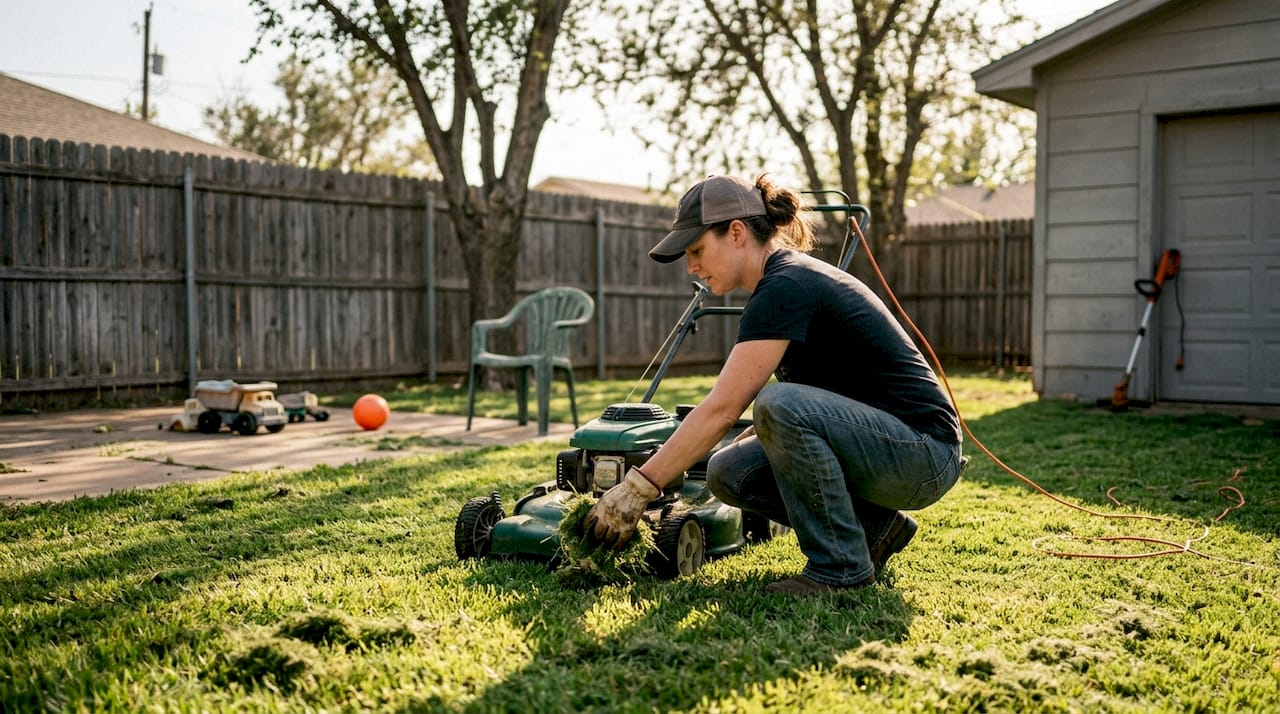
The first question most homeowners ask is: bag or mulch? The answer is almost always mulch. Leaving clippings on the lawn returns nitrogen and other nutrients back into the soil, acting like a light, free fertilizer application. The only time you should bag is when clippings are so thick they mat together and block sunlight, or when your lawn is showing signs of disease.
Here's a quick troubleshooting table for common post-mowing problems:
| Problem | Likely cause | Fix |
|---|---|---|
| Brown tips after mowing | Dull blades tearing grass | Sharpen blades immediately |
| Uneven patches | Scalping or deck not level | Adjust deck height, check for low spots |
| Clumping clippings | Grass was too wet or too tall | Bag clippings, wait for dry conditions |
| Slow regrowth | Cut too short (scalping) | Raise height, water deeply |
| Yellowing in strips | Missed rows or dull blades | Overlap passes, sharpen blades |
After mowing, walk your yard and look for early signs of stress or disease. Circular brown patches, slimy textures, or unusual color changes can signal fungal problems that spread quickly if ignored. Catching them early makes treatment far easier.
Things to check after every mow:
- Look for uneven areas that may indicate soil settling or thatch buildup
- Check that clippings are evenly distributed, not clumped
- Note any areas that look stressed or discolored for follow-up
- Rinse mower blades and undercarriage with water before storing
A well-maintained lawn does more than look good. It directly affects how neighbors and buyers perceive your property, as covered in this piece on property value through lawn care.
Pro Tip: Clean your mower deck after every use. Wet grass residue left on the blades and deck can harbor fungal spores and transfer disease to your lawn on the next mow. A quick rinse and dry takes two minutes and protects weeks of work.
The overlooked local secret for resilient Lubbock lawns
Here's something most national lawn care guides won't tell you: generic advice doesn't cut it in Lubbock. The combination of intense UV exposure, low humidity, and sandy soils means your lawn responds differently than one in Houston or Dallas. What works there can actually hurt your grass here.
The biggest mistake we see Lubbock homeowners make is following the "standard" mowing height without adjusting for local heat. Higher mowing heights in heat and drought shade the soil, reduce water loss, and keep root systems stronger through dry spells. Dropping even half an inch during a July heat wave can mean the difference between a lawn that bounces back and one that goes dormant for weeks.
We've also found that tool choice matters more here than people expect. Reel mowers give hybrid Bermuda that tight, clean cut it needs at lower heights. Rotary mowers are better for Buffalograss and standard Bermuda. Using the wrong tool at the wrong height compounds stress on already-taxed grass.
Our honest advice: treat Lubbock's climate as the primary variable in every lawn decision you make. Start your spring lawn care tips planning with local conditions in mind, not a national template. Small, climate-aware adjustments add up to a lawn that stays healthier longer with less effort.
Take your lawn to the next level with local expertise
You now have a solid, practical framework for mowing your Lubbock lawn the right way. But knowing the steps and consistently executing them through a Texas summer are two different things.

At Only Mow, we handle the execution so you don't have to. As the official lawn care vendor for the City of Lubbock, we bring regional knowledge and reliable service to every yard we maintain. Our team knows exactly how local grasses respond to heat, drought, and seasonal shifts, and we adjust our approach accordingly. Whether you want to hand off the whole job or just get professional support during peak season, our Lubbock mowing services make it easy to schedule and get started. See how consistent professional care connects to real lawn care value boost for Lubbock homeowners.
Frequently asked questions
How often should I mow my lawn in Lubbock, Texas?
Mow when your grass reaches 1.5 times your target height, which for Bermuda at a 2-inch target means mowing around 3 inches. During peak summer growth, that could mean mowing every 5 to 7 days.
Is it better to mulch or bag lawn clippings?
Mulching is almost always the better choice because it returns nutrients to the soil for free. Bag clippings only when they're excessive, matted, or your lawn shows signs of disease.
Should I mow my lawn in wet weather?
No. Mowing wet grass leads to uneven cuts, clumping under the mower deck, and creates conditions where fungal disease spreads quickly across your yard.
What mower type works best for Lubbock lawns?
Reel mowers are ideal for hybrid Bermuda and Zoysia kept at lower heights, while rotary mowers handle Buffalograss and standard Bermuda varieties more effectively.