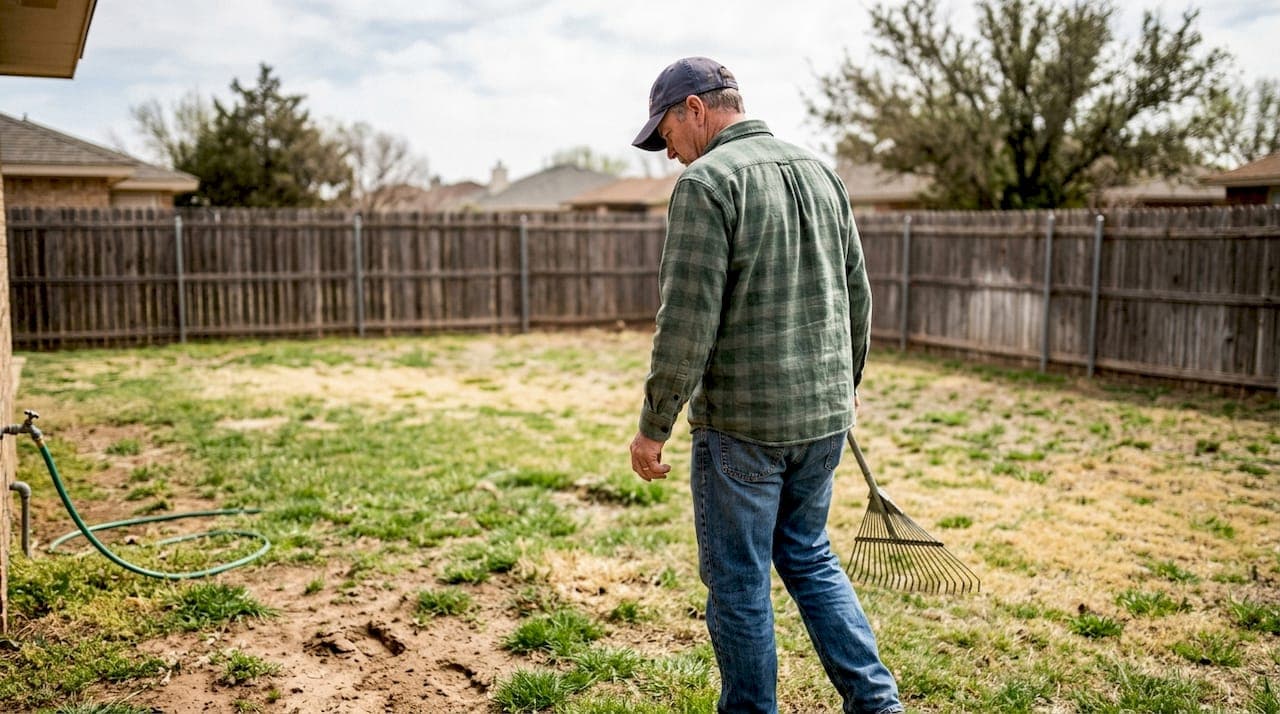
A patchy, brown lawn doesn't just hurt your home's curb appeal—it can lower property value and make your outdoor space feel unwelcoming. In Lubbock, drought, clay soil, and intense summer heat make lawn decline all too common. The good news? Restoring your lawn is absolutely achievable with the right approach. This guide walks you through assessing damage, gathering supplies, choosing the best restoration method, and maintaining results. Whether you're dealing with bare spots or a completely failed yard, you'll find actionable steps and local insights to bring your Lubbock lawn back to life.
Table of Contents
- Assessing your lawn's condition
- Gathering supplies and preparing your lawn
- Step-by-step lawn restoration methods
- Aftercare: Watering, mowing, and weed control
- Troubleshooting common mistakes and when to seek help
- Get professional help for your Lubbock lawn
- Frequently asked questions
Key Takeaways
| Point | Details |
|---|---|
| Know your lawn’s issues | Careful assessment determines if you need basic fixes or a full renovation for your yard. |
| Prep and the right tools matter | Soil prep and proper equipment are critical for lasting restoration success in Lubbock. |
| Region-specific techniques work best | Methods like proper watering and seeding produce better results in West Texas conditions. |
| Mistakes are costly but fixable | Knowing how to troubleshoot and when to seek expert help saves time and resources. |
| Professional help boosts results | Local lawn services ensure consistent care and bring lawns back to life quickly. |
Assessing your lawn's condition
Before you invest time and money into restoration, you need to understand what's actually wrong with your lawn. Walk your yard and look for visual clues: bare patches where grass has died completely, weeds overtaking turf, thinning areas with sparse growth, and uneven color ranging from brown to pale green. These signs tell you how severe the damage is and what kind of intervention you'll need.
Soil testing is your secret weapon. Lubbock's clay soils often lack proper drainage and nutrients, so guessing won't cut it. Contact Lubbock County AgriLife Extension for local soil testing and tailored advice. A simple test reveals pH levels, nutrient deficiencies, and organic matter content—all critical for choosing the right amendments and grass varieties.
Once you've gathered visual and soil data, decide whether to restore or replace. Use this quick reference:
| Lawn Condition | Damage Level | Recommended Action |
|---|---|---|
| Minor bare spots, mostly healthy grass | Light | Overseed and fertilize |
| Patchy areas, moderate weed invasion | Moderate | Aerate, overseed, weed control |
| Mostly dead grass, severe compaction | Severe | Full sod replacement or sprigging |
| Complete failure, poor soil structure | Critical | Soil prep, then sod or sprigging |
Lubbock-specific challenges make assessment even more important. Drought stress is constant, especially during summer months when temperatures soar above 95°F. Soil compaction from clay content prevents roots from spreading. Pests like grubs and chinch bugs thrive in stressed turf. Identifying these issues early lets you address root causes, not just symptoms. Understanding the benefits of restoring your lawn helps you stay motivated through the process.
Gathering supplies and preparing your lawn
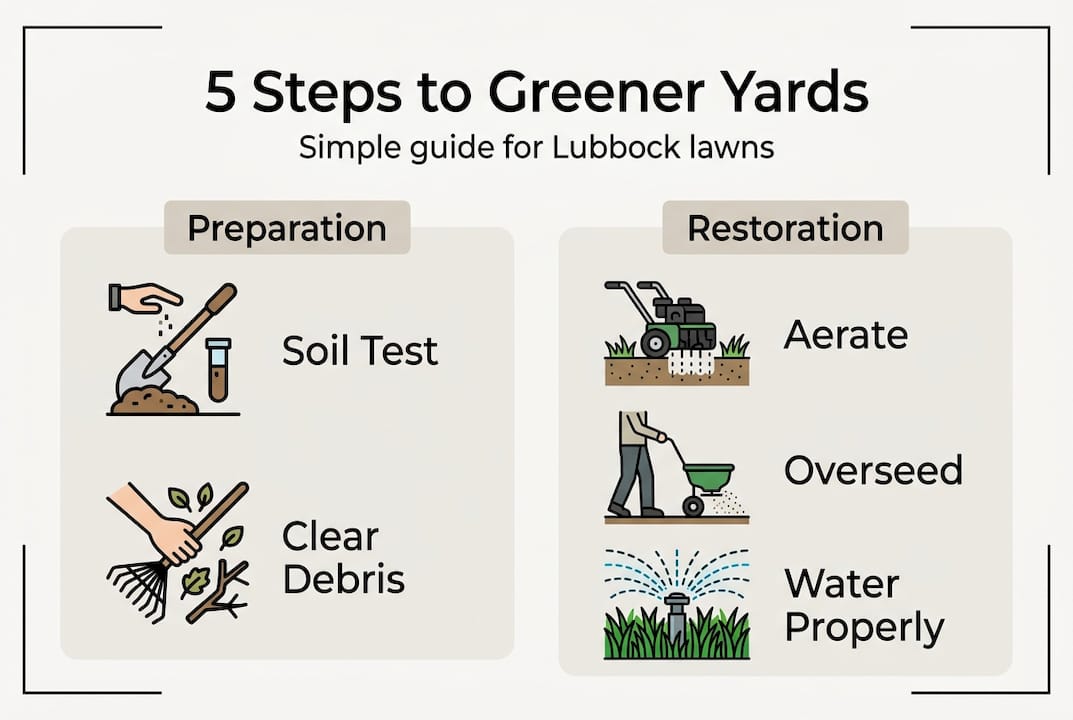
With your lawn's needs clear, it's time to gather the right tools and supplies. Having everything on hand before you start prevents frustrating delays and ensures you can work efficiently. Here's what you'll need:
- Basic tools: Rake for debris removal, shovel for soil work, broadcast or drop spreader for seed and fertilizer, garden hose with sprinkler attachment
- Supplies: Grass seed or sod matched to Lubbock's climate, starter fertilizer, soil amendments like compost or gypsum, pre-emergent herbicide for weed control
- Specialized equipment: Core aerator for compacted soil (rent if needed), dethatcher or verticutter for thick thatch layers, soil test kit if you haven't tested yet
Matching your supplies to your restoration approach saves money and effort. This table helps you choose:
| Restoration Level | Key Supplies | Special Equipment |
|---|---|---|
| Light (overseeding) | Seed, starter fertilizer, rake | Optional: broadcast spreader |
| Moderate (aeration + overseed) | Seed, fertilizer, soil amendments | Core aerator, spreader |
| Severe (full resod) | Sod pallets, topsoil, compost | Sod cutter (rental), roller |
Pro Tip: Lubbock has clay soils—never skip soil prep and aeration for best results. Clay compacts easily and drains poorly, so breaking it up with a core aerator and mixing in compost creates the loose, fertile base your grass needs to thrive.
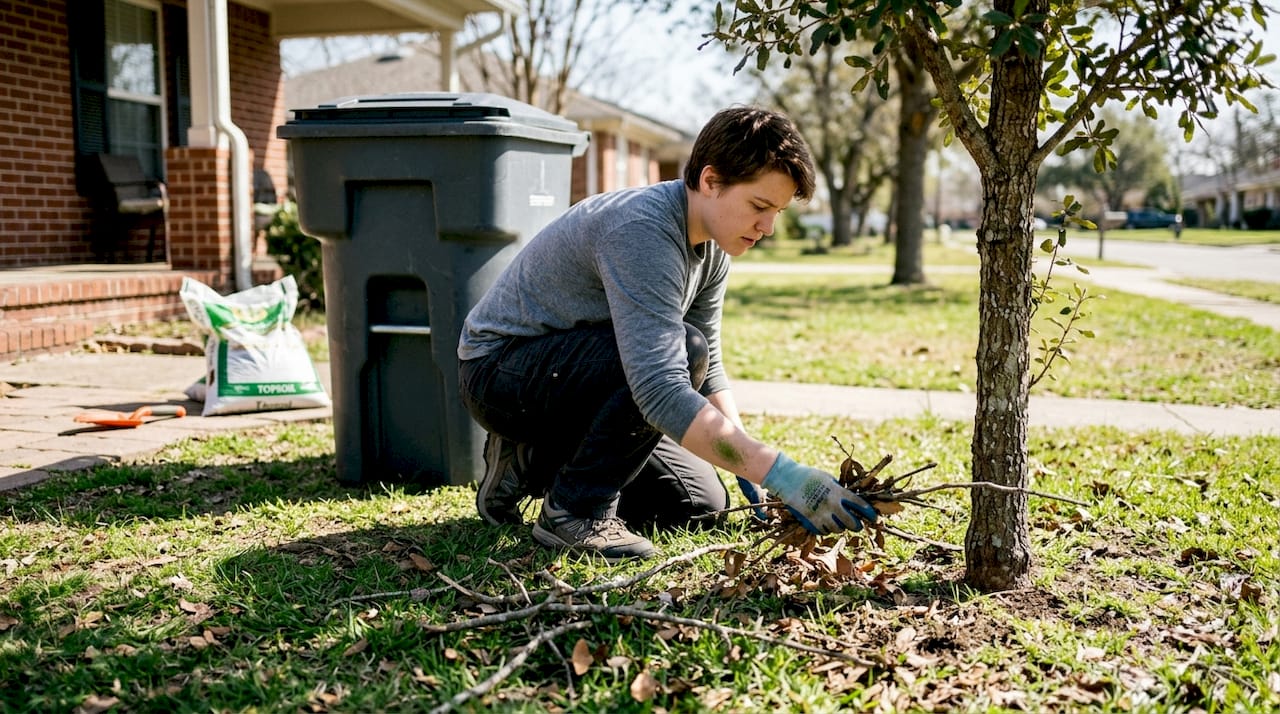
Prepping your lawn properly sets the stage for success. Start by clearing all debris: sticks, leaves, rocks, and any dead vegetation. Mow your existing grass as low as your mower allows without scalping—this reduces competition for new seedlings and helps amendments reach the soil. Water lightly a day before you plan to work; slightly moist soil is easier to aerate and amend than bone-dry or muddy ground. For renovation of existing lawns, use core aeration, verticutting, weed control, and overseeding; for severe cases, full sod replacement or sprigging after soil prep delivers faster results. Following spring prep tips ensures you're working with the seasons, not against them.
Step-by-step lawn restoration methods
Now comes the hands-on work. Choose the method that matches your lawn's condition, then follow these steps carefully. Rushing or skipping steps almost always leads to disappointing results.
First, here's a quick-scan chart to help you pick the right approach:
| Method | Best For | Time to Results | Difficulty |
|---|---|---|---|
| Overseeding | Light damage, thin spots | 2-4 weeks | Easy |
| Aeration + Overseeding | Moderate damage, compaction | 3-6 weeks | Moderate |
| Full Resod | Severe damage, complete failure | 1-2 weeks | Hard |
Light restoration (overseeding):
- Rake the lawn to remove debris and loosen the top layer of soil.
- Spread grass seed evenly using a broadcast spreader, following package rates for Lubbock's climate.
- Lightly rake again to ensure seed-to-soil contact.
- Apply starter fertilizer according to fertilizer best practices.
- Water lightly twice daily until germination, then reduce frequency.
Moderate restoration (aeration and overseeding):
- Run a core aerator over the entire lawn, making multiple passes in different directions.
- Leave soil plugs on the surface—they'll break down and add organic matter.
- Spread compost or topsoil to fill low spots and improve soil structure.
- Overseed as described above, using slightly higher rates in damaged areas.
- Apply starter fertilizer and water consistently.
- Control weeds with pre-emergent herbicide after grass establishes (usually 4-6 weeks).
Severe restoration (full resod):
- Remove existing dead grass with a sod cutter or by hand.
- Till the soil 4-6 inches deep, breaking up clay and removing rocks.
- Mix in 2-3 inches of compost to improve drainage and fertility.
- Grade the area to ensure proper drainage away from structures.
- Lay sod pieces tightly together, staggering seams like bricks.
- Roll the sod with a lawn roller to eliminate air pockets.
- Water immediately and keep soil moist for 2 weeks until roots establish.
Pro Tip: In Lubbock, overseeding with ryegrass can keep winter green, but may compete with Bermuda in spring—consider skipping it for natural dormancy. Bermuda grass naturally goes brown in winter and rebounds beautifully in spring without the hassle of managing two grass types.
Watering is critical during restoration. Deep, infrequent watering (1 inch every 2-4 weeks) promotes healthy roots even in Texas' dry spells, but newly seeded or sodded lawns need more frequent, lighter watering at first. Once established, shift to the deep watering schedule to build drought tolerance. Check your lawn care checklist to stay on track with timing and tasks. For additional guidance on overseeding advice, Texas A&M AgriLife Extension offers detailed recommendations.
Aftercare: Watering, mowing, and weed control
Restoration doesn't end when you finish planting. Aftercare determines whether your investment thrives or fails. In Lubbock's climate, consistent attention during the first few months makes all the difference.
Here are the essential aftercare tasks:
- Watering: For the first 2 weeks, water lightly once or twice daily to keep soil moist. After germination or sod rooting, transition to deep watering—1 inch every 2-4 weeks. Water early morning to reduce evaporation and fungal risk.
- Mowing: Wait until new grass reaches 3-4 inches before the first mow. Cut no more than one-third of blade height at a time. Keep mower blades sharp to avoid tearing tender new growth.
- Fertilizing: Apply a second round of fertilizer 4-6 weeks after seeding or sodding. Use a balanced formula with slow-release nitrogen to avoid burning young grass.
- Weed control: Hand-pull weeds for the first month to avoid herbicide damage to new grass. After establishment, apply pre-emergent herbicide in early spring and fall to prevent weed seeds from germinating.
Texas water restrictions and Lubbock's dry climate make smart watering critical:
Water conservation: Deep infrequent irrigation (1 inch every 2-4 weeks) prevents shallow roots; matches Texas restrictions. Shallow roots make grass vulnerable to drought and heat stress, while deep roots access moisture even during dry spells.
Watch for early warning signs of relapse. Brown patches reappearing may indicate insufficient watering or fungal disease. Weeds returning suggest gaps in your pre-emergent schedule. Thinning grass could mean nutrient deficiency or pest damage. Catching these issues early lets you adjust before major problems develop. Understanding the benefits of ongoing maintenance helps you stay committed to aftercare routines.
Troubleshooting common mistakes and when to seek help
Even careful homeowners make mistakes during lawn restoration. Knowing the most common pitfalls helps you avoid them and fix problems quickly when they occur.
Top restoration mistakes to avoid:
- Skipping soil prep: Planting seed or sod on compacted, nutrient-poor soil guarantees poor results. Always test and amend soil first.
- Overwatering new seeds or sod: Too much water causes fungal disease, shallow roots, and seed washout. Light, frequent watering is key initially, then shift to deep watering.
- Using the wrong seed mix: Cool-season grasses struggle in Lubbock's heat. Stick with warm-season varieties like Bermuda or buffalo grass.
- Mowing too soon or too short: Cutting new grass before it's established stresses plants and slows growth. Wait until grass reaches proper height.
- Ignoring weeds early: Letting weeds establish makes them exponentially harder to control later. Address them as soon as grass is strong enough for herbicide.
When things go wrong, here's how to troubleshoot:
- Patchy growth: Usually indicates uneven seed distribution or watering. Overseed bare spots and adjust sprinkler coverage.
- Fungus or disease: Brown, circular patches with a distinctive odor suggest fungal issues. Reduce watering frequency, improve air circulation by dethatching, and apply fungicide if needed.
- Persistent weeds: If pre-emergent herbicide isn't working, you may have applied it at the wrong time or missed a treatment window. Spot-treat with post-emergent herbicide and reset your prevention schedule.
Pro Tip: If the lawn fails to improve, contact Lubbock County AgriLife Extension for local soil testing and tailored advice; they host turfgrass seminars. Sometimes professional diagnosis reveals issues you can't spot on your own, like soil pH problems or pest infestations.
Know when to call for help. Severe pest infestations like grub damage or chinch bug colonies often require professional treatment. Unexplained failures despite following all steps may indicate deeper soil or drainage issues. Time constraints matter too—if you can't commit to consistent aftercare, hiring professionals ensures your investment doesn't go to waste. Choosing local lawn services carefully means finding experts who understand Lubbock's unique challenges. For hands-on learning, check out local turfgrass seminars offered throughout the year.
Get professional help for your Lubbock lawn
DIY restoration works beautifully when you have the time, tools, and knowledge to do it right. But if you'd prefer guaranteed results or need extra help, professional Lubbock services are ready to support your lawn transformation.
Only Mow specializes in lawn restoration and maintenance for Lubbock homeowners. We understand local soil conditions, climate challenges, and the grass varieties that thrive here. Our team handles everything from soil testing and preparation to seeding, sodding, and ongoing care. As the official vendor for the City of Lubbock, we bring proven expertise and local authority to every project.

Whether you need a one-time restoration or year-round maintenance, we tailor our services to your lawn's specific needs and your budget. Get a free quote or personalized assessment by visiting Lubbock lawn care experts. We'll evaluate your yard, recommend the best approach, and deliver results you can see and enjoy. Let us handle the hard work while you enjoy a beautiful, healthy lawn.
Frequently asked questions
When is the best time of year to restore a lawn in Lubbock?
Late spring and early fall are ideal for lawn restoration, as soil temperatures favor seed germination and root growth. Avoid summer heat and winter dormancy for best results.
How often should I water a new lawn after restoration?
Water lightly once or twice a day at first, then shift to deep, infrequent watering as the turf establishes. This builds drought-resistant roots.
Do I need to overseed Bermuda grass lawns for winter color?
Overseeding with ryegrass provides winter green, but may compete with Bermuda grass in spring—many experts recommend letting Bermuda go dormant. Natural dormancy is simpler and healthier.
Where can I get my soil tested in Lubbock?
You can contact the Lubbock County AgriLife Extension office for local soil testing and turf guidance. They provide affordable testing and expert recommendations.
How long does it take to see results from lawn restoration?
Overseeding shows results in 2-4 weeks, aeration and overseeding in 3-6 weeks, and full resod in 1-2 weeks. Consistent aftercare speeds up establishment and improves final quality.