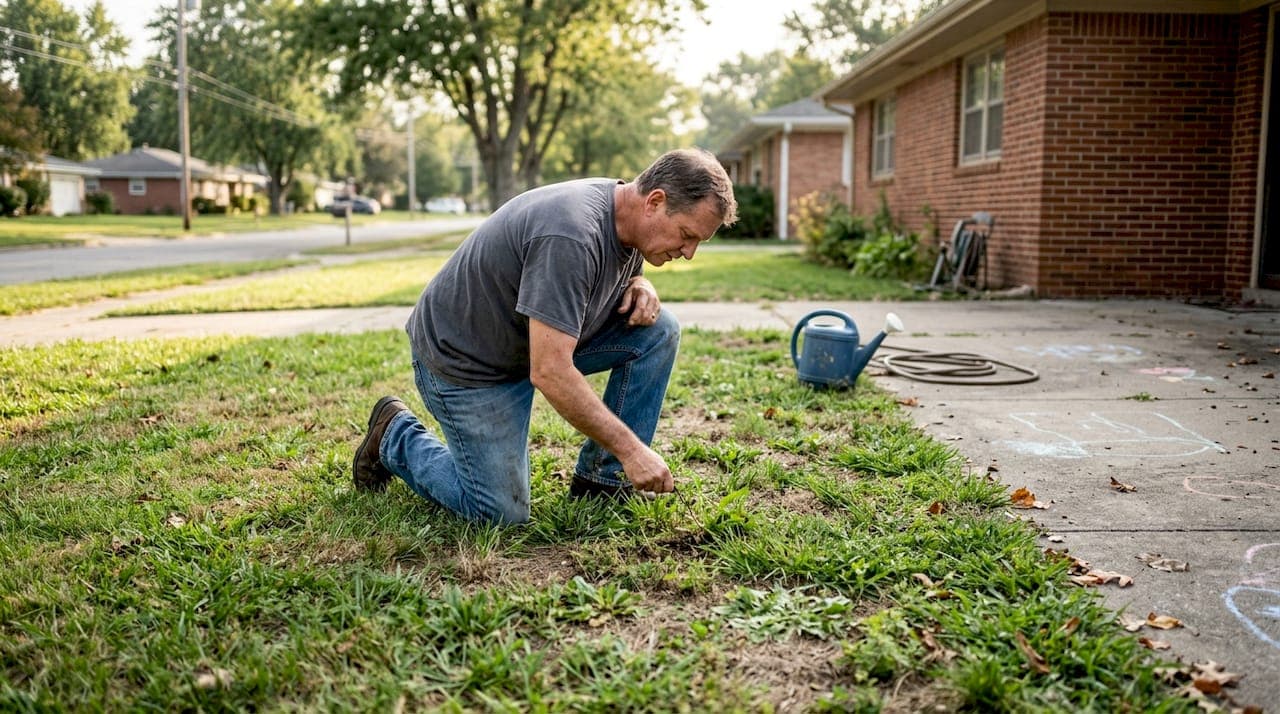
Many Lubbock homeowners question whether lawn restoration is worth the investment, assuming it's costly and unnecessary. However, lawn restoration delivers substantial benefits that extend far beyond aesthetics. A restored lawn improves environmental health, reduces surface temperatures, increases property value, and creates sustainable outdoor spaces that thrive in West Texas conditions. This article explains why prioritizing lawn restoration is crucial for healthier, more resilient lawns in Lubbock, providing actionable insights on methods, maintenance, and long-term value.
Table of Contents
- Key takeaways
- Understanding the benefits of lawn restoration in Lubbock
- Core methods for successful lawn restoration
- Comparing natural lawn restoration with artificial turf options
- Practical steps to maintain and enhance your restored lawn
- Professional lawn restoration services in Lubbock
- FAQ
Key Takeaways
| Point | Details |
|---|---|
| Environmental impact | Restored lawns sequester carbon and lower surface temperatures while supporting local wildlife. |
| Property value lift | A lush lawn improves curb appeal and can return the full cost or more at resale. |
| Water and chemical savings | Native grasses require less water and fewer inputs, reducing ongoing maintenance costs. |
| Restoration roadmap | The article outlines a three phase process including soil prep, installation, and ongoing maintenance. |
Understanding the benefits of lawn restoration in Lubbock
Lawn restoration transforms struggling turf into vibrant, healthy landscapes that deliver measurable environmental and financial returns. For Lubbock homeowners, these benefits address specific challenges posed by the region's semi-arid climate and temperature extremes.
Restored lawns provide significant environmental advantages. Turfgrass sequesters 0.9-1.8 tons of carbon per hectare annually, actively reducing atmospheric carbon dioxide while improving air quality. This carbon sequestration happens through photosynthesis and root growth, making your lawn a small but meaningful climate solution. Additionally, healthy turf reduces surface temperatures by 5-10°C compared to bare soil or hardscaping, creating cooler microclimates around your home that lower cooling costs during Lubbock's scorching summers.
Property value increases represent another compelling reason to prioritize restoration. Curb appeal directly influences buyer perceptions and home valuations. A lush, well-maintained lawn signals proper home care and creates positive first impressions that translate into higher offers. Studies consistently show that quality lawn care and property value are closely linked, with landscaping improvements often returning 100% or more of their investment at resale.
Ecological benefits extend beyond carbon capture. Native grasses used in restoration support local wildlife, including pollinators and beneficial insects that maintain ecosystem balance. These grasses evolved to thrive in Lubbock's conditions, requiring less water and fewer chemical inputs than non-native species. This natural adaptation reduces your environmental footprint while cutting maintenance costs.
Key environmental and financial benefits:
- Carbon sequestration reduces atmospheric CO2 and improves air quality
- Temperature reduction creates cooler outdoor spaces and lowers energy bills
- Increased property value through enhanced curb appeal and buyer interest
- Native grass ecosystems support local wildlife and biodiversity
- Reduced water consumption and chemical dependence lower ongoing costs
Contrasting natural lawn restoration with artificial turf highlights additional advantages. While synthetic surfaces eliminate mowing, they create heat islands that can exceed 150°F in direct sunlight, making outdoor spaces unusable during peak hours. Artificial turf also contributes to stormwater runoff and microplastic pollution, undermining environmental goals that natural restoration achieves effortlessly.
Core methods for successful lawn restoration
Successful lawn restoration follows a systematic process that addresses soil health, grass selection, and ongoing maintenance. Understanding these core methods helps Lubbock homeowners set realistic expectations and make informed decisions about DIY versus professional services.
The restoration process typically unfolds in three phases. Core methodologies include prep, install, and maintain stages that build upon each other to establish healthy, sustainable turf.
Step-by-step restoration process:
- Soil preparation: Clear existing vegetation, test soil pH and nutrient levels, amend with organic matter or lime as needed, and grade for proper drainage
- Installation: Choose between seeding for cost efficiency or sodding for immediate results, ensuring proper seed-to-soil contact or sod-to-ground adhesion
- Establishment care: Water deeply but infrequently to encourage root growth, avoid foot traffic for 4-6 weeks, and monitor for pest or disease issues
- Long-term maintenance: Implement regular aeration, seasonal fertilization, and integrated pest management practices
Integrated pest management (IPM) forms a cornerstone of sustainable restoration. Rather than relying on chemical treatments that can reduce carbon sequestration benefits, IPM uses monitoring, cultural practices, and targeted interventions. This approach minimizes environmental impact while maintaining lawn health.
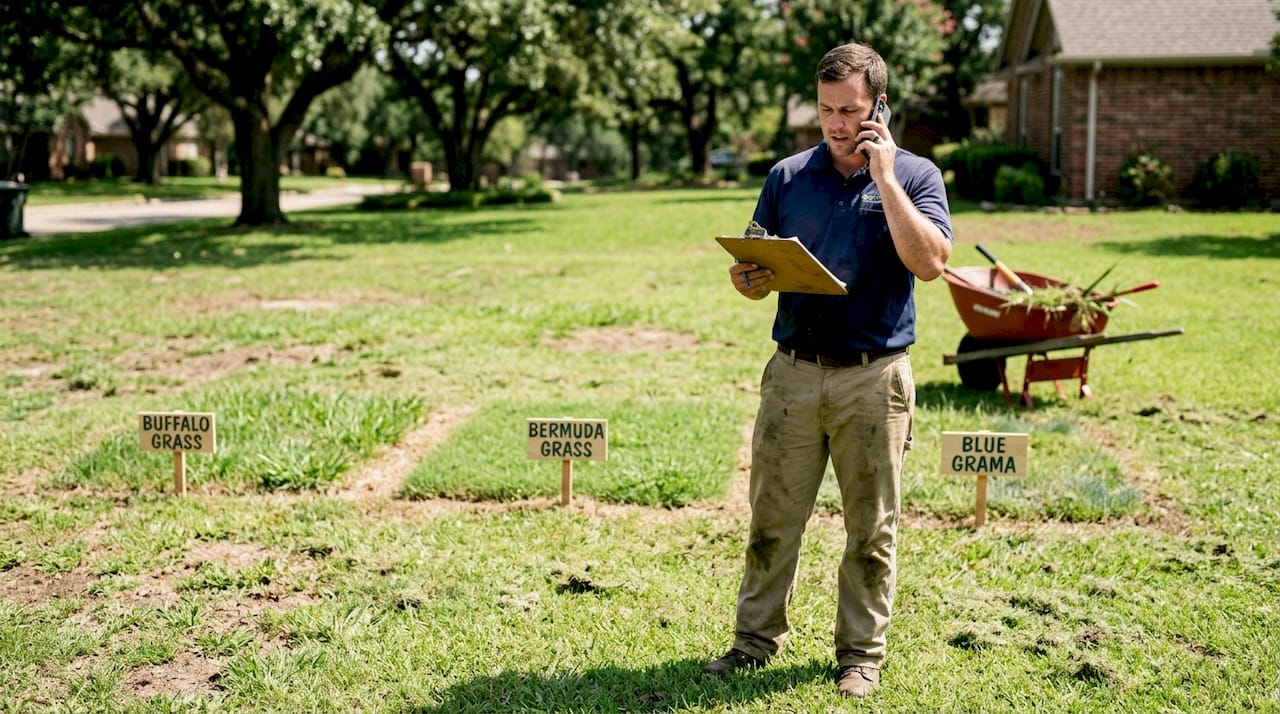
Native grass selection dramatically improves restoration success in Lubbock. Buffalo grass, Bermuda grass, and Blue grama adapt naturally to West Texas conditions, requiring 30-50% less water than traditional cool-season grasses. These species develop deep root systems that access moisture during dry periods, reducing irrigation needs and improving drought resilience.
Aeration and fertilization support soil health throughout the restoration process. Core aeration relieves compaction, allowing water, nutrients, and oxygen to penetrate root zones. Annual or biannual aeration prevents the soil density issues common in Lubbock's clay-heavy soils. Fertilization should follow soil test recommendations, providing nutrients in balanced ratios that support growth without excess runoff.
Pro Tip: Avoid excessive chemical inputs during restoration. High-nitrogen synthetic fertilizers can reduce carbon sequestration and create dependency cycles. Instead, use slow-release organic options that feed soil microbes and build long-term fertility.
Seasonal timing matters significantly for restoration success. Spring and early fall offer ideal conditions in Lubbock, with moderate temperatures and increased rainfall probability. Preparing for lawn service during these windows maximizes germination rates and establishment speed. Summer restoration attempts often fail due to heat stress, while winter projects face dormancy challenges.
Following a comprehensive Lubbock lawn care checklist ensures you address all critical factors throughout the restoration timeline. Systematic approaches prevent common mistakes and accelerate results.
Comparing natural lawn restoration with artificial turf options
Homeowners evaluating lawn improvement options often consider artificial turf as an alternative to natural restoration. Understanding the trade-offs between these approaches helps you make decisions aligned with your priorities, budget, and environmental values.
Installation costs differ dramatically between natural and synthetic options. Artificial turf ranges from $5-20 per square foot installed, creating substantial upfront expenses for average-sized Lubbock lawns. A 2,000-square-foot installation can cost $10,000-$40,000, representing a significant capital investment. Natural restoration through seeding costs $0.10-$0.50 per square foot, while sodding runs $0.50-$2.00 per square foot, making both options considerably more affordable initially.
| Factor | Natural Lawn Restoration | Artificial Turf |
|---|---|---|
| Installation Cost | $200-$4,000 (2,000 sq ft) | $10,000-$40,000 (2,000 sq ft) |
| Monthly Water Use | 50-100 gallons per sq ft annually | Zero irrigation required |
| Surface Temperature | 5-10°C cooler than hardscaping | Can exceed 150°F in direct sun |
| Environmental Impact | Carbon sequestration, wildlife habitat | Microplastic pollution, runoff issues |
| Lifespan | Indefinite with maintenance | 8-15 years before replacement |
| Maintenance | Mowing, fertilizing, aerating | Periodic cleaning, infill replacement |
Temperature differences create significant comfort and usability impacts. Artificial turf gets extremely hot during Lubbock summers, often becoming too hot to walk on barefoot by mid-morning. Natural lawns reduce surface temperatures through evapotranspiration, creating cooler microclimates that extend outdoor enjoyment throughout the day. This cooling effect also reduces heat transfer to your home, lowering air conditioning demands.
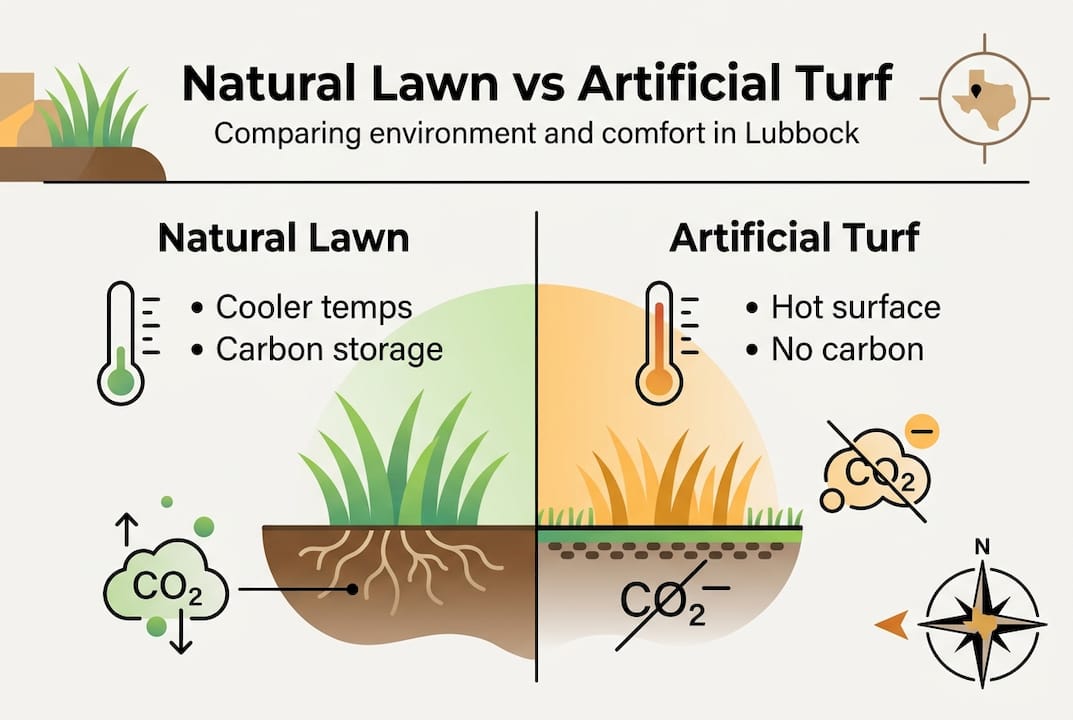
Ecological considerations favor natural restoration overwhelmingly. Artificial turf eliminates the carbon sequestration, oxygen production, and wildlife habitat benefits that living grass provides. Synthetic surfaces also contribute to stormwater runoff since they lack the absorption capacity of natural soil and root systems. Microplastic fibers from turf breakdown enter waterways and ecosystems, creating pollution concerns that intensify over the product's lifespan.
Water usage presents the primary argument for artificial turf. Eliminating irrigation saves thousands of gallons annually in Lubbock's dry climate. However, native grass restoration dramatically reduces water needs compared to traditional lawns, narrowing this gap considerably. Buffalo grass and other adapted species require minimal supplemental watering once established, especially when combined with proper soil preparation and mulching techniques.
Decision factors for homeowners:
- Budget: Natural restoration offers lower upfront costs and no replacement expenses
- Sustainability: Living lawns provide environmental benefits artificial turf cannot match
- Aesthetics: Both options can look attractive, though natural grass offers seasonal variation
- Maintenance preference: Artificial turf eliminates mowing but requires cleaning and infill management
- Usage patterns: High-traffic areas may benefit from turf durability, while general landscaping favors natural grass
Long-term cost analysis often favors natural restoration despite ongoing maintenance requirements. Artificial turf requires complete replacement every 8-15 years, creating recurring capital expenses that exceed cumulative mowing and care costs for natural lawns. When you factor in the environmental and property value benefits of living turf, natural restoration typically delivers superior return on investment.
For homeowners seeking landscaping ideas for Lubbock homes that balance aesthetics with sustainability, natural lawn restoration with native grasses represents the optimal choice for most properties.
Practical steps to maintain and enhance your restored lawn
Successful restoration requires ongoing maintenance that preserves health, appearance, and environmental benefits. Implementing strategic care practices adapted to Lubbock's climate ensures your investment delivers lasting value.
Integrated pest management protects your lawn while minimizing chemical inputs. Monitor regularly for signs of insect damage, disease, or weed pressure. When issues arise, identify the specific problem before treating. Many pest populations remain below damage thresholds and require no intervention. When treatment becomes necessary, use targeted solutions rather than broad-spectrum chemicals that harm beneficial organisms.
Seasonal fertilization and aeration schedules align with grass growth patterns. Spring applications support active growth as temperatures warm, while fall feeding strengthens roots before dormancy. Avoid high-input practices that negate carbon sequestration by using moderate, balanced fertilizer rates based on soil test results. Over-fertilization creates excessive growth that demands more mowing, water, and pest management while reducing environmental benefits.
Essential maintenance practices:
- Aerate annually in spring or fall to relieve compaction and improve water penetration
- Fertilize based on soil tests, typically 2-3 times annually for native grasses
- Mow at appropriate heights (2-3 inches for Bermuda, 3-4 inches for Buffalo grass)
- Water deeply but infrequently, encouraging deep root development
- Monitor for pests and diseases, treating only when damage thresholds are reached
- Overseed thin areas in fall to maintain density and prevent weed establishment
Native grass selection remains crucial for long-term success. Buffalo grass, Bermuda grass, and Blue grama thrive in Lubbock conditions with minimal inputs once established. These species tolerate heat, drought, and alkaline soils that challenge non-native alternatives. Choosing adapted varieties reduces maintenance demands while improving sustainability.
Watering best practices balance lawn health with water conservation. Deep, infrequent irrigation encourages roots to grow deeper, accessing moisture during dry periods. Shallow, frequent watering creates weak root systems dependent on constant moisture. Water early morning to minimize evaporation and disease pressure. Adjust schedules seasonally, reducing frequency as temperatures cool in fall.
Mowing height and frequency impact lawn health significantly. Taller grass shades soil, reducing water loss and suppressing weeds. Never remove more than one-third of blade height in a single mowing. Sharp blades create clean cuts that heal quickly, while dull blades tear grass and create entry points for disease.
Pro Tip: Monitor soil health annually through professional testing. Soil conditions change over time due to irrigation, fertilization, and natural processes. Annual tests allow you to tailor amendments effectively, maintaining optimal pH and nutrient levels without guesswork or waste.
| Season | Key Maintenance Tasks | Focus Areas |
|---|---|---|
| Spring | Aerate, fertilize, pre-emergent application | Support active growth, prevent summer weeds |
| Summer | Adjust watering, monitor pests, mow regularly | Maintain health during heat stress |
| Fall | Overseed, fertilize, final aeration | Strengthen roots, repair summer damage |
| Winter | Minimal activity, plan next year | Allow dormancy, prepare for spring |
Following spring lawn care tips ensures your lawn emerges from dormancy strong and ready for the growing season. Understanding the importance of lawn maintenance helps you stay consistent with care practices that compound over time, creating increasingly resilient and attractive turf.
Consistent maintenance transforms restored lawns into low-input landscapes that deliver maximum environmental and aesthetic benefits. The initial effort invested in proper care practices pays dividends through reduced costs, improved appearance, and enhanced property value over the lawn's lifespan.
Professional lawn restoration services in Lubbock
While DIY restoration suits some homeowners, professional services deliver expertise, equipment, and efficiency that accelerate results and minimize risks. Only Mow specializes in lawn restoration tailored to Lubbock's unique climate and soil conditions, offering comprehensive solutions from initial assessment through long-term maintenance.
Professional restoration begins with thorough soil analysis and site evaluation, identifying specific challenges your property faces. Expert teams use commercial-grade equipment for grading, aeration, and installation that produces superior results compared to consumer tools. Specialized knowledge of native grass varieties, seeding rates, and establishment protocols ensures optimal outcomes.

Only Mow's Lubbock lawn care and mowing services combine restoration expertise with ongoing maintenance programs that protect your investment. From seasonal fertilization to integrated pest management, professional care keeps your restored lawn healthy and attractive year-round. As the official vendor for the City of Lubbock, Only Mow brings proven reliability and local knowledge to every project. Whether you need complete restoration or targeted improvements, local landscaper services in Lubbock provide customized solutions that fit your goals and budget. Ready to transform your lawn? Sign up for landscaping services and start your restoration journey today.
FAQ
What is the average cost of lawn restoration in Lubbock?
Restoration costs vary based on lawn size, chosen method, and soil condition. Seeding typically costs $0.10-$0.50 per square foot, while sodding ranges from $0.50-$2.00 per square foot. A 2,000-square-foot lawn restoration averages $500-$2,500 depending on complexity and materials. Soil amendments, grading work, and irrigation adjustments add to base costs but improve long-term success.
How long does lawn restoration take to show results?
Initial green-up appears within 7-14 days after seeding or immediately with sod installation. However, full establishment requires 6-12 months as root systems develop and turf fills in completely. Patience during this period pays off with healthier, more resilient lawns that withstand Lubbock's climate challenges. Consistent watering and maintenance during establishment accelerates visible improvements.
Can I restore my lawn myself or should I hire professionals?
DIY restoration works for small lawns when you have time, knowledge, and basic equipment. Homeowners can successfully seed or sod areas under 1,000 square feet with proper research and effort. However, professional lawn restoration services offer significant advantages for larger projects, including specialized equipment, bulk material pricing, and expertise that prevents costly mistakes. Complex issues like severe compaction, drainage problems, or extensive weed pressure benefit most from professional assessment and treatment.
What native grasses work best for Lubbock lawn restoration?
Buffalo grass, Bermuda grass, and Blue grama represent top choices for Lubbock lawns. Buffalo grass offers exceptional drought tolerance and low maintenance requirements, staying green with minimal water once established. Bermuda grass provides dense, durable turf that handles foot traffic well and recovers quickly from damage. Blue grama adapts to poor soils and requires almost no supplemental irrigation after establishment. All three species evolved in similar climates and outperform non-native alternatives in West Texas conditions.