Most Lubbock homeowners think a quick rake and a mow is all it takes to prep their yard for the next season. That assumption costs them more than they realize. Seasonal lawn clean-up is not just about appearances. It directly affects how well your grass handles drought, how many pests move in, and whether your soil can even absorb water properly. Deep, infrequent watering and clearing post-storm debris are essential habits in Lubbock's dry, unpredictable climate. This article breaks down exactly why seasonal clean-up matters here, what it involves, and how to get the best results from your yard.
Table of Contents
- Why Lubbock lawns need regular seasonal clean-up
- What does seasonal lawn clean-up include?
- How seasonal clean-up restores and protects your lawn
- Seasonal clean-up's connection to curb appeal and property value
- When to DIY vs. hire professional clean-up in Lubbock
- Let Only Mow help your yard thrive season after season
- Frequently asked questions
Key Takeaways
| Point | Details |
|---|---|
| Clean-up timing matters | Seasonal yard clean-ups in spring and fall are critical for Lubbock lawns. |
| Soil and pest problems are preventable | Clearing debris and addressing compacted or pest-prone soil keeps your lawn healthy. |
| DIY vs. pro, choose wisely | Larger issues or heavy debris often require professional service for best results. |
| Yard appearance affects value | A well-maintained lawn improves property value and reduces long-term costs. |
Why Lubbock lawns need regular seasonal clean-up
Lubbock's climate is not forgiving. You get intense heat, periodic drought, sudden storms, and soil that compacts faster than most homeowners expect. These conditions make seasonal clean-up more than a cosmetic task. It is a foundational practice that keeps your lawn alive and functional through the year.
The soil here tends to be heavy clay, which means it compacts under foot traffic and equipment. Compact clay soils need annual aeration, and drought-prone lawns need deep, infrequent watering after clean-up to recover properly. Without regular clean-up, debris builds up and blocks sunlight, water, and nutrients from reaching the roots.
Here is what neglected seasonal clean-up leads to in a Lubbock yard:
- Thatch buildup that suffocates grass roots
- Standing debris that shelters pests and disease
- Compacted soil that repels water instead of absorbing it
- Weed seeds that germinate faster in cluttered, untreated ground
- Higher water bills because moisture cannot penetrate the soil
"A lawn that skips seasonal clean-up in Lubbock is essentially starting each season already behind. The soil, the pests, and the weeds all take advantage of that gap."
For a full breakdown of what your yard needs each season, the Lubbock lawn care checklist is a practical starting point.
What does seasonal lawn clean-up include?
A thorough seasonal clean-up is not just raking leaves. It covers several tasks that each serve a specific purpose, and skipping any one of them can leave your yard vulnerable.
Here is the order that works best for Lubbock yards:
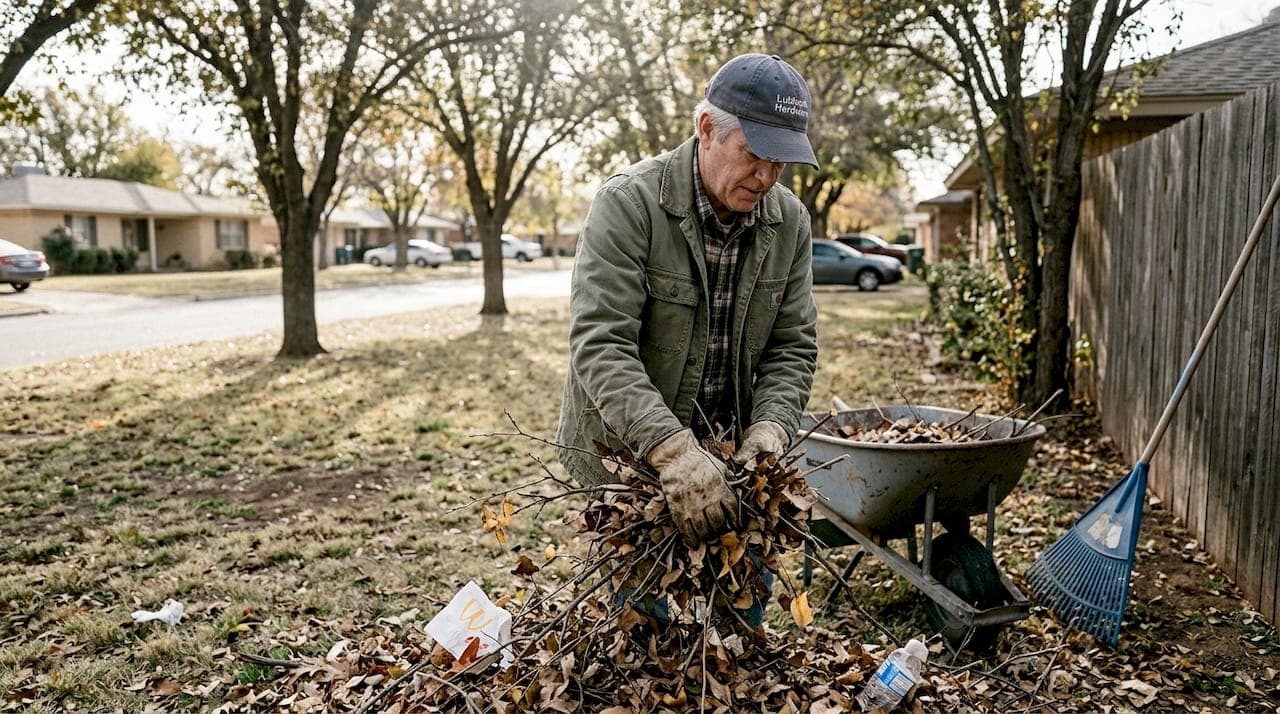
- Remove surface debris including leaves, dead branches, and any trash blown in by wind or storms.
- Check for and remove thatch if the layer is thicker than half an inch. Thick thatch blocks water and air from reaching roots.
- Inspect for pest activity in debris piles, along fence lines, and near the soil surface.
- Edge and trim along sidewalks, driveways, and garden beds to define clean lines.
- Aerate compacted areas especially in high-traffic zones or spots where water pools after rain.
- Apply pre-emergent weed control before weed seeds have a chance to germinate.
- Clear storm damage including broken limbs and displaced mulch after any significant weather event.
Lubbock storms can leave behind more than just leaves. Displaced soil, broken branches, and waterlogged patches all need attention. Avoid clean-up on frozen or waterlogged soil and always address post-storm debris and pest-prone areas thoroughly before moving on to other tasks.
A common mistake is working on a lawn that is still wet or soft after rain. You compact the soil further and can tear up grass that is already stressed. Wait until the ground firms up.
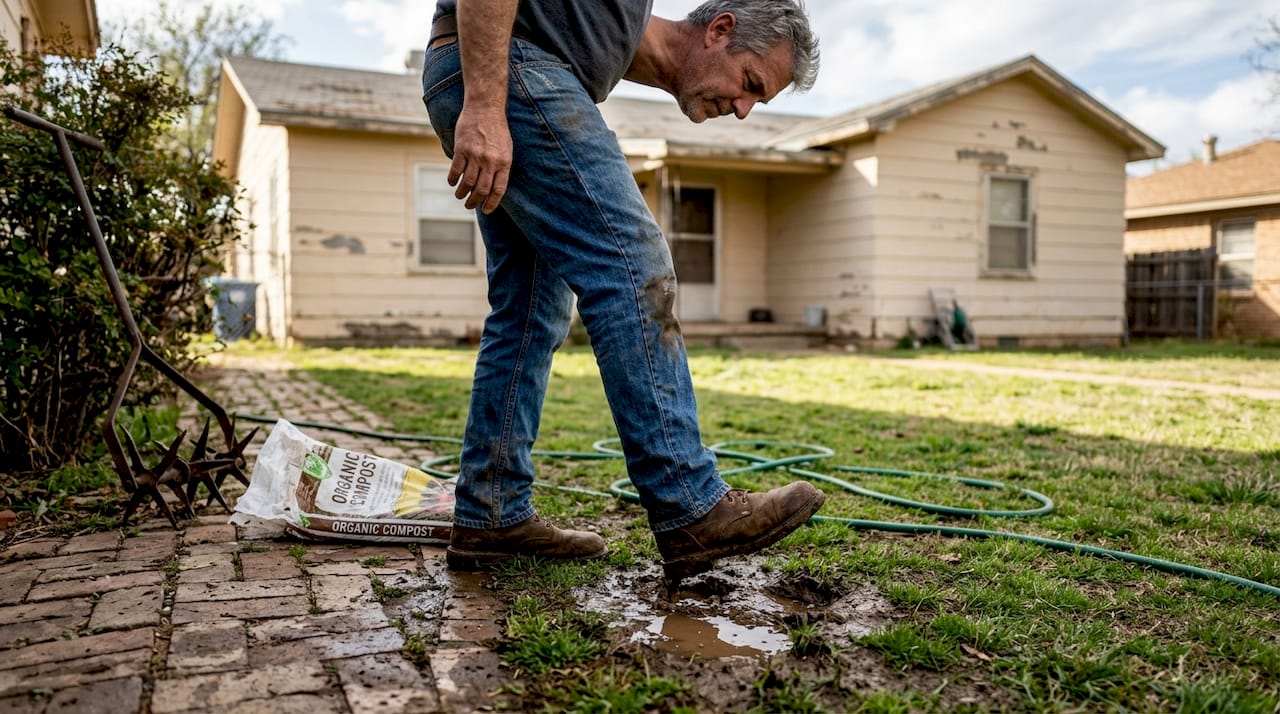
Pro Tip: Walk your yard and press your heel into the soil in a few spots. If it sinks more than half an inch easily, the ground is too soft for heavy clean-up work. Come back in a day or two.
For visual examples of what a proper clean-up looks like before and after, check out these clean-up examples. If thatch is a recurring issue in your yard, the dethatching guide covers the full process.
How seasonal clean-up restores and protects your lawn
Once the debris is gone and the soil is addressed, the real recovery begins. Clean-up creates the conditions your grass needs to grow strong roots, resist drought, and fight off disease.
Cleared debris allows sunlight to reach the soil surface, which warms the ground and signals dormant grass to start growing. Water and nutrients can now penetrate instead of running off or pooling on top of compacted ground. In a drought-prone city like Lubbock, that penetration is everything.
Dethatching is critical when thatch exceeds 0.5 inches, and aeration resolves compacted traffic areas by creating channels for air, water, and fertilizer to reach the root zone. Together, these two steps can transform a struggling lawn into one that actually thrives through summer heat.
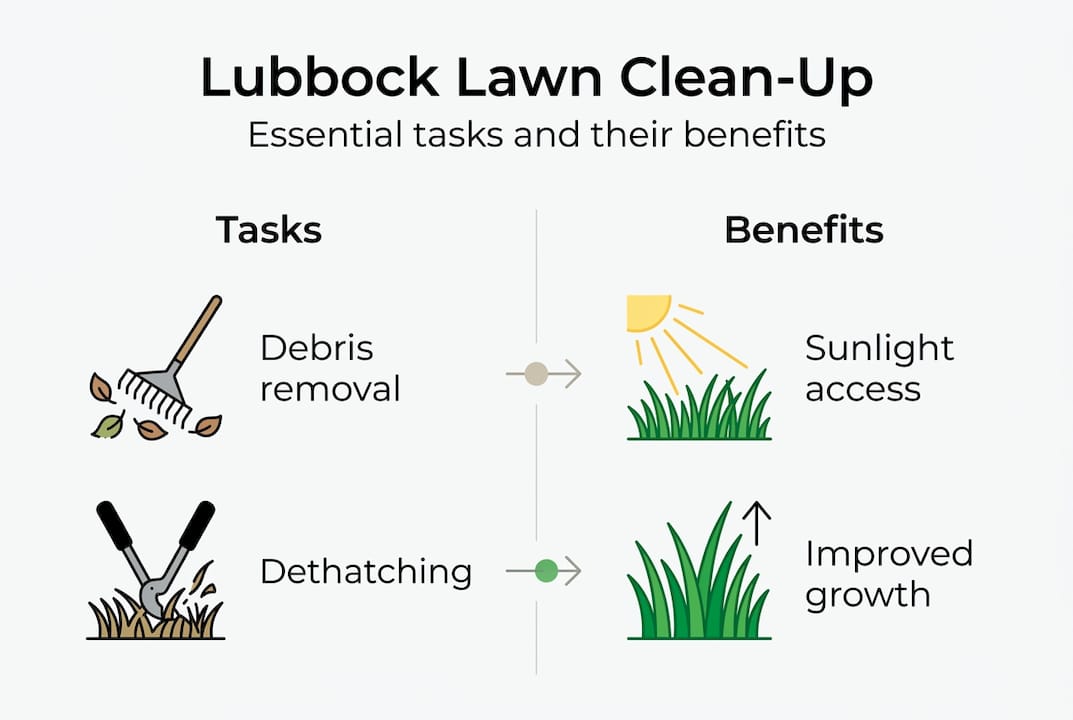
Here is a quick look at what each clean-up task does for your lawn's health:
| Clean-up task | Primary benefit | Lubbock-specific reason |
|---|---|---|
| Debris removal | Sunlight and airflow restored | Prevents pest harborage after storms |
| Dethatching | Root zone access improved | Clay soil traps thatch faster |
| Aeration | Water and nutrient absorption | Compaction is common in high-traffic yards |
| Weed control | Fewer competing plants | Lubbock weeds germinate early in spring |
| Edging and trimming | Clean boundaries maintained | Reduces overgrowth into beds and hardscapes |
Pro Tip: After a full clean-up, water deeply once rather than lightly every day. Deep watering pushes moisture down to the root zone, which trains roots to grow deeper and makes your grass far more drought-resistant over time.
For more on how aeration fits into your seasonal routine, the lawn aeration guide explains timing and technique. The lawn dethatching guide covers how to identify when dethatching is actually needed versus when it can wait.
Seasonal clean-up's connection to curb appeal and property value
A healthy lawn does more than feel good underfoot. It changes how your home looks from the street and how buyers, neighbors, and even appraisers perceive your property.
The difference between a maintained yard and a neglected one is visible within a single season. Overgrown edges, dead patches, and debris-covered beds signal that a property is not well cared for. That impression sticks. Thorough debris and pest removal reduces pest risk, which matters directly for Lubbock property value and long-term maintenance costs.
Here is how a maintained lawn compares to a neglected one over time:
| Factor | Maintained lawn | Neglected lawn |
|---|---|---|
| Curb appeal | Strong, consistent | Patchy, uninviting |
| Pest activity | Low, controlled | High, recurring |
| Water efficiency | High absorption | Runoff and waste |
| Weed pressure | Minimal | Heavy and spreading |
| Perceived property value | Higher | Lower |
The quick wins from regular seasonal clean-up include:
- Fewer weeds competing with your grass
- Smoother visits from lawn service crews
- Better community image and neighborhood pride
- Lower risk of pest infestations spreading to your home
- Reduced long-term repair and restoration costs
For ideas on how to maximize your yard's visual impact, boosting curb appeal with targeted clean-up is a great place to start. You can also explore how lawn care and property value connect in the Lubbock market specifically.
When to DIY vs. hire professional clean-up in Lubbock
Not every yard needs a professional crew, but not every homeowner has the time, tools, or physical ability to do a thorough job either. Knowing which route fits your situation saves you money and frustration.
DIY clean-up works well when:
- Your yard is small and relatively flat
- There is no significant storm damage or pest activity
- You have basic tools like a rake, edger, and leaf blower
- Your soil is in decent shape with no major compaction issues
Professional clean-up is the smarter call when:
- Your yard has heavy storm debris or fallen limbs
- You notice signs of pests, disease, or thick thatch buildup
- The soil is compacted and needs aeration equipment
- You simply do not have the time to do it right
Pest-prone and compacted yards, heavy storm debris, or thick thatch are best addressed by experienced crews who have the right equipment and know what to look for. A missed pest problem or improperly timed aeration can set your lawn back by an entire season.
The cost of hiring a professional is often offset by avoiding expensive repairs later. A crew that catches a grub infestation early, for example, saves you the cost of reseeding or resodding a damaged section.
For a full picture of what professional yard services include in Lubbock, and tips on preparing for professional help before a crew arrives, both resources are worth a read before you book.
Let Only Mow help your yard thrive season after season
If you have made it this far, you already know that seasonal clean-up is one of the highest-value things you can do for your Lubbock yard. The question is whether you want to tackle it yourself or hand it off to a team that does this every day.

Only Mow is Lubbock's locally operated lawn care team and the official vendor for the City of Lubbock. We handle seasonal clean-up, dethatching, aeration, weed control, and full yard restoration, all tailored to the specific demands of West Texas soil and weather. Whether you need a one-time clean-up before summer or a recurring maintenance plan, we make it easy to schedule and even easier to enjoy the results. Visit Only Mow's local Lubbock lawn services to get a free quote, or if you are interested in running your own lawn care operation, explore how to find a local contractor or become a contractor with our team.
Frequently asked questions
How often should I schedule seasonal lawn clean-up in Lubbock, TX?
Plan for at least twice a year, once in spring and once in fall. Lubbock's drought- and storm-prone conditions mean debris and soil issues build up faster than in milder climates.
What happens if I skip lawn clean-up for a season?
Skipping clean-up allows thatch, weeds, and pests to establish themselves. Neglect raises pest risk, thatch depth, and soil compaction, all of which become harder and more expensive to fix the longer they sit.
Is professional clean-up worth it for a small Lubbock yard?
Yes, even small yards benefit because professionals spot problems early. Expert crews handle pest and debris removal more thoroughly than most DIY efforts, saving busy homeowners time and preventing bigger issues down the road.
What is the best time to dethatch or aerate my Lubbock lawn?
Dethatch when the thatch layer exceeds 0.5 inches, and aerate yearly in compacted or high-traffic areas. Dethatching and aeration needs depend on your specific soil condition and how much foot traffic your yard gets, but spring and fall are the best windows for both.