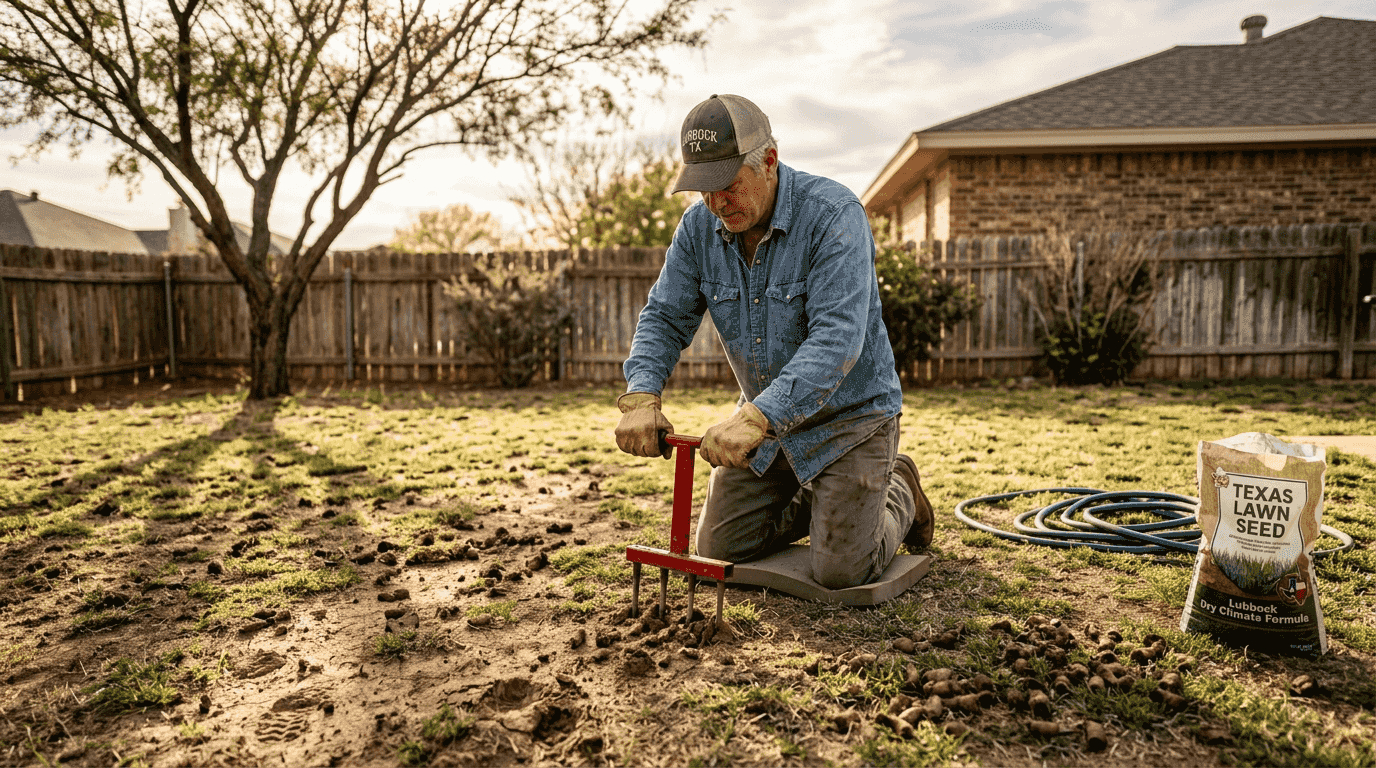
You water regularly, mow weekly, and still your Lubbock lawn looks patchy and thin. The problem often lies beneath the surface in compacted soil that chokes grass roots. Lawn aeration is a proven practice that perforates soil, allowing oxygen, water, and nutrients to reach roots, transforming struggling turf into a lush, resilient lawn that thrives in our challenging local conditions.
Table of Contents
- Understanding lawn aeration: definition and purpose
- How lawn aeration enhances soil and turf health
- Common methods of lawn aeration: core vs spike aeration
- Optimal timing and frequency for aeration in Lubbock, Texas
- Soil challenges in Lubbock that make aeration essential
- Common misconceptions about lawn aeration
- Long-term and practical benefits of regular lawn aeration
- Lawn care services in Lubbock to support aeration benefits
- Frequently asked questions
Key takeaways
| Point | Details |
|---|---|
| Aeration relieves compaction | Perforating soil improves oxygen and water flow by up to 30%, supporting healthier grass growth. |
| Core aeration is preferred | Removes soil plugs effectively in Lubbock's heavy clay, improving porosity 20-40% more than spike methods. |
| Optimal timing matters | Late spring to early summer aligns with warm-season grass growth, ensuring rapid recovery and maximum benefit. |
| Builds stronger roots | Regular aeration promotes deeper root systems that increase drought resistance and lawn durability. |
| Reduces disease risk | Better soil conditions and airflow lower lawn disease prevalence, keeping turf healthier year-round. |
Understanding lawn aeration: definition and purpose
Lawn aeration is the process of creating small holes in your soil to break up compaction. This simple yet powerful technique allows air, water, and nutrients to penetrate dense soil layers and reach grass roots where they're needed most. For Lubbock homeowners, where clay soils dominate, aeration is not optional but essential for maintaining vibrant, healthy lawns.
Compacted soil acts like a barrier, blocking the essential elements grass needs to thrive. Without adequate oxygen, beneficial soil microbes struggle to break down organic matter and release nutrients. Water pools on the surface instead of soaking in, leading to runoff and wasted irrigation. Grass roots remain shallow and weak, making lawns vulnerable to heat stress, drought, and disease.
Aeration reverses these problems by opening pathways through compacted layers. The process creates space for roots to expand deeper and stronger. It enhances the soil ecosystem, supporting microbial life that naturally enriches the ground. For anyone following a Lubbock lawn care checklist 2026 healthier lawns, aeration ranks as a foundational practice.
Key purposes of lawn aeration include:
- Reducing soil compaction to improve root penetration
- Enhancing water infiltration and reducing surface runoff
- Increasing oxygen availability for root respiration and microbial activity
- Improving nutrient uptake efficiency for healthier grass
- Promoting thicker, more resilient turf that withstands local climate stresses
Regular aeration directly impacts your property's curb appeal and value. Healthy, well-maintained lawns contribute significantly to lawn care Lubbock property retention value, making this practice a smart investment. Whether you manage lawn care yourself or use professional Lubbock lawn care & mowing services, understanding aeration's role helps you make informed decisions for long-term lawn health.
How lawn aeration enhances soil and turf health
Aeration works at the biological and physical levels to transform soil conditions. When you remove compaction, you create an environment where grass can truly flourish. The benefits extend far beyond surface appearance, reaching deep into the root zone where real lawn health begins.
Oxygen is critical for root respiration and energy production in grass plants. Compacted soil traps carbon dioxide and limits oxygen exchange, essentially suffocating roots. Aeration boosts soil oxygen levels by up to 30%, creating conditions where roots can breathe and grow vigorously. This increase in oxygen availability triggers a cascade of positive effects throughout your lawn.
Soil microbes are the unsung heroes of lawn health. These beneficial organisms decompose thatch, fix nitrogen, and break down organic matter into forms grass can absorb. They require oxygen to function efficiently. When aeration increases microbial activity supporting nutrient cycling, your soil becomes a living factory that continuously feeds your lawn naturally.
Enhanced nutrient availability means grass gets more from fertilizers and organic matter already in the soil. Roots absorb nutrients more efficiently when soil structure is loose and porous. Water carries dissolved nutrients deeper into the root zone instead of running off or evaporating. This efficiency reduces the need for excessive fertilization, saving money and protecting the environment.
Root development is the foundation of a resilient lawn. Aeration encourages roots to grow deeper, sometimes reaching 8 to 12 inches into the soil. Deep roots access moisture and nutrients that shallow roots miss, providing a buffer during drought periods. Stronger root systems anchor grass firmly, preventing erosion and creating the thick, lush appearance homeowners desire.
Key benefits of enhanced soil health through aeration include:
- Increased root depth and density for better drought tolerance
- Improved water retention in the root zone, reducing irrigation needs
- Enhanced nutrient uptake efficiency, maximizing fertilizer effectiveness
- Greater resistance to pests, diseases, and environmental stresses
- Faster recovery from damage or wear, maintaining consistent appearance
Pro Tip: Schedule aeration right before applying fertilizer. The holes allow nutrients to penetrate deeper into the soil, reaching roots directly and reducing waste from surface runoff.
Professional lawn mowing and maintenance services often combine aeration with other treatments for comprehensive care. This integrated approach ensures every aspect of your lawn receives attention, creating optimal conditions for year-round health and beauty.
Common methods of lawn aeration: core vs spike aeration
Choosing the right aeration method makes a significant difference in results. Two primary techniques dominate the industry, each with distinct processes, benefits, and limitations. Understanding these differences helps you select the best approach for Lubbock's soil conditions.
Core aeration, also called plug aeration, uses hollow tines to extract cylindrical plugs of soil from your lawn. These plugs, typically 2 to 3 inches long and half an inch in diameter, are left on the surface where they break down naturally. The holes created provide immediate relief from compaction and create space for roots to expand.
Spike aeration uses solid tines or spikes to puncture the soil without removing any material. While simpler and often cheaper, this method can actually worsen compaction in heavy soils. The tines push soil particles together around each hole, creating dense walls that limit the benefits. This effect is particularly problematic in clay soils common throughout Lubbock.
Research shows core aeration improves soil porosity 20-40% more effectively than spike methods. The removed plugs allow for genuine expansion and restructuring of soil. Air and water move freely through the holes without obstruction. For homeowners dealing with compacted clay, core aeration is the clear winner.
| Feature | Core Aeration | Spike Aeration |
|---|---|---|
| Process | Removes soil plugs using hollow tines | Punctures soil with solid spikes |
| Compaction relief | High, creates true openings in soil | Low to moderate, may increase compaction |
| Best for | Heavy clay soils, high-traffic areas | Light soils, minimal compaction |
| Porosity improvement | 20-40% increase | 5-15% increase |
| Cost | Higher, requires specialized equipment | Lower, simpler tools needed |
| Frequency needed | Once or twice annually | May need more frequent application |
Core aeration is particularly important for Lubbock lawns due to our soil composition. Clay particles pack tightly, creating dense layers that restrict root growth and water movement. Only by physically removing material can you truly break up these layers. The Lubbock lawn care checklist 2026 healthier lawns emphasizes core aeration as a priority task.
Key considerations when choosing an aeration method:
- Soil type: Heavy clay demands core aeration for effective results
- Compaction level: Severe compaction requires plug removal, not just puncturing
- Lawn usage: High-traffic areas benefit most from core aeration
- Equipment access: Core aerators are heavier but more effective
- Budget: Core aeration costs more but delivers superior long-term value
Pro Tip: If you see soil plugs on your lawn after aeration, don't remove them. They break down within a few weeks, returning organic matter and nutrients to the soil naturally.
Optimal timing and frequency for aeration in Lubbock, Texas
Timing aeration correctly maximizes benefits and minimizes stress on your lawn. Grass type, growth patterns, and local climate all influence when you should schedule this important maintenance task. For Lubbock homeowners, understanding these factors ensures your lawn recovers quickly and thrives.
Warm-season grasses dominate Lubbock lawns, including bermudagrass, buffalograss, and zoysiagrass. These varieties grow actively during late spring through summer when soil temperatures consistently exceed 65 degrees Fahrenheit. Aerating during this active growth phase allows grass to heal quickly, filling in the holes and taking advantage of improved soil conditions immediately.
Late spring to early summer, typically May through June, represents the ideal aeration window. Grass is growing vigorously, roots are expanding, and the plant has maximum energy reserves to recover from the temporary disturbance. Soil moisture is usually adequate without being waterlogged, making it easier to pull clean plugs without damaging equipment or creating muddy conditions.
Avoiding dormant periods is critical. Aerating when grass is dormant in winter or during summer heat stress slows recovery dramatically. The lawn cannot quickly fill in holes or take advantage of improved conditions. This delay leaves your turf vulnerable to weeds, disease, and further stress.
Frequency depends on soil compaction severity and lawn usage. Most Lubbock lawns benefit from annual aeration. High-traffic areas or lawns with severe clay compaction may require twice yearly treatments, once in late spring and again in late summer. Less used areas with lighter soil might maintain health with aeration every other year.
Key timing and frequency guidelines:
- Primary aeration window: Late May through early July for warm-season grasses
- Secondary window (if needed): Late August through September for severely compacted areas
- Frequency: Annually for most lawns, biannually for high-traffic or heavily compacted areas
- Avoid: Winter dormancy, extreme heat periods, and drought stress times
- Coordinate: Schedule before fertilization and overseeding for maximum benefit
Regular aeration maintains the improvements you achieve, preventing compaction from returning to problematic levels. This proactive approach is more effective and less expensive than waiting until your lawn shows severe stress symptoms. It also supports broader property maintenance goals related to lawn care Lubbock 2026 retention and value.
Soil challenges in Lubbock that make aeration essential
Lubbock's soil presents unique challenges that make aeration more than just beneficial, but truly necessary for lawn success. Understanding these local conditions helps explain why aeration should be a non-negotiable part of your lawn care routine.
The region's soil is predominantly heavy clay, characterized by tiny particles that pack together tightly. This dense structure creates a nearly impermeable barrier when dry and a sticky, waterlogged mess when wet. Neither condition supports healthy grass growth. Clay soils restrict root penetration, limit water movement, and create anaerobic conditions that harm beneficial organisms.
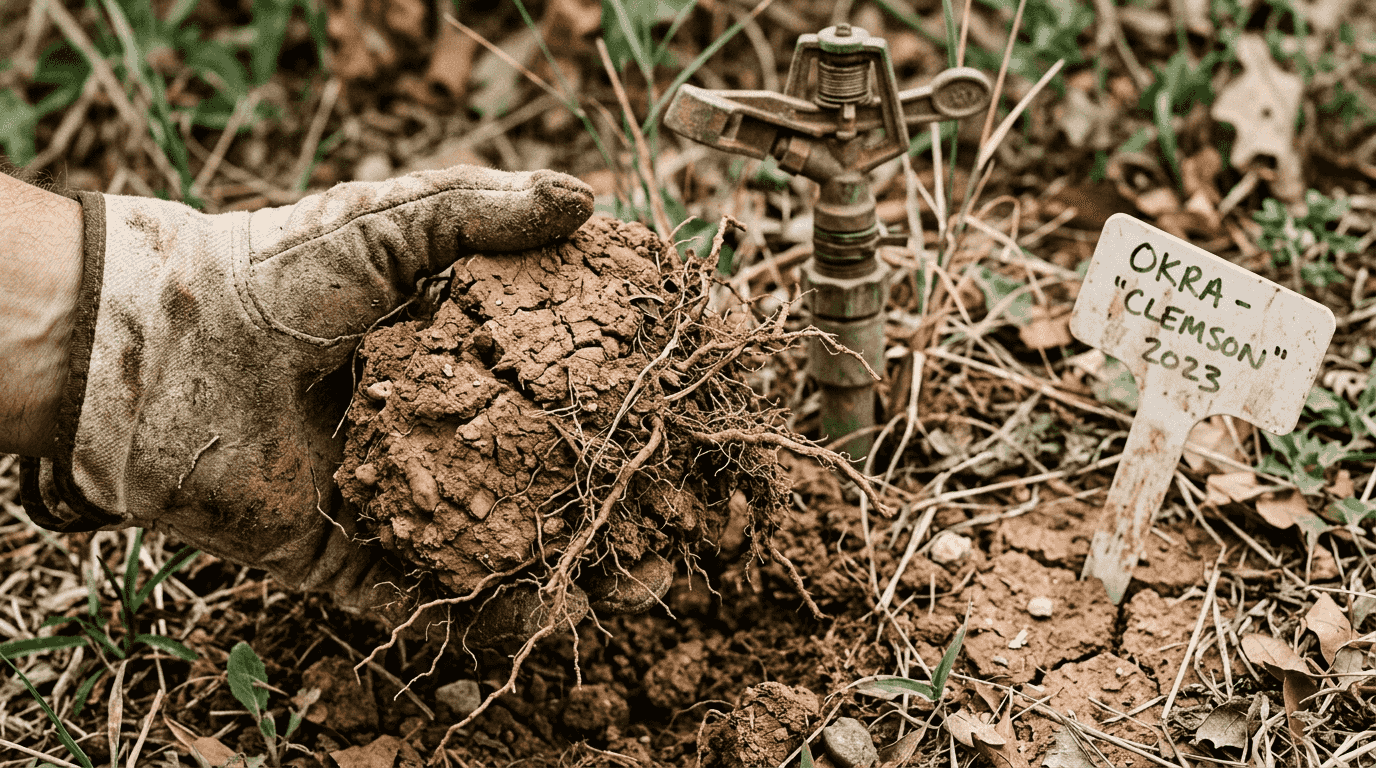
Compaction levels in Lubbock clay soils reach extreme levels, particularly in established lawns and high-traffic areas. Clay soils in Lubbock have compaction levels up to 50% higher than sandy soils found in other regions. This compaction creates a cycle of declining lawn health: poor drainage leads to surface pooling, shallow roots make grass vulnerable to stress, and weak turf invites weeds and pests.
Water infiltration rates in compacted clay can be as low as 0.1 inches per hour, compared to 2 inches per hour in healthy, aerated soil. This dramatic difference means irrigation water runs off instead of soaking in, wasting resources and leaving grass thirsty despite regular watering. Aeration breaks up these dense layers, creating channels for water to penetrate deeply.
Nutrient availability suffers in compacted soil. Even when you apply quality fertilizer, nutrients cannot reach roots effectively. They either wash away with runoff or remain bound in the clay matrix where grass cannot access them. This inefficiency forces homeowners to apply more fertilizer than necessary, increasing costs and environmental impact.
"Understanding your soil is the first step to a healthy lawn. In Lubbock, where clay dominates, regular aeration is not optional but essential for breaking the compaction cycle and creating conditions where grass can truly thrive year after year."
Local climate factors compound soil challenges. Hot, dry summers stress lawns already struggling with poor root systems. Occasional heavy rains overwhelm compacted soil, causing erosion and nutrient loss. Wind deposits fine particles that further clog soil pores. Aeration provides the structural relief needed to help lawns withstand these environmental pressures.
Without regular aeration, Lubbock lawns face a losing battle against soil conditions. Grass becomes thin and weak, requiring constant intervention to maintain even marginal appearance. Disease and pest problems increase as stressed plants lose their natural defenses. The cumulative effect is a lawn that consumes time and money while delivering disappointing results.
Common misconceptions about lawn aeration
Several myths about aeration persist among homeowners, leading to missed opportunities and ineffective practices. Clearing up these misconceptions ensures you approach aeration with accurate expectations and proper techniques.
Myth one: Aeration is only a fall task. Many believe fall is the only appropriate time for aeration, a guideline that applies primarily to cool-season grasses in northern climates. For Lubbock's warm-season grasses, spring and early summer are optimal. Aerating in fall when warm-season grass is preparing for dormancy slows recovery and provides minimal benefit.
Myth two: Any aeration method works equally well. As discussed earlier, spike aeration can actually worsen compaction in clay soils by pushing particles together. Core aeration, which removes soil plugs, is far more effective in Lubbock conditions. Choosing the wrong method wastes time and money while potentially harming your lawn.
Myth three: Aeration damages lawns and increases disease risk. Properly timed aeration performed during active growth does not harm grass. In fact, improved air circulation and reduced moisture stress actually lower disease risk. Healthier grass with deeper roots is more resistant to pathogens and recovers faster from any damage.
Myth four: You only need to aerate severely damaged lawns. Waiting until your lawn shows severe stress means the problem has already caused significant damage. Preventive aeration maintains healthy soil structure, preventing compaction from reaching crisis levels. Regular maintenance is always more effective and less expensive than emergency intervention.
Myth five: Leaving soil plugs on the lawn looks bad and harms grass. Those small cylinders of soil left behind by core aeration break down naturally within two to four weeks. They return organic matter and soil microbes to your lawn, actually improving overall health. Removing them wastes valuable material and creates unnecessary work.
Key facts about aeration to remember:
- Spring aeration suits warm-season grasses better than fall treatment
- Core aeration is essential for heavy clay soils, not just any method
- Aeration reduces disease risk by improving plant health and soil conditions
- Preventive aeration is more effective than waiting for visible problems
- Soil plugs are beneficial and should remain on the lawn to decompose naturally
Understanding these realities helps you make informed decisions about your lawn care strategy. Aeration is a powerful tool when applied correctly, but misconceptions can lead to wasted effort or missed opportunities for improvement.
Long-term and practical benefits of regular lawn aeration
Consistent aeration delivers cumulative benefits that compound over time, transforming struggling lawns into resilient, beautiful landscapes. These advantages extend beyond immediate appearance improvements to fundamental changes in soil structure and grass health.
Water infiltration improves dramatically with regular aeration. Studies show aeration can increase water absorption by 50% or more, meaning less runoff and more efficient irrigation. Your lawn uses water more effectively, reducing consumption and costs while maintaining better hydration during dry periods. This efficiency is particularly valuable in Lubbock's semi-arid climate where water conservation matters.
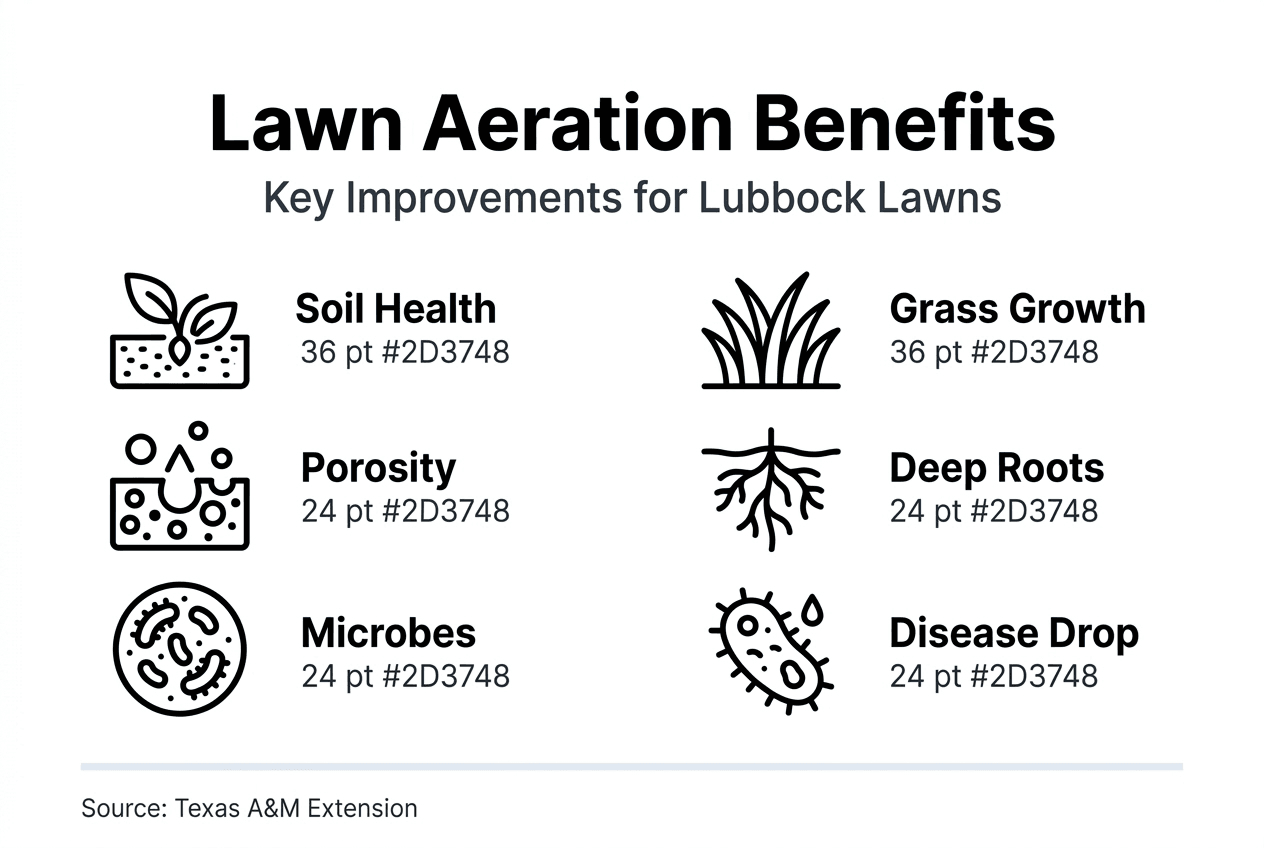
Root depth increases substantially with repeated aeration cycles. Measurements show turfgrass root systems can grow more than 20% deeper after consistent aeration over multiple seasons. Deeper roots access moisture and nutrients that shallow systems miss, providing a buffer against drought and heat stress. This root development creates a stronger, more stable lawn that withstands heavy use and environmental challenges.
Disease prevalence drops when soil conditions improve. Research indicates regular aeration can lower lawn disease occurrence by up to 25% by enhancing air circulation, reducing surface moisture, and supporting stronger plant immune responses. Healthier grass naturally resists fungal infections, insect damage, and other common problems that plague poorly maintained lawns.
Thatch accumulation slows when soil biology is active and balanced. Beneficial microbes that thrive in well-aerated soil break down thatch naturally, preventing the thick, spongy layer that blocks water and harbors pests. This natural decomposition process maintains healthy thatch levels without requiring aggressive mechanical removal.
Key long-term benefits of consistent aeration include:
- Improved water efficiency, reducing irrigation needs by up to 30%
- Stronger, deeper root systems that increase drought tolerance dramatically
- Reduced fertilizer requirements due to better nutrient cycling and uptake
- Lower disease and pest pressure from healthier, more resilient grass
- Enhanced soil structure that maintains improvements between aeration cycles
- Thicker, lusher lawn appearance that increases property value and curb appeal
Pro Tip: Track your lawn's progress after each aeration by noting changes in grass color, density, and water needs. This documentation helps you adjust frequency and timing for optimal results specific to your property.
The cumulative effect of these benefits creates a positive feedback loop. Better soil supports healthier grass, which develops stronger roots, which further improves soil structure. This cycle, once established through regular aeration, makes lawn maintenance easier and more rewarding over time. For homeowners preparing for professional service, understanding these benefits helps you appreciate the value of practices outlined in guides like how to prepare for lawn service.
Lawn care services in Lubbock to support aeration benefits
Implementing effective aeration requires proper equipment, timing, and technique. While homeowners can tackle this task independently, professional services offer expertise and efficiency that maximize results. Only Mow provides comprehensive lawn care solutions tailored specifically to Lubbock's challenging conditions.

Professional aeration services include soil assessment to determine compaction severity and optimal treatment timing. Experts use commercial-grade core aerators that penetrate deeper and more uniformly than rental equipment. They coordinate aeration with fertilization, overseeding, and irrigation adjustments to create an integrated care program that addresses your lawn's specific needs.
Only Mow's team understands the unique challenges of Lubbock's clay soils and semi-arid climate. They schedule treatments during optimal windows for warm-season grasses, ensuring rapid recovery and maximum benefit. Their experience working as the official vendor for the City of Lubbock demonstrates their expertise and reliability in maintaining healthy turf under local conditions.
Comprehensive Lubbock lawn care & mowing services extend beyond aeration to include regular mowing, edging, fertilization, and seasonal treatments. This holistic approach ensures every aspect of lawn health receives attention, creating the lush, resilient turf homeowners desire. Easy online scheduling and responsive customer service make maintaining your lawn convenient and stress-free.
For lawn care professionals seeking partnership opportunities, the landscaper near Lubbock TX program offers resources and support for growing your business while serving the community effectively.
Frequently asked questions
What is lawn aeration and why is it important?
Lawn aeration perforates soil to reduce compaction and improve airflow, water absorption, and nutrient penetration. It's vital because compacted soil suffocates grass roots, limiting growth and resilience. Aeration creates pathways for essential elements to reach roots, promoting vigorous, healthy turf that withstands stress.
How often should I aerate my lawn in Lubbock?
Most Lubbock lawns benefit from annual aeration in late spring when warm-season grasses grow actively. Heavily compacted areas or high-traffic zones may require twice yearly treatment. Regular aeration prevents compaction from returning to problematic levels, maintaining healthy soil structure year after year.
Can I perform lawn aeration myself or should I hire a professional?
Homeowners can rent core aerators and perform aeration independently if familiar with proper techniques and timing. However, professionals ensure correct method selection, optimal scheduling, and uniform coverage, especially important for Lubbock's challenging clay soils. They also coordinate aeration with other treatments for comprehensive care.
Is aeration beneficial during drought conditions common in Lubbock?
Aeration significantly helps lawns survive drought by improving water infiltration and promoting deeper root growth. Better absorption means less runoff and more efficient moisture use. Deeper roots access water reserves that shallow systems miss, providing drought resistance even during extended dry periods common in West Texas.