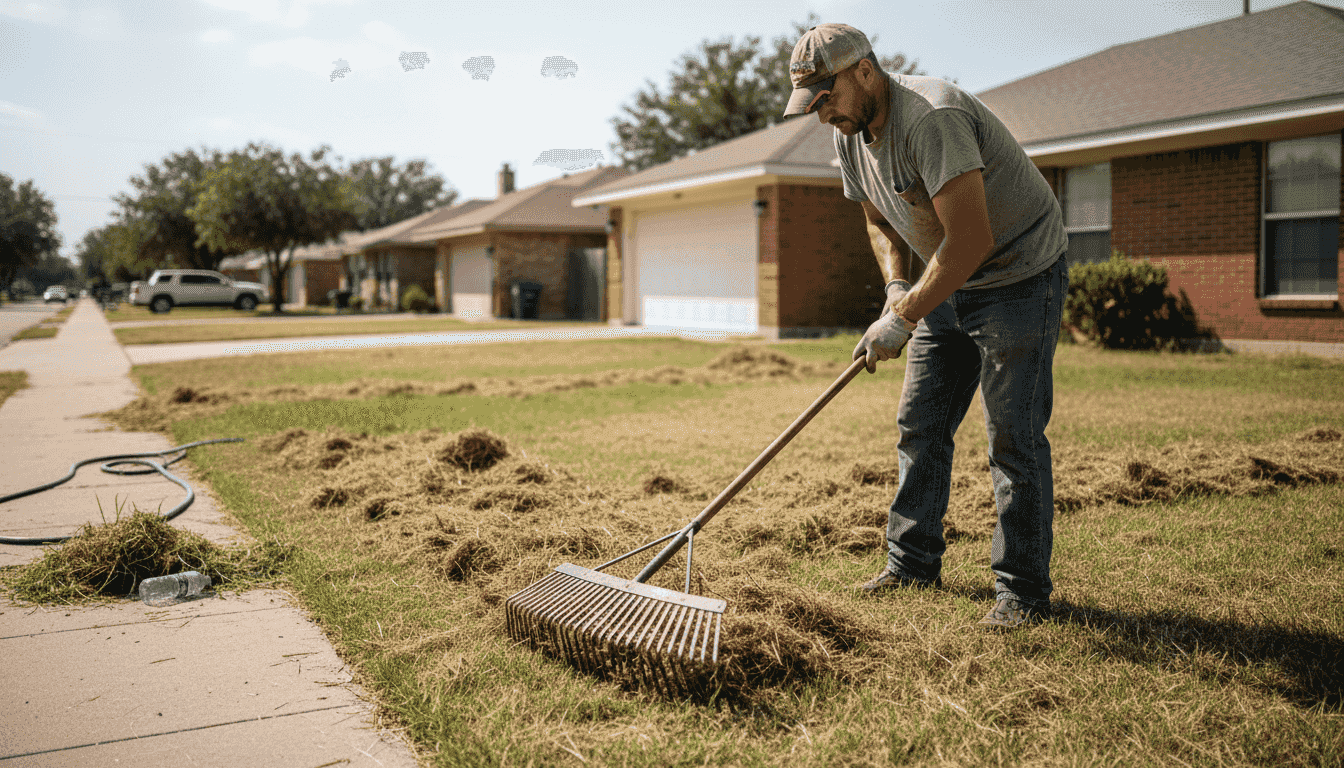
Many Lubbock homeowners avoid dethatching because they fear it will damage their lawn. This misconception keeps yards from reaching their full potential. In reality, proper dethatching is one of the most beneficial services you can provide for your grass, especially in our local climate. Dethatching removes dead organic matter that blocks water and nutrients from reaching roots. This guide will walk you through what dethatching is, when your lawn needs it, how to do it correctly, and how to maintain your yard afterward for lasting health and beauty.
Table of Contents
- Understanding thatch: what it is and why it matters
- When and how to dethatch your lawn in Lubbock: timing and methods
- Dethatching compared: lawn aeration and other techniques for healthier grass
- Maintaining a healthy lawn after dethatching: best practices for Lubbock homeowners
- Enhance your Lubbock lawn with professional dethatching services
- Frequently asked questions
Key takeaways
| Point | Details |
|---|---|
| Thatch removal benefits | Dethatching eliminates the barrier preventing water, air, and nutrients from reaching grass roots. |
| Healthy thatch threshold | A thatch layer under 0.5 inches is beneficial, but anything thicker requires removal. |
| Timing matters | Most Lubbock lawns benefit from dethatching every 2-3 years during early spring or fall. |
| Tool selection | Manual rakes work for small areas while power dethatchers handle larger lawns efficiently. |
| Warning signs | Brown patches, spongy soil, and slow growth indicate your lawn needs dethatching soon. |
Understanding thatch: what it is and why it matters
Thatch is the layer of dead grass stems, roots, and organic debris that accumulates between your soil surface and the living grass blades above. This material builds up naturally as grass grows, sheds old tissue, and decomposes. A thin thatch layer actually benefits your lawn by providing insulation against temperature extremes and helping retain soil moisture during Lubbock's hot, dry summers.
The problem starts when thatch exceeds half an inch in thickness. At this point, the layer becomes a barrier that prevents essential resources from reaching your grass roots. Water runs off instead of penetrating the soil. Fertilizer sits on top of the thatch rather than feeding roots below. Air circulation decreases, creating conditions where disease and pests thrive.
Several factors accelerate thatch buildup in Lubbock yards:
- Soil compaction from foot traffic or heavy clay content
- Overfertilization that stimulates excessive top growth
- Certain grass types like Bermuda that produce more organic matter
- Infrequent mowing that allows too much material to accumulate
- Poor soil drainage that slows natural decomposition
You can identify excessive thatch by examining your lawn closely. Push your finger into the grass. If you feel a spongy, bouncy layer before reaching firm soil, you likely have too much thatch. Grass may grow slowly despite regular watering and feeding. Brown patches might appear even when you maintain consistent lawn care practices in Lubbock.
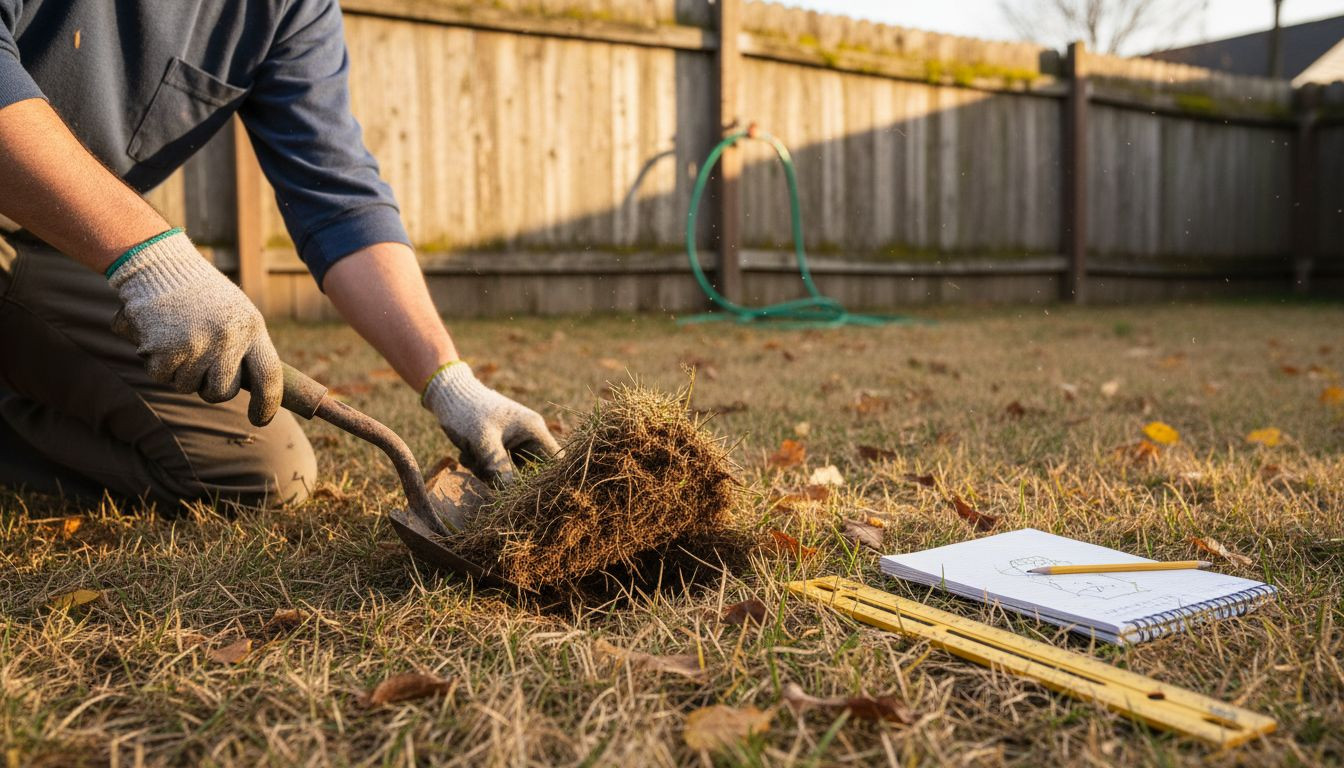
Pro Tip: Check your thatch thickness twice a year by cutting a small wedge from your lawn with a spade and measuring the brown layer between green grass and soil.
Monitoring thatch regularly helps you catch problems before they severely impact lawn health. Lubbock's climate, with its alkaline soil and temperature swings, makes thatch management especially important. The dry conditions slow natural decomposition, meaning organic matter accumulates faster than it breaks down. Understanding this dynamic helps you maintain the right balance for a thriving yard.
When and how to dethatch your lawn in Lubbock: timing and methods
Before you start dethatching, measure your thatch layer accurately. Cut a small triangular section from your lawn about 3 inches deep. Look at the cross section and measure the brown, matted layer between the green grass blades and the soil. If this layer measures between 0.5 and 1 inch, your lawn needs dethatching.
Several warning signs indicate it's time to act. Your lawn feels spongy when you walk on it. Grass grows slowly despite adequate water and fertilizer. Brown or bare patches appear without obvious cause. Water pools on the surface instead of soaking in. These symptoms all point to excessive thatch blocking essential resources.
For small yards or light thatch buildup, a manual dethatching rake works perfectly. This tool features curved metal tines that dig into the thatch layer and pull it up as you rake. The process is labor intensive but gives you precise control. You can target problem areas without disturbing healthy sections of lawn.
Power dethatchers, also called vertical mowers or verticutters, handle larger areas efficiently. These machines use rotating blades or tines that cut through thatch and pull it to the surface. They save significant time and effort on properties over 1,000 square feet. Most dethatching equipment requires proper preparation to avoid damaging your lawn.
Timing your dethatching project correctly ensures the best results. In Lubbock, early spring works well for warm season grasses like Bermuda when they're just starting active growth. This timing gives grass the entire growing season to recover and fill in. Early fall provides another good window, allowing grass to heal before winter dormancy while temperatures remain moderate.
Follow these steps for successful dethatching:
- Mow your lawn shorter than usual, about 1 to 1.5 inches high
- Water the lawn lightly the day before to soften soil without creating mud
- Make one pass with your dethatching tool in one direction
- Make a second pass perpendicular to the first for thorough coverage
- Rake up all removed thatch material and dispose of it properly
- Water deeply and apply fertilizer to help grass recover quickly
Pro Tip: Set power dethatcher blades to penetrate only 0.5 inches into soil to remove thatch without damaging grass roots or creating bare spots that invite weeds.
Most Lubbock lawns benefit from dethatching every 2-3 years, though frequency varies based on grass type and maintenance practices. Bermuda grass often requires more frequent dethatching than buffalo grass. Heavily fertilized lawns accumulate thatch faster than those receiving moderate feeding. Following the Lubbock lawn care checklist helps you schedule dethatching at optimal intervals.
Dethatching compared: lawn aeration and other techniques for healthier grass
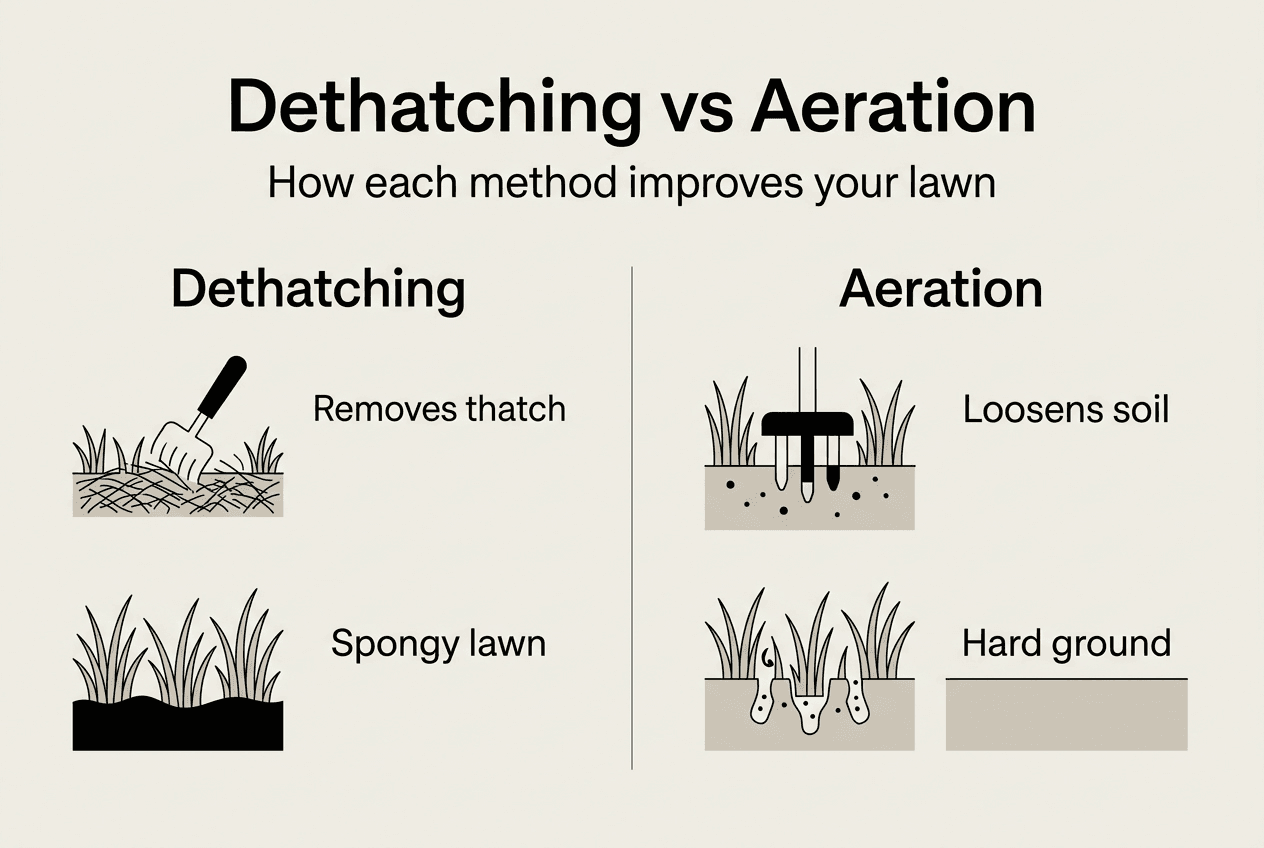
Homeowners often confuse dethatching with lawn aeration, but these services address different problems. Dethatching removes organic debris that accumulates above the soil surface. Aeration creates holes in compacted soil to improve root penetration and resource movement. Both services improve lawn health, but they work in distinct ways.
This comparison clarifies when to use each technique:
| Factor | Dethatching | Aeration |
|---|---|---|
| Primary goal | Remove dead organic matter layer | Relieve soil compaction |
| Tools used | Rake or vertical mower with blades | Core aerator with hollow tines |
| What it removes | Thatch layer above soil | Soil plugs from below surface |
| Best timing | Early spring or fall | Growing season when grass recovers quickly |
| Frequency needed | Every 2-3 years typically | Annually for compacted soil |
| Effect on grass | Temporarily stressful but improves access | Minimal stress, immediate benefits |
Beyond dethatching and aeration, several complementary practices maintain lawn health. Regular mowing at the correct height prevents excessive organic matter buildup. Proper fertilization feeds grass without stimulating overgrowth that accelerates thatch formation. Overseeding after dethatching fills in thin areas and improves lawn density. Core aeration following dethatching maximizes the impact of both services.
You might need both dethatching and aeration if your lawn shows multiple symptoms. Spongy, thick thatch combined with hard, compacted soil creates a double barrier to healthy growth. In this situation, dethatch first to remove the organic layer, then aerate to address soil compaction. This combination delivers maximum lawn health benefits.
Pro Tip: Schedule aeration and dethatching at least three weeks apart to avoid overwhelming your grass with too much stress at once, giving it time to recover between treatments.
Some situations call for dethatching alone. If your soil drains well and feels relatively soft but you notice thatch buildup, dethatching solves the problem without unnecessary aeration. Conversely, hard soil with minimal thatch responds better to aeration alone. Understanding your specific lawn conditions helps you choose the right service. The lawn aeration guide for Lubbock provides detailed information about when aeration makes sense for your property.
Maintaining a healthy lawn after dethatching: best practices for Lubbock homeowners
Your lawn needs special attention immediately after dethatching to recover quickly and fully. The process temporarily stresses grass by removing protective organic matter and potentially disturbing shallow roots. Following proper post-dethatching care ensures your yard bounces back stronger and healthier than before.
Water deeply right after dethatching to help grass roots reestablish and encourage new growth. Apply about 1 inch of water, which typically means running sprinklers for 30 to 45 minutes depending on your system. Continue watering regularly for the next two weeks, providing moisture every 2 to 3 days. Lubbock's dry climate makes consistent watering especially important during the recovery period.
Fertilization feeds recovering grass and accelerates new growth to fill in any thin spots. Apply a balanced fertilizer with equal parts nitrogen, phosphorus, and potassium within 24 hours of dethatching. This timing gives grass the nutrients it needs exactly when it can use them most effectively. Choose a slow release formula to provide steady feeding over several weeks rather than a quick burst that might stress already vulnerable grass.
Mowing requires extra care on recently dethatched lawns. Wait at least 10 days before the first mowing to give grass time to recover. When you do mow, raise your blade height by half an inch above your normal setting. Remove no more than one third of the grass blade length. Dull mower blades tear grass rather than cutting cleanly, so sharpen blades before mowing dethatched areas.
Follow these maintenance priorities after dethatching:
- Water deeply immediately and maintain consistent moisture for two weeks
- Apply balanced fertilizer within 24 hours to feed recovering grass
- Keep foot traffic minimal for 10 to 14 days while grass reestablishes
- Mow at a higher setting once grass reaches 3 inches tall
- Overseed thin areas if needed to improve lawn density
- Monitor for weeds and address them promptly before they establish
Several common mistakes can undermine your dethatching benefits. Avoid these pitfalls:
- Dethatching during extreme heat or drought when grass can't recover
- Applying too much fertilizer that burns stressed grass
- Mowing too soon before roots reestablish
- Neglecting watering during the critical recovery period
- Using herbicides immediately after dethatching on vulnerable grass
Preventing future thatch buildup maintains the health you've restored. Mow regularly at the correct height for your grass type. Avoid overfertilizing, which stimulates excessive growth. Core aerate annually if you have heavy clay soil. These practices keep thatch at healthy levels between dethatching services. Following spring lawn care tips for Lubbock helps you maintain optimal lawn health year round.
Schedule periodic thatch checks every six months by cutting a small lawn section and measuring the organic layer. This monitoring helps you catch problems early before they require aggressive treatment. When you notice thatch approaching half an inch thickness, you can plan your next dethatching service at the optimal time. Proactive monitoring combined with proper maintenance keeps your Lubbock lawn healthy, green, and beautiful with the right lawn services.
Enhance your Lubbock lawn with professional dethatching services
While DIY dethatching works for small properties, professional services deliver superior results for most homeowners. Expert technicians understand exactly how deep to set equipment blades for your specific grass type and soil conditions. They complete the job efficiently without the physical strain or equipment rental costs you'd face doing it yourself.
Only Mow brings professional dethatching expertise to Lubbock homeowners who want healthier, more attractive lawns. Our team uses commercial grade equipment that removes thatch thoroughly while protecting your grass. We schedule services at optimal times based on local weather patterns and your lawn's specific needs. Beyond dethatching, we offer complete lawn care solutions including mowing, fertilization, and seasonal maintenance. Visit Only Mow to learn how our services keep your yard looking its best year round, or explore our professional landscaper services for comprehensive lawn care solutions.
Frequently asked questions
Is dethatching necessary for all lawn types?
Not all grass types accumulate thatch at the same rate. Bermuda grass and other warm season varieties common in Lubbock produce more organic matter and typically need dethatching every 2 to 3 years. Buffalo grass and other low maintenance types rarely require dethatching. Test your thatch thickness rather than following a rigid schedule, since individual lawn conditions vary based on soil, fertilization, and maintenance practices.
How do I know if my lawn in Lubbock needs dethatching?
Your lawn shows several clear signs when thatch becomes excessive. The ground feels spongy or bouncy when you walk on it. Grass grows slowly despite regular watering and feeding. Brown patches appear without obvious disease or pest damage. Water pools on the surface instead of soaking in quickly. Cut a small section of your lawn and measure the brown layer between grass and soil; anything over half an inch indicates dethatching time.
What are the best times of year to dethatch in Lubbock?
Early spring works perfectly for Bermuda and other warm season grasses just as they begin active growth, typically late March through April in Lubbock. Early fall provides another excellent window, usually September through early October, when temperatures moderate but grass still grows actively. Avoid dethatching during summer heat stress or winter dormancy when grass can't recover quickly. Your specific timing depends on grass type and current weather patterns.
Can I dethatch my lawn myself or should I hire a pro?
Small lawns under 1,000 square feet with light thatch respond well to manual dethatching using a specialized rake. This approach gives you complete control and costs only the tool price. Larger properties or lawns with heavy thatch accumulation benefit from professional power dethatching equipment and expertise. Professionals complete the job faster, achieve more thorough results, and understand proper blade depth settings that remove thatch without damaging grass roots or creating bare spots that invite weeds.