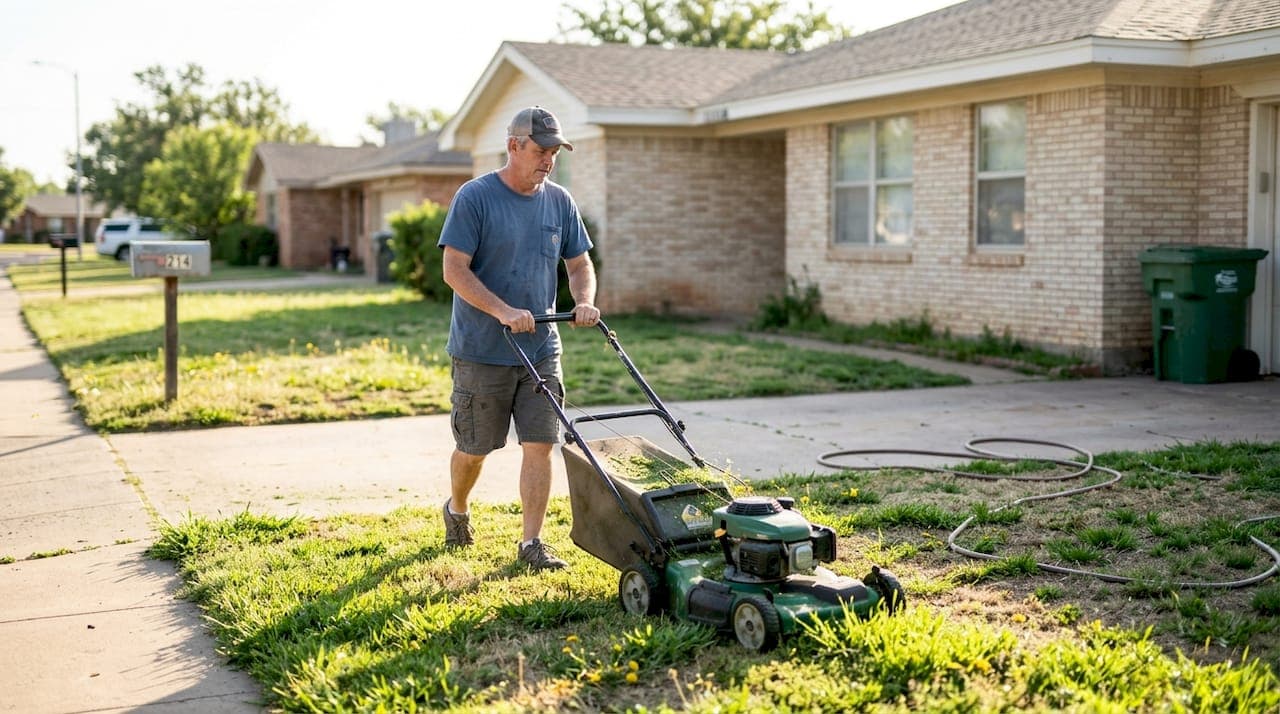
Most Lubbock homeowners think a weekly mow is all it takes to keep a yard looking sharp. That assumption costs them every summer. Between the relentless West Texas heat, sandy soil, and winds that strip moisture faster than you can replace it, lawn care requires a multi-step approach that goes well beyond pushing a mower around. This article breaks down what real lawn care means, which tasks matter most in Lubbock's climate, how to fix the most common yard problems, and when it makes sense to call in a professional.
Table of Contents
- What does lawn care really mean?
- Core components of lawn care: What every yard needs
- Lawn care in Lubbock: Adapting to the local climate
- Fixing common lawn problems: From bare patches to chronic weeds
- DIY or hire a pro? Making the right choice in Lubbock
- Get help with your Lubbock lawn care
- Frequently asked questions
Key Takeaways
| Point | Details |
|---|---|
| Lawn care defined | It includes mowing, watering, fertilizing, aerating, and controlling weeds to keep your grass healthy year-round. |
| Local climate matters | Lubbock’s dry heat means you need warm-season grasses and careful watering to avoid costly mistakes. |
| Routine is key | Following a reliable schedule for mowing, fertilizing, and aeration delivers the healthiest results. |
| Prevent, don’t treat | A thick, healthy lawn is your best defense against weeds and pests, often reducing the need for chemicals. |
| Pros add value | Professional lawn care can save time, boost curb appeal, and solve problems unique to Lubbock yards. |
What does lawn care really mean?
Lawn care is not just mowing. It is the full set of practices that keep your grass healthy, dense, and attractive through every season. That includes watering, fertilizing, aerating, controlling weeds, and managing pests. When you skip any of these, the gaps show up fast, especially in Lubbock where the environment is already working against you.
Lawn care covers practices to maintain and improve the health and appearance of lawns, including mowing, fertilizing, watering, pest and weed control, aeration, and overseeding. That is a wide range of tasks, and each one affects the others. Fertilize without aerating and the nutrients sit on top of compacted soil. Water without mowing at the right height and you invite disease.
Understanding lawn care basics also means recognizing that a healthy lawn is not just cosmetic. It adds real value to your home. Research consistently shows that why maintenance matters goes beyond looks, directly affecting property retention value. A well-kept yard also signals to neighbors and buyers that the home is cared for, which is why enhancing curb appeal is one of the top reasons Lubbock homeowners invest in professional services.
Here is what a complete lawn care routine actually covers:
- Mowing at the correct height for your grass type
- Watering deeply and infrequently to encourage deep root growth
- Fertilizing based on soil test results and seasonal timing
- Aerating to break up compacted soil and improve drainage
- Dethatching to remove the layer of dead grass blocking water and nutrients
- Weed and pest control to protect turf density
- Overseeding to fill in thin or bare areas
"A lawn that receives all of these treatments consistently will outperform one that only gets mowed, even if the mowed lawn looks fine on the surface."
Core components of lawn care: What every yard needs
Now that you know what lawn care means, see how each piece fits together in a healthy yard routine. The methodology backbone of proper lawn care includes mowing, deep infrequent watering, soil testing, correct fertilizing, aeration, and dethatching. Each task builds on the last.
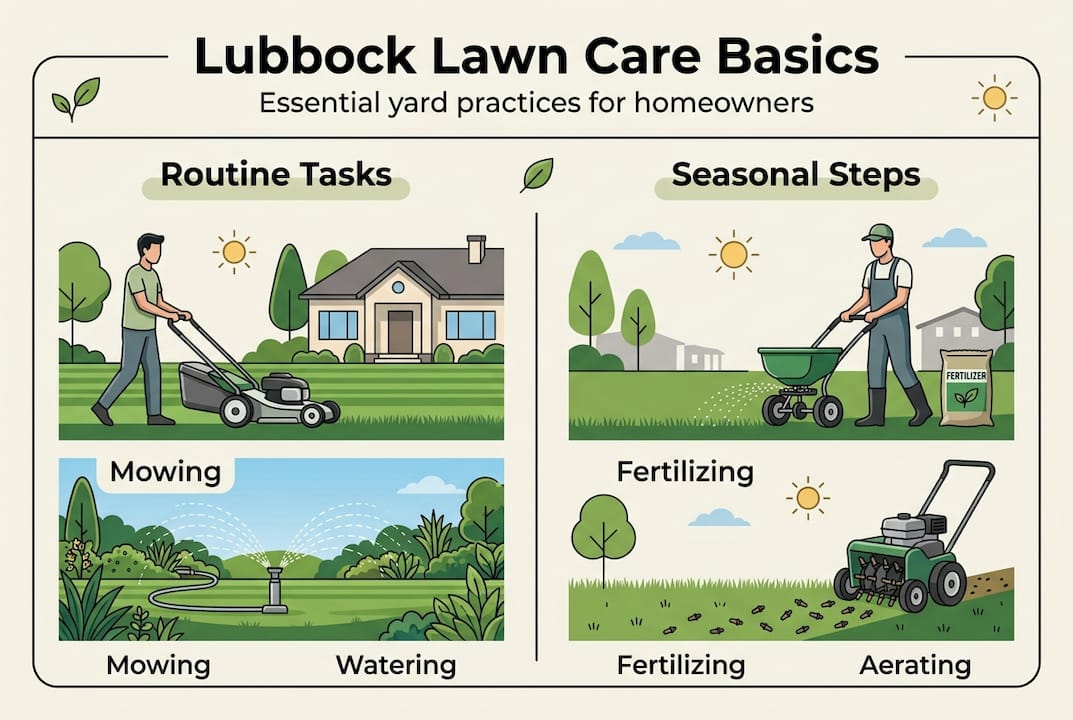
| Task | Why it matters | How often |
|---|---|---|
| Mowing | Controls height, reduces stress | Every 7 to 10 days in growing season |
| Watering | Feeds roots, prevents drought stress | 2 to 3 times per week, deep soaks |
| Fertilizing | Supplies nutrients for growth | 3 to 4 times per year |
| Aeration | Breaks compaction, improves drainage | Once or twice per year |
| Dethatching | Removes debris blocking soil contact | Once per year, typically in spring |
| Weed control | Keeps turf dense and competitive | As needed, with pre-emergent in spring |
Here is the order that works best for a Lubbock yard in the growing season:
- Test your soil before fertilizing so you know exactly what it needs
- Aerate in late spring to open up compacted ground
- Dethatch if the thatch layer is thicker than half an inch
- Fertilize after aeration so nutrients reach the root zone
- Mow at the right height for your grass type throughout the season
- Water deeply two to three times per week in the early morning
Pro Tip: Never cut more than one-third of the grass blade in a single mow. Cutting too much at once stresses the plant and makes it vulnerable to heat damage, which is a serious issue in Lubbock summers.
For a full seasonal breakdown, the Lubbock lawn care checklist is a great starting point. If you are getting ready for a service visit, knowing how to prepare for lawn service can make the process smoother. And if your soil is compacted, the lawn aeration guide explains exactly when and how to do it right.
Lawn care in Lubbock: Adapting to the local climate
As the basics are universal, Lubbock's specific climate adds extra complexity to your annual yard routine. Average summer temperatures regularly exceed 95°F, annual rainfall sits around 18 inches, and the wind accelerates evaporation constantly. That combination demands a different approach than what works in Houston or Dallas.
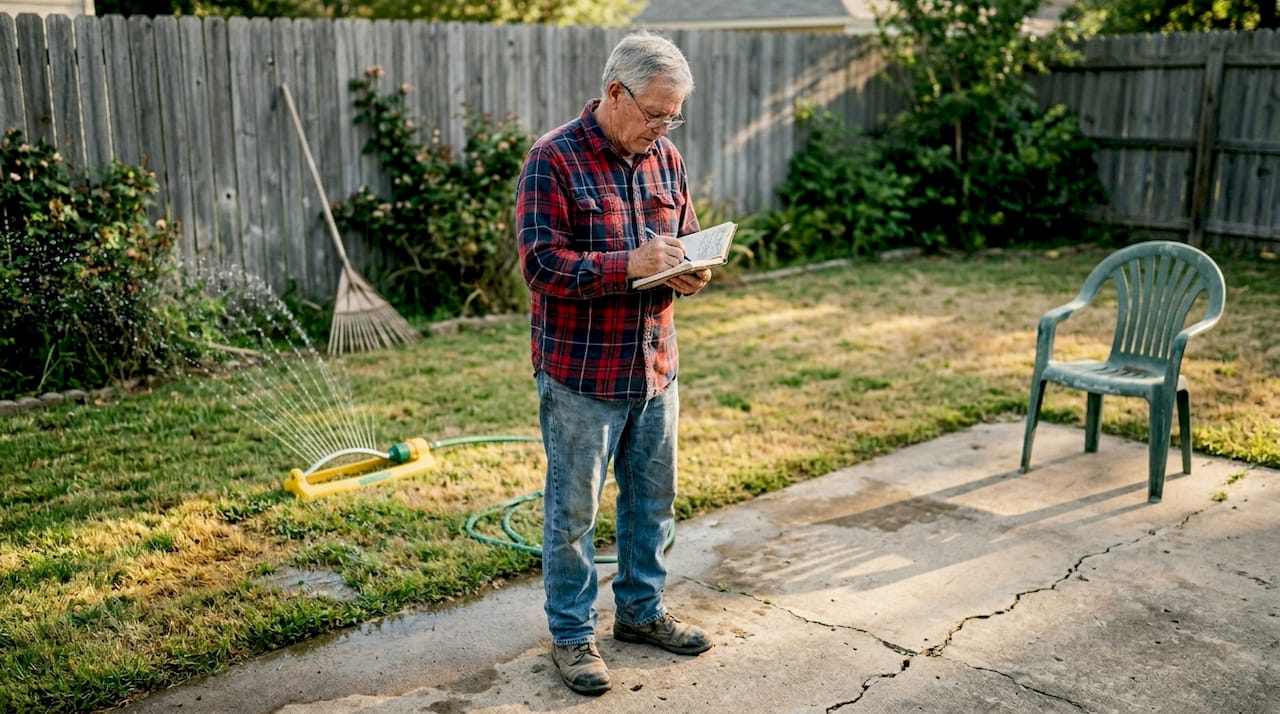
Warm-season grasses and deep infrequent watering are the right strategy for Lubbock's arid climate, and city watering restrictions apply during peak season. The three grasses that perform best here are Bermuda, Zoysia, and St. Augustine. Bermuda is the most drought-tolerant and recovers quickly from heat stress. Zoysia handles foot traffic well and stays dense. St. Augustine thrives in partial shade but needs more water than the other two.
| Grass type | Drought tolerance | Shade tolerance | Maintenance level |
|---|---|---|---|
| Bermuda | High | Low | Low to medium |
| Zoysia | Medium to high | Medium | Medium |
| St. Augustine | Medium | High | Medium to high |
For fertilizing, Texas A&M recommends specific nitrogen amounts for warm-season grasses based on grass type and time of year. Bermuda typically needs 1 pound of nitrogen per 1,000 square feet per application, applied from late spring through early fall. Over-fertilizing in summer heat can burn your lawn fast.
Pro Tip: Water your lawn between 5 a.m. and 10 a.m. to reduce evaporation and comply with Lubbock city watering schedules. Watering in the afternoon loses up to 30% more moisture to evaporation.
For more detail on timing and products, check out local fertilizing tips and the essential fertilization guide. When the season changes, spring care tips will help you get ahead of weeds and heat before they take hold.
Fixing common lawn problems: From bare patches to chronic weeds
Once you know Lubbock's rules, it is time to tackle the real-world challenges every yard faces. Most problems come down to a handful of recurring issues: bare spots, excessive thatch, stubborn weeds, and poor growth from compacted or nutrient-depleted soil.
Neglected lawns need soil tests, local overseeding, and correct fertilizing, and cool-season grasses simply fail under Lubbock heat. If you have bare patches, start with a soil test to rule out pH or nutrient problems. Then overseed with Bermuda, which germinates quickly in warm soil and fills in gaps aggressively.
Excess thatch, overwatering, and poor mowing height are among the most common mistakes Lubbock homeowners make. Thatch thicker than half an inch blocks water and fertilizer from reaching the soil. Dethatch in spring, then follow up with aeration and overseeding to restore density.
Here is a quick guide to the most common problems and their fixes:
- Bare spots: Soil test, overseed with Bermuda, water consistently for 3 to 4 weeks
- Thick thatch: Dethatch in spring, aerate immediately after
- Chronic weeds: Apply pre-emergent in early spring, maintain dense turf to crowd out new growth
- Yellowing grass: Check for overwatering, iron deficiency, or grub damage
- Slow growth: Aerate, fertilize based on soil test, and raise mowing height slightly
"The single best defense against weeds is a thick, healthy lawn. Weeds fill gaps. Remove the gaps and you remove most of the problem."
Overwatering is just as damaging as drought in Lubbock. Soggy soil invites fungal disease and root rot, and it wastes water under city restrictions. If your grass feels spongy underfoot, cut back your irrigation schedule immediately.
DIY or hire a pro? Making the right choice in Lubbock
Knowing what your lawn needs, you also need to decide if you are doing it all yourself or bringing in help. Both options work, but they are not equal for every situation.
Homeowners can handle basics, but pros provide expertise for licensed chemical applications and dealing with Lubbock's challenging conditions. Mowing, basic watering, and light fertilizing are all manageable for most homeowners with the right equipment. But when it comes to pre-emergent herbicides, soil amendments, or diagnosing a disease, a trained eye makes a real difference.
| Task | DIY friendly | Better with a pro |
|---|---|---|
| Weekly mowing | Yes | Optional |
| Fertilizing | With research | Recommended |
| Pre-emergent weed control | Risky without training | Yes |
| Aeration | Rentable equipment | Preferred |
| Disease or pest diagnosis | Difficult | Yes |
| Full seasonal program | Time-intensive | Yes |
Time is the other factor. A full lawn care routine for an average Lubbock yard takes 3 to 5 hours per week during peak season. For many homeowners, that time is simply not available. Hiring a local pro means consistent results without the guesswork or the weekend hours.
Pro Tip: A thick, dense lawn is your best natural defense against weeds and pests. Invest in getting your turf healthy first, and you will spend far less on reactive treatments later.
Get help with your Lubbock lawn care
Putting all of this into practice takes time, the right products, and local knowledge that only comes from working in Lubbock's specific conditions year after year. For homeowners who want a healthy yard without spending every weekend on it, working with a trusted local team is the most reliable path forward.

Only Mow is Lubbock's official City vendor for lawn care, which means we know this city's soil, climate, and seasonal demands better than anyone. From routine mowing and fertilizing to full yard restoration and pre-emergent weed control, our Lubbock lawn care services cover everything your yard needs. Scheduling is simple, and our team shows up consistently so your lawn never falls behind. If you are interested in joining the lawn care industry yourself, explore options to become a local contractor or learn about landscaper franchise opportunities with Only Mow.
Frequently asked questions
How often should I mow my lawn in Lubbock?
Mow every 7 to 10 days during spring and summer, keeping grass at 2 to 3 inches. During the hottest months, raise the height to 2.5 to 3.5 inches to reduce heat stress, as recommended by lawn care basics and thatch management guidelines.
What are the ideal grasses for Lubbock lawns?
Bermuda, Zoysia, and St. Augustine are the best fits for Lubbock's hot, dry climate, with Bermuda being the most drought-tolerant option according to lawn water management guidance.
How much should I water my lawn each week?
Aim for 1 to 1.5 inches per week, delivered through deep irrigation sessions 2 to 3 times weekly in the early morning, following city watering guidance for Lubbock.
Can I fix bare spots in my yard myself?
Yes. Test your soil first, then overseed with Bermuda grass and fertilize based on your results. The zoysiagrass restoration guide outlines the same steps for most warm-season lawn repairs.
Is professional lawn care worth it in Lubbock?
For most homeowners, yes. Pros bring expertise for chemical applications, climate-specific decisions, and consistent scheduling that saves time and prevents costly mistakes, as outlined in lawn care 101.