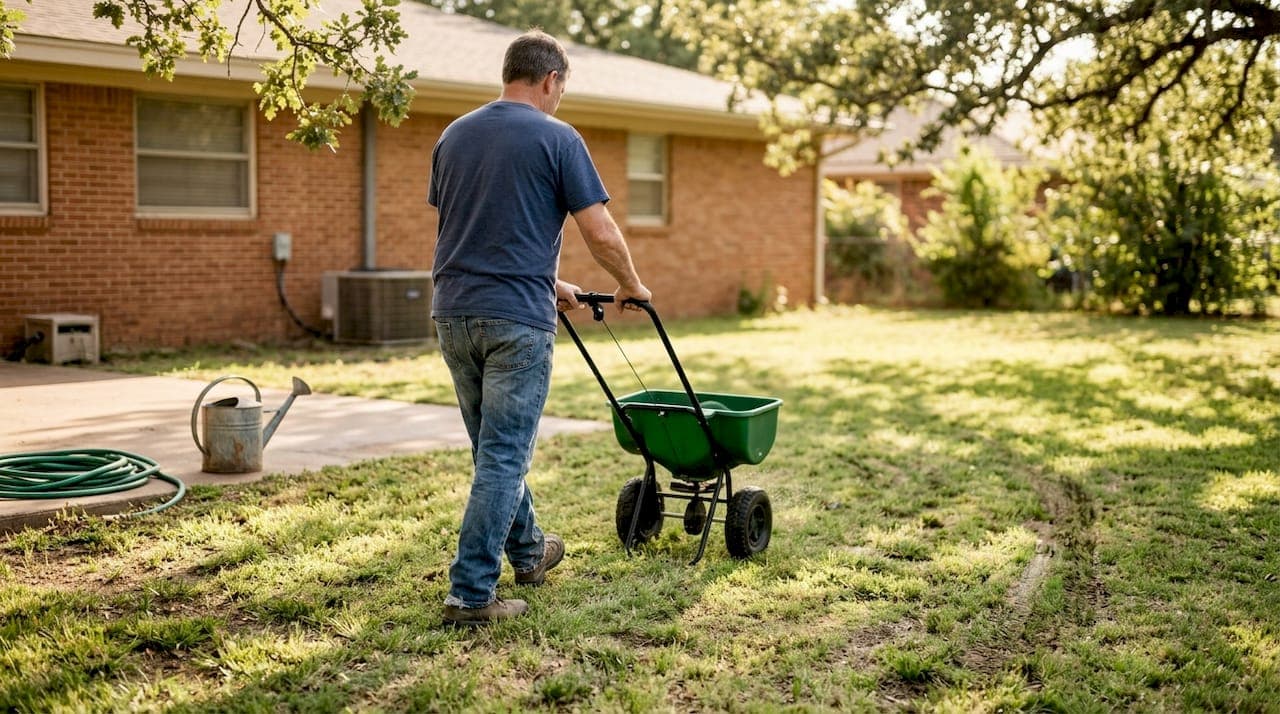
Many Lubbock homeowners believe fertilizing their lawn is as simple as spreading product whenever the grass looks dull. This misconception leads to wasted money, burned turf, and disappointing results. The truth is that effective lawn fertilization depends on precise timing, nutrient balance, and understanding your soil's unique chemistry. Lubbock's alkaline soils and intense summer heat create challenges that generic fertilization schedules simply can't address. This guide explains what lawn fertilization actually is, which nutrients your grass needs, when to apply them in West Texas conditions, and how to avoid common mistakes that sabotage your lawn's health and appearance.
Table of Contents
- Key Takeaways
- Understanding lawn fertilization: what it is and why it matters
- When and how to fertilize lawns in Lubbock, Texas
- Choosing the right fertilizer and addressing Lubbock's soil challenges
- Common mistakes and best practices for lawn fertilization in Lubbock
- Enhance your Lubbock lawn with professional care
- FAQ
Key Takeaways
| Point | Details |
|---|---|
| Timing window Bermudagrass | Begin late April to early May when soil temperatures exceed 65 degrees Fahrenheit, and apply every six to eight weeks through summer and fall, avoiding winter dormancy. |
| NPK balance for warm season | Choose a fertilizer with an appropriate NPK ratio for warm season grasses and follow recommended application rates to prevent excessive growth and thatch buildup. |
| Soil test and amend | Test soil and amend the alkaline conditions to improve nutrient availability in West Texas soils. |
| Avoid fertilizing stressed turf | Never fertilize during drought or when heat stressed to prevent leaf burn and root damage. |
Understanding lawn fertilization: what it is and why it matters
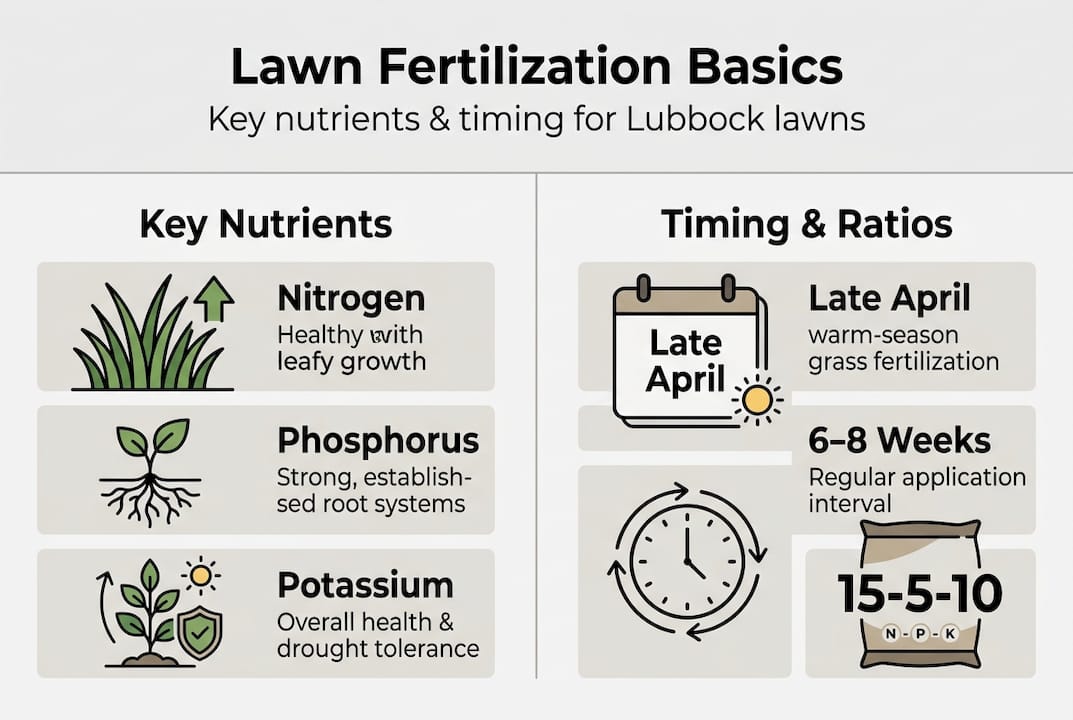
Lawn fertilization is the process of applying nutrients, primarily nitrogen (N), phosphorus (P), and potassium (K), to grass to promote healthy growth, green color, root development, and resilience. Think of it as feeding your lawn the same way you'd take vitamins to fill nutritional gaps. Grass constantly pulls nutrients from soil as it grows, and over time these reserves deplete. Without replenishment, your turf weakens, loses color, and becomes vulnerable to weeds, disease, and environmental stress.
Each primary nutrient plays a distinct role. Nitrogen drives leaf growth and gives grass its rich green color. It's the nutrient your lawn consumes most rapidly, which is why fertilizers typically contain higher nitrogen percentages. Phosphorus supports root development and helps new grass establish quickly, though established lawns need far less of it. Potassium strengthens cell walls, improves drought tolerance, and helps grass withstand temperature extremes and foot traffic.
Balanced nutrient supply keeps your lawn thriving through Lubbock's challenging conditions. When nitrogen runs low, grass turns pale yellow and grows slowly. Phosphorus deficiency leads to weak, shallow roots that can't access water during dry spells. Potassium shortage makes turf susceptible to heat stress and disease. The key is matching fertilizer application to your grass type, soil conditions, and seasonal growth patterns.
Understanding these nutrient roles helps you make smarter choices about what to apply and when. A fertilizer labeled 15-5-10 contains 15% nitrogen, 5% phosphorus, and 10% potassium by weight. The remaining percentage consists of filler material that helps distribute nutrients evenly. Reading these numbers and knowing what your lawn needs at different times of year transforms fertilization from guesswork into precision lawn care.
When and how to fertilize lawns in Lubbock, Texas
Timing separates successful fertilization from wasted effort. For Lubbock homeowners, warm-season grasses like Bermudagrass require fertilization during active growth: late April to early May start when soil temperatures exceed 65°F, then every 6-8 weeks through summer and fall, avoiding winter dormancy. Applying fertilizer before grass breaks dormancy wastes nutrients and risks runoff into storm drains. Wait until you see consistent green growth and soil temps stay reliably warm.
Application rate matters as much as timing. Apply 0.5 to 1 pound of nitrogen per 1,000 square feet during each feeding. Measure your lawn area accurately and calculate how much product you need based on the fertilizer's nitrogen percentage. A 15-5-10 fertilizer that's 15% nitrogen means you need roughly 6.5 pounds of product per 1,000 square feet to deliver 1 pound of actual nitrogen. Overloading your lawn with excess nitrogen causes rapid, weak growth that attracts pests and creates thatch buildup.
Never fertilize during drought or when grass shows heat stress. Lubbock's summer temperatures regularly exceed 95°F, and fertilizing stressed turf can burn leaf tissue and damage roots. If your lawn looks wilted or shows brown patches from water shortage, hold off on fertilization until you've restored adequate moisture through deep watering. Stressed grass can't absorb nutrients properly, so you'll waste product and potentially harm your turf.
Application methods include granular broadcast or drop spreaders, liquid foliar or fertigation systems, banding, and aerator application for compacted soil. Most homeowners use broadcast spreaders for even coverage across large areas. Drop spreaders offer more precision but take longer. Liquid fertilizers provide quick nutrient uptake but require more frequent applications.
Pro Tip: Water your lawn within 24 hours after applying granular fertilizer to activate nutrients and move them into the root zone. Without moisture, granules sit on leaf blades and can cause burning. A quarter inch of water dissolves the product and carries nutrients down to where roots can absorb them. This simple step dramatically improves fertilization effectiveness and prevents waste.
Choosing the right fertilizer and addressing Lubbock's soil challenges
Lubbock's alkaline and caliche soils with pH levels above 7.5 lock up essential nutrients, making them unavailable to grass roots even when present in soil. Always soil test first through the Texas A&M AgriLife Extension Lab, amend pH to the 6.0 to 7.0 range, and use iron-supplemented fertilizers to maintain deep green color. Alkaline conditions particularly limit iron, manganese, and zinc availability, causing chlorosis where grass turns yellow while veins stay green.
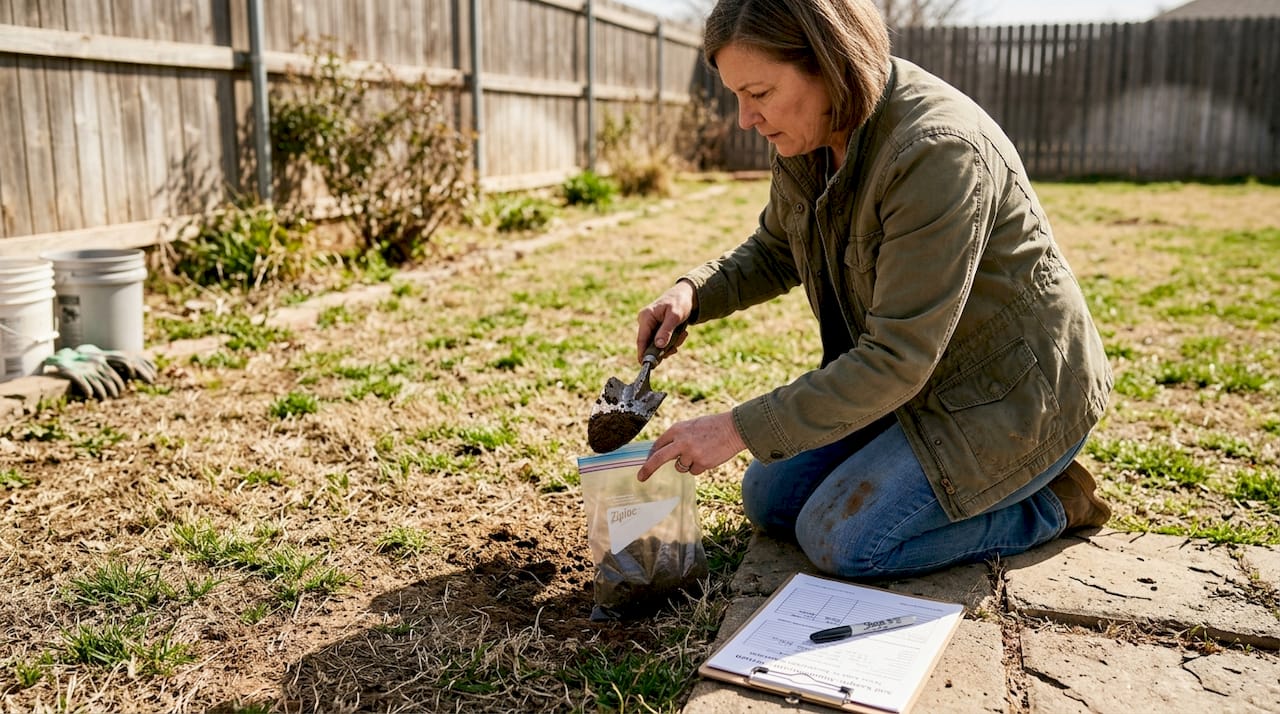
Soil testing every three years gives you precise data about nutrient levels, pH, and organic matter content. The test costs around $20 and saves you hundreds in wasted fertilizer. Testing helps identify pH and nutrient locks in alkaline soils common in Lubbock, guiding amendments and fertilizer choice. You'll receive specific recommendations for lime or sulfur application to adjust pH, plus guidance on which nutrients your soil actually needs.
NPK ratios for Texas warm-season grasses should follow 3-1-2 or 4-1-2 formulations, such as 15-5-10 or 16-4-8. These ratios provide nitrogen for growth and color, moderate potassium for stress tolerance, and minimal phosphorus since established lawns rarely need it. Slow-release nitrogen formulations work best during summer heat because they feed grass gradually over 8 to 12 weeks without causing excessive growth spurts that stress turf.
| Fertilizer type | NPK ratio | Best use | Release speed |
|---|---|---|---|
| Spring starter | 15-5-10 | Early season growth | Medium |
| Summer maintenance | 20-0-10 | Heat stress periods | Slow |
| Fall strengthening | 10-10-10 | Root development | Medium |
| Iron supplement | 15-0-0 + Fe | Color enhancement | Fast |
Slow-release nitrogen sources include sulfur-coated urea, polymer-coated products, and organic options like Milorganite. These formulations cost more upfront but reduce application frequency and minimize the risk of burning your lawn during hot weather. They also decrease nutrient runoff into waterways, making them environmentally responsible choices for Lubbock's landscape.
Pro Tip: Apply iron supplements separately in June and August to boost green color without forcing excessive growth during peak heat. Iron sulfate or chelated iron products darken grass within days and help overcome chlorosis caused by alkaline soil. Use 2 to 4 ounces of iron per 1,000 square feet, dissolved in water for even application. This targeted approach keeps your lawn looking vibrant without stressing it with heavy nitrogen during summer.
Common mistakes and best practices for lawn fertilization in Lubbock
The biggest mistakes homeowners make involve timing and quantity. Avoid fertilizing dormant grass, which wastes nitrogen and contributes to pollution, during drought or heat when burn risk increases, and over-application exceeding 1 pound of nitrogen per 1,000 square feet, which causes thatch buildup and runoff. Dormant Bermudagrass can't absorb nutrients, so winter fertilization simply washes away with rain or irrigation. Save your money and protect water quality by waiting until active growth resumes.
Over-fertilization creates more problems than it solves. Excess nitrogen produces lush, weak growth that attracts chinch bugs and other pests. It also builds up thatch, the layer of dead organic matter between soil and green grass. Thick thatch blocks water and air from reaching roots, creating ideal conditions for disease. Heavy fertilization also increases mowing frequency, water demand, and the likelihood of nutrient runoff polluting streams and groundwater.
Drought and extreme heat make fertilization dangerous. When grass enters survival mode during water stress, adding fertilizer forces it to grow when it should be conserving energy. The result is burned, damaged turf that takes weeks to recover. If Lubbock enters a dry spell, delay fertilization until you've watered deeply for at least a week and grass shows vigorous green growth.
Sustainable fertilization approaches emphasize slow-release nitrogen to minimize pollution while maintaining acceptable turf quality. Texas lawn care professionals increasingly focus on these methods to protect water resources. High-input aesthetics that demand frequent fertilization and irrigation give way to moderate programs that work with natural growth cycles and reduce environmental impact.
Integrating fertilization with other lawn care practices maximizes results:
- Aerate compacted soil before fertilizing to improve nutrient penetration
- Mow at proper height (1.5 to 2 inches for Bermudagrass) to strengthen roots
- Water deeply and infrequently to encourage deep root systems
- Apply pre-emergent herbicides separately from fertilizer for better weed control
- Overseed thin areas after fertilizing to fill bare spots
Follow these steps for responsible lawn fertilization in Lubbock:
- Test your soil through Texas A&M AgriLife Extension to identify needs
- Choose a fertilizer with appropriate NPK ratio for warm-season grass
- Calculate the correct amount based on lawn area and product analysis
- Apply when soil temperature exceeds 65°F and grass shows active growth
- Water within 24 hours to activate nutrients and prevent leaf burn
- Repeat applications every 6 to 8 weeks during the growing season
- Stop fertilizing by late September as grass prepares for dormancy
These practices ensure your fertilization program supports healthy turf without wasting resources or harming the environment. Consistency matters more than intensity. Regular, moderate applications following proven lawn care principles deliver better results than sporadic heavy feeding.
Enhance your Lubbock lawn with professional care
Implementing a precise fertilization program requires knowledge, equipment, and consistent attention to timing. Professional lawn care services take the guesswork out of maintaining healthy turf by applying the right products at optimal intervals based on local conditions and grass type. Experts understand Lubbock's soil chemistry, seasonal patterns, and the specific needs of Bermudagrass and other warm-season varieties common in West Texas.

Professional teams conduct soil testing, calculate exact application rates, and use commercial-grade equipment for uniform coverage. They track fertilization schedules so you never miss a critical application window. Many services bundle fertilization with aeration, weed control, and seasonal maintenance to create comprehensive lawn health programs. This integrated approach delivers superior results compared to piecemeal DIY efforts.
Local Lubbock providers offer convenient scheduling, reliable service, and expertise you can trust. Whether you need a complete lawn care program or targeted fertilization services, professional contractors bring the tools and knowledge to keep your turf thriving year-round. For those interested in the business side, opportunities exist to join the lawn care industry and serve your community.
FAQ
How often should I fertilize my Bermuda lawn in Lubbock?
Bermudagrass requires fertilization starting late April with repeat applications every 6 to 8 weeks during active growth. This schedule typically means four to five applications between late April and early September. Stop fertilizing by late September as grass prepares for winter dormancy.
Why is soil testing important for my lawn in Lubbock?
Soil testing helps identify pH and nutrient locks in alkaline soils common in Lubbock, guiding amendments and fertilizer choice. Testing reveals exactly which nutrients your lawn needs and prevents wasting money on unnecessary products. It also shows pH levels so you can correct alkalinity that blocks nutrient availability.
Can I fertilize my lawn during drought or extreme heat in Texas?
Avoid fertilizing during drought or heat stress to prevent burning and nutrient runoff. Stressed grass cannot absorb nutrients properly, and fertilizer application forces growth when turf should conserve energy. Wait until you've restored adequate soil moisture and grass shows vigorous green growth before resuming fertilization.
What NPK ratio works best for Lubbock lawns?
Warm-season grasses in Lubbock thrive with 3-1-2 or 4-1-2 NPK ratios such as 15-5-10 or 16-4-8. These formulations provide ample nitrogen for growth and color, moderate potassium for stress tolerance, and minimal phosphorus since established lawns rarely need it. Slow-release nitrogen sources work best during summer heat to avoid burning turf.