TL;DR:
- Outdoor maintenance in Lubbock requires a system of practices tailored to its unique climate and soil.
- Native grasses can reduce water use by up to 80 percent, promoting sustainable lawn care.
- Local guidance emphasizes observing soil conditions and timing tasks, rather than following generic routines.
Lubbock lawns are not like lawns in Houston or Dallas. The high plains climate, alkaline caliche soil, and unpredictable spring winds create a maintenance environment that punishes generic advice fast. Most homeowners assume that regular mowing is the bulk of the job, but outdoor maintenance covers a much wider range of tasks, and getting them right can mean the difference between a yard that thrives and one that slowly fades. Choosing the right grass alone can cut your water use dramatically, since native grasses use 80% less water than traditional varieties. This guide breaks down exactly what outdoor maintenance means for Lubbock homeowners and how to do it smarter.
Table of Contents
- Defining outdoor maintenance for Lubbock homeowners
- Key tasks: From mowing to seasonal cleanups
- Expert nuances: Proven techniques for Lubbock lawns
- Traditional vs. sustainable approaches: What works in West Texas?
- Our perspective: Outdoor maintenance is evolving in Lubbock
- Professional outdoor maintenance services for your Lubbock home
- Frequently asked questions
Key Takeaways
| Point | Details |
|---|---|
| Full-spectrum care | Effective outdoor maintenance in Lubbock means addressing mowing, fertilizing, irrigation, and seasonal cleanups as an integrated system. |
| Local climate matters | Lubbock's dry, warm climate calls for tailored schedules and techniques, especially when choosing grasses and watering methods. |
| Sustainable saves water | Switching to native grasses and sustainable practices can reduce water use by up to 80 percent without losing curb appeal. |
| Expert nuance helps | Pro tips like the screwdriver test and seasonal timing can improve results and avoid common mistakes. |
| Professional support available | Local outdoor maintenance companies cover expert tasks that save homeowners time and ensure healthy lawns all year. |
Defining outdoor maintenance for Lubbock homeowners
Outdoor maintenance is not a single task. It is a system of recurring practices that keep your lawn, garden beds, and landscape looking healthy and functional throughout the year. According to standard lawn care guidance, outdoor maintenance includes regular mowing, edging, watering, fertilizing, weed control, aeration, dethatching, and seasonal cleanups. Each task plays a role, and skipping one often creates problems that make the next task harder.
Lubbock's climate adds a layer of complexity that national guides rarely address. The city sits at over 3,200 feet in elevation, receives an average of about 18 inches of rain per year, and regularly experiences hot, dry summers followed by sharp temperature drops in fall. The soil here tends to be heavy in clay and caliche, which compacts easily and drains poorly. That combination means your lawn can look stressed even when you think you are doing everything right.
Here are the core elements that make up a complete outdoor maintenance plan:
- Mowing and edging: Keeps turf at the right height and defines borders cleanly
- Watering: Timed and targeted to avoid waste and fungal issues
- Fertilizing: Feeds the grass based on soil needs, not a generic schedule
- Weed control: Includes both pre-emergent and post-emergent treatments
- Aeration: Breaks up compacted soil so water and nutrients can reach roots
- Dethatching: Removes the layer of dead material that blocks healthy growth
- Seasonal cleanups: Prepares the lawn for winter dormancy and spring recovery
One of the most common misconceptions is that mowing is enough. It is not. Mowing keeps your lawn looking neat, but it does nothing to address soil compaction, thatch buildup, or nutrient deficiency. A good landscape maintenance guide will show you how each task connects to the others.
"Outdoor maintenance is not about doing more. It is about doing the right things at the right time for your specific lawn and climate."
Pro Tip: If your lawn looks patchy or thin even after regular mowing, the problem is almost always below the surface. Soil compaction or thatch buildup are the most likely culprits in Lubbock yards.
Key tasks: From mowing to seasonal cleanups
Understanding the full list of tasks is one thing. Knowing how to sequence and time them for Lubbock is what actually moves the needle. Here is a practical breakdown of each task in order of priority during the growing season.
- Mowing: Warm-season grasses like bermuda and buffalo grass dominate Lubbock lawns. Keep mowing height between 1.5 and 2.5 inches depending on grass type. Mow too low and you stress the plant. Mow too infrequently and you remove more than one-third of the blade at once, which shocks the turf.
- Edging: Clean edges along sidewalks, driveways, and beds make the entire yard look more polished. Do this monthly at minimum.
- Watering: Water deeply and infrequently rather than lightly every day. Early morning watering reduces evaporation and fungal risk.
- Fertilizing: Apply based on soil test results. Most Lubbock lawns benefit from 2 to 4 applications per year.
- Weed control: Apply pre-emergent herbicide when soil temperatures reach 55°F in early spring. Post-emergent treatments handle anything that breaks through.
- Aeration: Best done in late spring or early summer for warm-season grasses. Relieves compaction and improves root depth.
- Dethatching: Remove thatch if it exceeds half an inch. Thicker layers block water and fertilizer from reaching the soil.
- Seasonal cleanups: Clear debris in fall, apply a winterizing fertilizer, and do a final mow before dormancy.
The numbers behind these tasks are telling. Lawn care data shows that the average homeowner mows about 30 times per year, spends roughly 1.8 hours per week on mowing alone, and about 60% of homeowners fertilize 2 to 4 times annually. A solid lawn care checklist keeps you on track without guessing.
| Task | Recommended frequency | Best timing for Lubbock |
|---|---|---|
| Mowing | Weekly during growing season | April through October |
| Edging | Monthly | April through October |
| Fertilizing | 2 to 4 times per year | Spring, early summer, fall |
| Aeration | Once per year | Late spring or early summer |
| Dethatching | As needed | Late spring |
| Seasonal cleanup | Twice per year | Spring and fall |
Pro Tip: Use a simple calendar app to set recurring reminders for each task. Homeowners who schedule maintenance in advance are far less likely to miss a critical window, especially for pre-emergent weed control. For a deeper look at the fundamentals, lawn care essentials is a solid starting point.
Expert nuances: Proven techniques for Lubbock lawns
Knowing the task list is step one. Knowing when and how to act on each task is what separates a good lawn from a great one. Texas A&M AgriLife Extension offers some of the most reliable guidance for warm-season turf in our region, and several of their recommendations are directly applicable to Lubbock conditions.
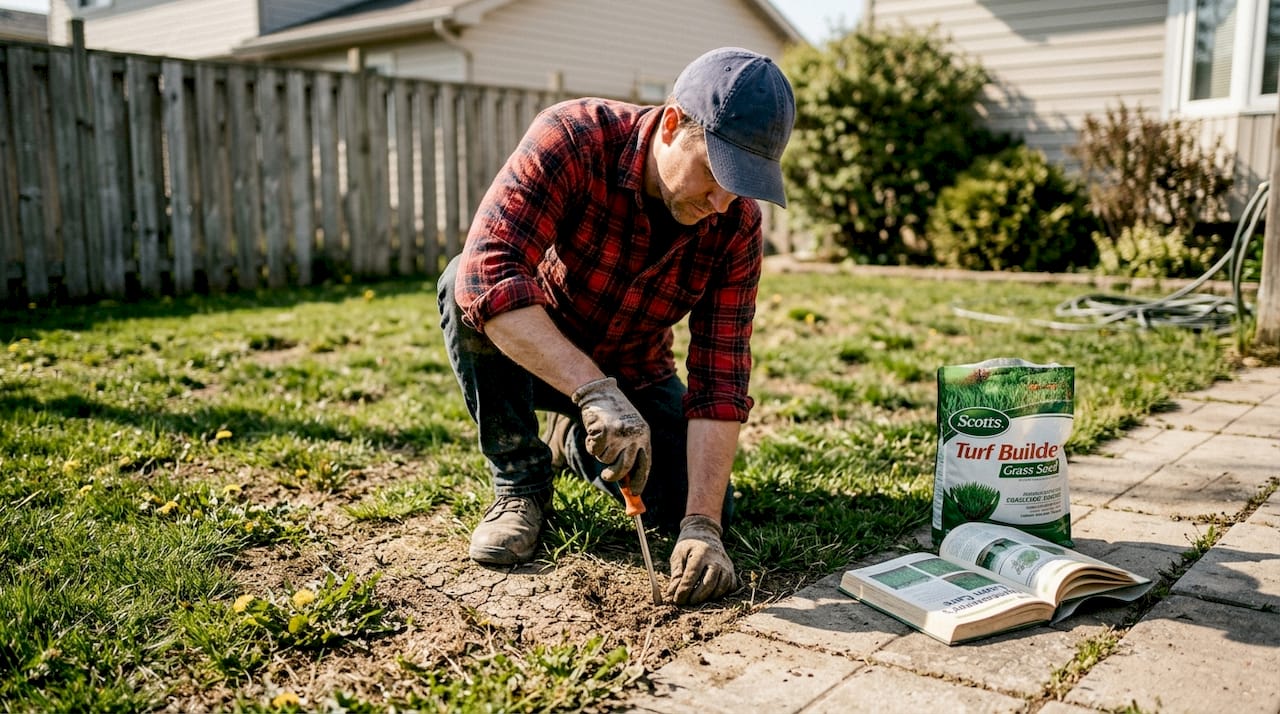
For aeration, the standard advice is to aerate once a year, but the real trigger is soil condition. Aerate when a screwdriver cannot penetrate 6 inches into the soil. That is your signal. If it slides in easily, you can wait. If it stops at 3 or 4 inches, your soil is compacted and roots are struggling.
For dethatching, the threshold is half an inch. More than that and you have a barrier blocking water, fertilizer, and air from reaching the root zone. For weed control, timing is everything. Pre-emergent herbicide must go down when soil temperatures hit 55°F, which in Lubbock typically falls in early to mid-March.
Here is a quick comparison of what generic national advice looks like versus what actually works in Lubbock:
| Practice | Generic national advice | Lubbock-specific approach |
|---|---|---|
| Watering schedule | 3 times per week | Deep watering 1 to 2 times per week |
| Fertilizer timing | Spring only | Spring, early summer, and fall |
| Aeration trigger | Once per year | When screwdriver test fails |
| Pre-emergent timing | Early spring | When soil hits 55°F (early March) |
| Winter prep | Optional | Required: final mow at 2 to 2.5 inches plus potassium-rich fertilizer |
A few additional best practices worth noting:
- Test your soil every 2 to 3 years to avoid over-fertilizing
- Never remove more than one-third of the grass blade in a single mow
- Apply pre-emergent before rain is forecast so it activates properly
- Use a potassium-rich fertilizer in fall to harden grass before winter
About 60% of Lubbock homeowners already fertilize 2 to 4 times per year, which puts them ahead of the national average. But fertilizing without a soil test is essentially guessing. For more seasonal guidance, spring lawn care tips covers the early-season window in detail.
Traditional vs. sustainable approaches: What works in West Texas?
With a handle on expert tactics, it is worth stepping back and asking a bigger question: should you follow a traditional high-input approach or shift toward something more sustainable? In Lubbock, this is not just a philosophical debate. It has real consequences for your water bill and your lawn's long-term health.
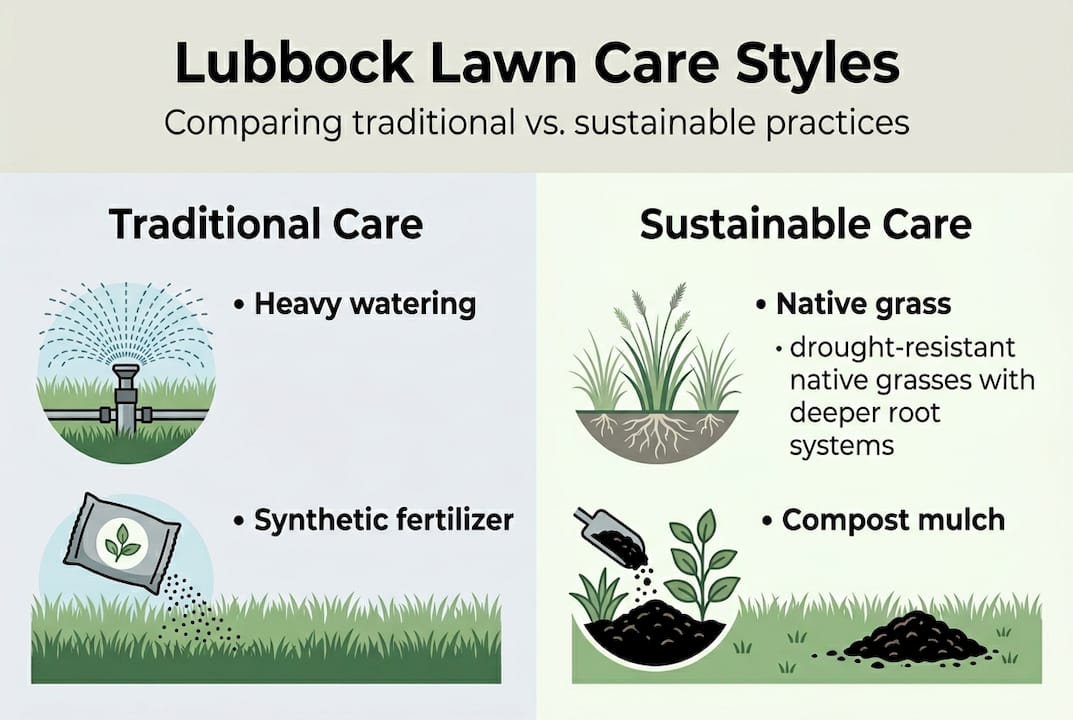
Traditional maintenance relies on frequent watering, synthetic fertilizers, and chemical weed control. It produces lush results quickly but demands significant resources. Sustainable maintenance, by contrast, leans on drought-tolerant native grasses, grasscycling (leaving clippings on the lawn), and minimal chemical inputs. The tradeoff is a slower start but far lower ongoing costs.
| Factor | Traditional approach | Sustainable approach |
|---|---|---|
| Water use | High, 3 to 5 times per week | Low, 1 to 2 times per week |
| Fertilizer | Synthetic, applied frequently | Organic or minimal, soil-test driven |
| Weed control | Chemical-heavy | Pre-emergent focus, hand-pulling |
| Grass type | Non-native turf varieties | Native or adapted varieties |
| Curb appeal | Fast results | Takes 1 to 2 seasons to establish |
| Long-term cost | Higher | Lower |
The water savings argument is compelling. Switching to native grasses can reduce water use by up to 80%, which matters in a city where summer drought conditions are common and water restrictions are a real possibility.
Here is how to transition without sacrificing curb appeal:
- Start by overseeding existing turf with drought-tolerant varieties rather than replacing everything at once
- Reduce watering frequency gradually so the grass adapts and roots grow deeper
- Switch to grasscycling to return nutrients to the soil naturally
- Replace one garden bed per season with native plants to build momentum
"Sustainability in a Lubbock lawn is not about letting things go. It is about working with the climate instead of against it."
For homeowners exploring what a more sustainable yard could look like, landscaping services options outlines the range of approaches available locally.
Our perspective: Outdoor maintenance is evolving in Lubbock
After working with hundreds of Lubbock homeowners, one thing stands out clearly: the biggest mistakes come from following advice that was never written for this climate. National lawn care guides assume average rainfall, average soil, and average temperatures. Lubbock is none of those things.
We have seen homeowners water on a fixed schedule and end up with fungal problems. We have seen others skip aeration for years because they thought their lawn looked fine, only to discover roots that could not push past 2 inches. Generic advice creates these gaps.
What actually works here is a routine built around observation and local knowledge. Check your soil before you aerate. Watch the forecast before you fertilize. Know your grass type before you set your mower height. These are small adjustments, but they compound over a season.
For property owners managing multiple yards, the stakes are even higher. A missed pre-emergent window or an over-watered lawn can cost real money. Practical guidance on rental lawn care tips addresses this specific challenge. The bottom line is that Lubbock lawns reward attention and punish autopilot.
Professional outdoor maintenance services for your Lubbock home
Knowing what your lawn needs and having the time and tools to deliver it are two different things. That is where a trusted local professional makes a real difference.

At Only Mow, we serve Lubbock homeowners as the city's official lawn care vendor, which means we understand local soil, seasonal timing, and grass types better than any national franchise. Whether you need consistent mowing, seasonal aeration, fertilization on a tested schedule, or a full yard cleanup before winter, we handle it with the precision your lawn deserves. Visit Lubbock lawn professionals to learn more about our approach, or explore our full range of outdoor maintenance services and book a customized assessment for your property today.
Frequently asked questions
How often should I mow my lawn in Lubbock?
Most Lubbock lawns need mowing about 30 times per year, which works out to roughly once a week during the active growing season from April through October.
When is the best time to fertilize my Lubbock lawn?
Warm-season grasses do best with 2 to 4 fertilizer applications per year. Always finish the season with a potassium-rich fertilizer to help the grass harden before winter dormancy.
Can choosing native grass really save water in Lubbock?
Absolutely. Switching to native or drought-adapted grass varieties can cut your water use by up to 80% compared to traditional lawn varieties, which is a significant saving in Lubbock's dry climate.
What is the screwdriver test for lawn aeration?
Push a standard screwdriver into your lawn soil. If it won't penetrate 6 inches, your soil is compacted and it is time to aerate. If it slides in easily, you can hold off.
What services can a Lubbock outdoor maintenance company provide?
A full-service Lubbock provider covers mowing, edging, aeration, fertilization, pre-emergent weed control, irrigation and seasonal cleanups, giving you a complete solution without juggling multiple contractors.