TL;DR:
- Spring in Lubbock arrives quickly, requiring tailored yard preparation to handle alkaline soils, climate, and water restrictions.
- Proper steps include aerating first, then adding amendments, mowing lightly, and deep watering carefully to promote healthy turf.
Spring in Lubbock arrives fast, and your yard either keeps up or falls behind. The combination of clay-heavy alkaline soils, unpredictable late cold snaps, and city-enforced water restrictions makes spring preparation here genuinely different from what you'd do in Houston or Dallas. Get it right, and your lawn stays thick, green, and low-maintenance all the way through August. Get it wrong, and you spend the hottest months of the year chasing weeds, bare spots, and brown patches. This guide walks you through every step, specifically for Lubbock conditions.
Table of Contents
- What you'll need to prepare your yard for spring
- Step-by-step guide to spring yard preparation
- Optimize watering and comply with Lubbock's spring regulations
- Boost curb appeal: Edging, mulching, and planting for low-maintenance beauty
- What most guides miss about preparing Lubbock yards for spring
- Let Only Mow make spring yard prep effortless
- Frequently asked questions
Key Takeaways
| Point | Details |
|---|---|
| Test your soil first | A soil test reveals exactly what amendments your Lubbock yard needs. |
| Aerate then amend | Aerate compacted clay before adding compost or gypsum for better soil health. |
| Water deep but less often | Established lawns need just 1 inch of water every 2–4 weeks under city rules. |
| Prioritize natives and mulch | Native plants and a mulch layer boost curb appeal and reduce maintenance. |
| Comply with Lubbock rules | Follow city watering restrictions for a healthy yard and to avoid fines. |
What you'll need to prepare your yard for spring
Now that you know why spring prep matters, gather what you'll need before starting. Having the right tools on hand saves you from stopping mid-project and losing momentum when the weather window is right.
Essential tools and materials:
- Core aerator (rented from most Lubbock hardware stores or Home Depot)
- Rake and dethatching rake for clearing debris and loose material
- Lawn mower with adjustable blade height
- Soil test kit or access to AgriLife Extension for diagnostics
- Compost (fine, aged) for organic matter improvement
- Gypsum to help loosen clay and lower sodium levels
- Mulch (3 to 4 inch depth) for beds
- Edge trimmer for clean bed lines
- Broadcast or drop spreader for seed and amendments
- Drought-tolerant native plants for beds and borders
Here's a quick overview of which tools match which spring tasks:
| Tool or material | Task it handles |
|---|---|
| Core aerator | Relieves compaction in clay soils |
| Compost and gypsum | Improves drainage and soil structure |
| Dethatching rake | Removes dead material blocking grass growth |
| Edge trimmer | Defines beds for a clean, polished look |
| Soil test kit | Identifies pH and nutrient levels before fertilizing |
| Broadcast spreader | Even distribution of seed or amendments |
| Mulch | Weed suppression and moisture retention in beds |
Before you add any fertilizer or soil amendments, test your soil first. Lubbock soils tend to run alkaline, often above pH 7.5, and they're frequently low in organic matter and high in sodium. Adding the wrong fertilizer without knowing your numbers is a waste of money and can actually make things worse. You can conduct soil testing through Lubbock County AgriLife Extension to identify your pH, nutrient levels, and exactly which amendments your clay or alkaline soil needs. Results usually come back within a week and include specific recommendations.
For more detail on your seasonal timing, Lubbock spring lawn care tips can help you match your prep schedule to your grass type. And before you head to the fertilizer aisle, review these fertilizing tips to avoid over-applying nitrogen too early in the season.
Pro Tip: AgriLife Extension offices are genuinely one of Lubbock's most underused lawn resources. For a minimal fee, they'll test your soil and tell you exactly what to add. It takes the guesswork completely out of the amendment process.
Step-by-step guide to spring yard preparation
With your tools gathered, here's the exact sequence to follow for the best spring results. Doing these steps out of order, especially aerating after you've added amendments, reduces how much benefit you actually get.
-
Remove debris and dethatch if necessary. Start by raking out dead leaves, sticks, and any matted grass from winter. If your thatch layer (the layer of dead organic material between soil and grass blades) is more than half an inch thick, use a dethatching rake or rent a power dethatcher. Thatch blocks water, fertilizer, and air from reaching roots.
-
Mow low, but not too low. Set your mower to lightly scalp the grass, cutting it shorter than you normally would for the season. For Bermuda grass, which is the dominant turf in Lubbock, a height of about 1 to 1.5 inches in early spring removes dead top growth and lets sunlight hit the soil. Never remove more than one-third of the blade height in a single pass.
-
Lightly water the soil before aeration. Dry, rock-hard soil makes aeration nearly impossible. Water your lawn the day before you aerate, enough to moisten the top 3 to 4 inches but not saturate it. Soft but not soggy is what you're aiming for.
-
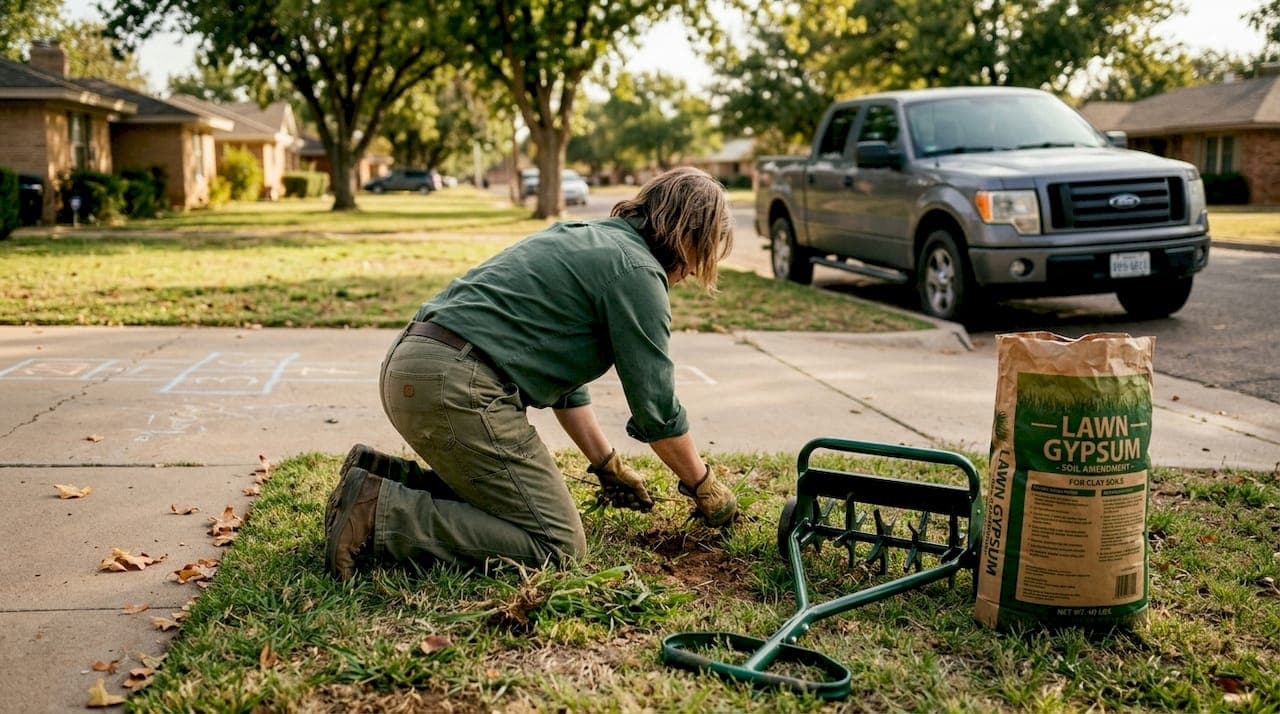
Core aerate for compaction. This is the most important step for Lubbock lawns. Core aerate clay soils once a year in spring while the grass is actively growing to relieve compaction, improve drainage, and get nutrients deeper into the root zone. Aerators pull small plugs of soil from the ground, creating channels for air, water, and amendments to penetrate. Do two passes in perpendicular directions for the best coverage.
-
Add organic amendments. Right after aeration is the ideal moment to top-dress with compost and spread gypsum. The open channels from aeration allow these materials to work down into the soil rather than sitting on top. Compost improves overall soil health and adds beneficial microbes. Gypsum specifically helps break up tight clay structure and flush excess sodium, which is a real problem in West Texas soils.
-
Reseed or repair bare spots. Once the soil is aerated and amended, address any bare patches. Use grass seed that matches your existing turf variety. For most Lubbock homeowners with Bermuda lawns, plugs or sod pieces work faster and more reliably than seed. Following the Lubbock spring lawn checklist will help you time each repair step correctly.
Here's how standard lawn advice compares to what actually works in Lubbock:
| Step | Generic best practice | Lubbock-specific best practice |
|---|---|---|
| Soil amendment | Add compost before aerating | Aerate first, then add compost and gypsum |
| Mowing height | Cut to 2-3 inches in spring | Scalp lightly to 1-1.5 inches for Bermuda |
| Overseeding | Use rye for quick green coverage | Avoid winter rye over Bermuda; it competes |
| Aeration timing | Any time in growing season | Early spring only, once per year |
| Watering after repair | Water daily until established | Frequent light watering for new seed or sod only |
Caution: Don't over-scalp your Bermuda lawn or aerate too late in spring once temperatures consistently hit 90°F. Late aeration stresses actively growing grass and opens the door to weed invasion during the critical summer establishment period.
Pro Tip: After aerating, leave those soil plugs right where they are. They look messy for a week, but they break down naturally and return organic matter directly back into your lawn without any extra work from you.
Optimize watering and comply with Lubbock's spring regulations
Once your lawn is prepped, it's time to focus on watering, especially given Lubbock's strict city rules. Watering incorrectly is the single fastest way to undo all the prep work you just completed.
For established Bermuda lawns, the goal is deep, infrequent watering that pushes roots down into the soil. Established lawns need roughly 1 inch every 2 to 4 weeks in spring, depending on heat and wind. Shallow daily watering keeps roots near the surface, which makes your lawn far more vulnerable to drought stress once summer heat arrives. The goal is roots that reach 6 inches deep or more.
For new seed or sod, you do need more frequent watering. Light applications twice daily for the first two weeks keep the soil surface moist enough for germination and root establishment. Once the grass is anchored, scale back to the deep, infrequent schedule.
Lubbock spring watering guidelines to follow:
- Watering is allowed based on your address number (ending in 0 or 5 water on Monday and Thursday, for example)
- Permitted watering hours are midnight to 10am or 6pm to midnight only
- No daytime watering between 10am and 6pm to reduce evaporation
- Use the cycle and soak method: run each zone for short intervals, pause, then repeat to let water absorb into clay instead of running off
The cycle and soak method is especially valuable for Lubbock's clay soils. Clay absorbs water slowly. If you run a sprinkler zone for 20 straight minutes, the water runs off before it penetrates. Instead, run each zone for 5 minutes, cycle through all zones, then repeat the sequence two or three times. You'll get the same total water applied, but it actually soaks in.
Early morning watering also matters. It reduces evaporation loss from wind and sun and allows grass blades to dry before evening, which cuts down on fungal disease risk significantly. For a deeper look at making every drop count, these irrigation strategies cover system setup and zone management. If you're interested in reducing your overall water footprint, eco-friendly watering practices can cut outdoor water use noticeably without sacrificing lawn health.
Boost curb appeal: Edging, mulching, and planting for low-maintenance beauty
Once your turfgrass is set, finish your spring prep with these final upgrades for a standout yard. These steps are often skipped or rushed, but they're what separates a yard that looks okay from one that actually turns heads.
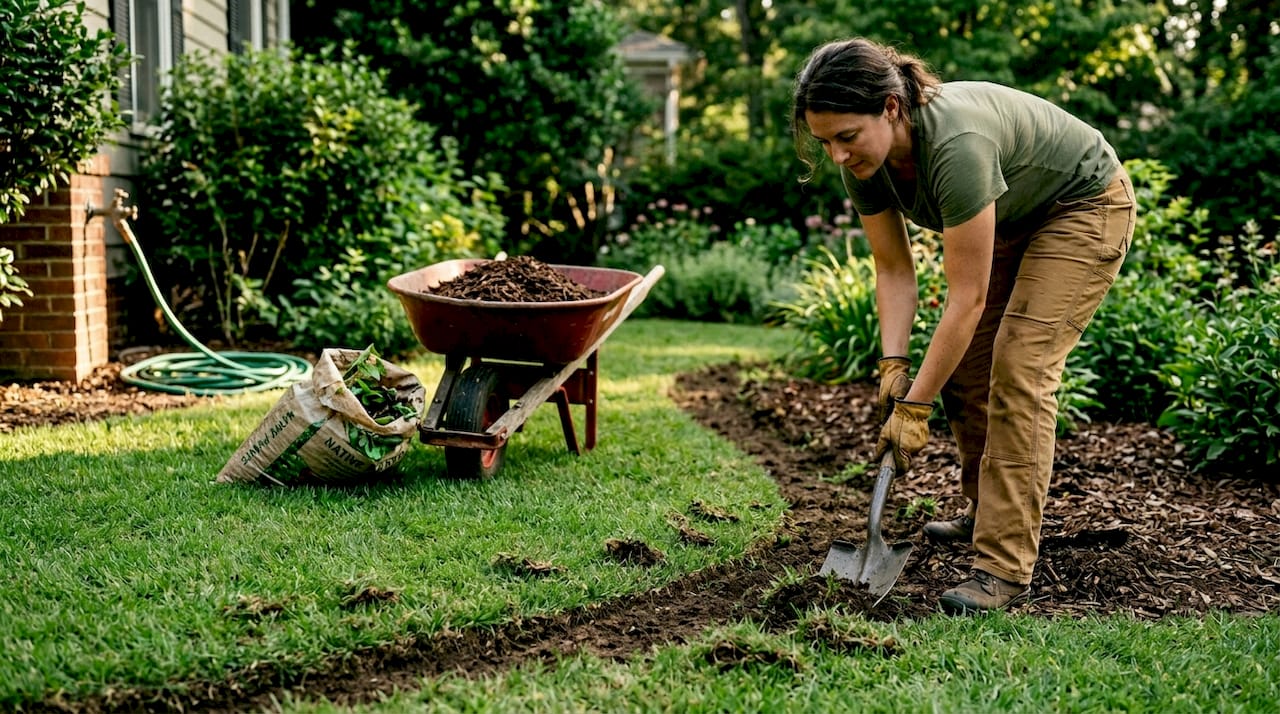
Edging is the easiest way to instantly improve how a yard looks. Clean, defined lines between your turf and flower beds give your entire landscape a polished, intentional appearance. Run an edge trimmer along every bed border, sidewalk, and driveway edge. A fresh edge only takes 15 minutes but creates a dramatic visual difference.
Mulching serves multiple purposes at once. Apply 3 to 4 inches of mulch in all your beds to suppress weeds and retain moisture. Lubbock summers are brutal, and mulch acts as insulation for plant roots. It also prevents the soil surface from crusting over, which is a real problem with clay soils exposed to intense sun.
Low-maintenance native and drought-tolerant plants to consider:
- Autumn Sage (Salvia greggii) for color with minimal water
- Black-eyed Susan for naturalistic drifts of yellow
- Texas Sage (Leucophyllum frutescens) as a reliable low-water shrub
- Purple Coneflower (Echinacea) for pollinators and long bloom time
- Buffalo grass for low-water turf in non-high-traffic areas
- Ornamental grasses like Muhly grass for texture and movement
Native plants are naturally adapted to Lubbock's alkaline soil and dry summers. They need far less supplemental irrigation than traditional bedding plants once established and rarely require fertilizer. For a solid foundation on selecting and maintaining plant beds alongside your turf, these lawn care essentials walk through the relationship between beds, borders, and turfgrass health.
Pro Tip: Mulch your beds now, before temperatures hit the 90s in June. Mulch applied in late spring locks in soil moisture from spring rains and dramatically reduces how much you need to water beds all summer long.
What most guides miss about preparing Lubbock yards for spring
Most lawn care articles you find online were written for the Southeast or Pacific Northwest. They assume a neutral soil pH, decent organic matter, and moderate summers. Lubbock's conditions don't fit that mold, and following generic advice can actively set your yard back.
The single biggest mistake we see is homeowners adding compost or gypsum before aerating. The logic makes sense on the surface: prep the soil, then open it up. But in dense clay, amendments applied before aeration just sit on top. They don't move down to the root zone where they're actually needed. Always aerate first, then apply your amendments immediately after so they filter directly into the channels.
The second common mistake is over-reliance on overseeding. Not every damaged lawn should be overseeded. If more than 50 percent of your lawn is dead or bare after winter, overseeding is just slow and often ineffective. In those cases, full sodding or sprigging with Bermuda sprigs gets you back to a functional lawn in weeks rather than months. Knowing the difference between a lawn that needs a patch and one that needs a full restart is a judgment call worth making carefully.
Deep, infrequent watering also solves more spring lawn problems than almost any other single change. It builds drought resistance, discourages shallow weeds, and reduces fungal disease pressure all at once. Expert recommendations for Texas warm-season grasses consistently point to root depth as the primary indicator of long-term lawn health, and deep watering is what builds it.
Don't underestimate preventing lawn disease as part of your spring strategy either. Spring moisture combined with warming temps creates ideal conditions for fungal issues, and catching them early is far cheaper than treating an established problem.
The AgriLife Extension soil test is also a genuinely local advantage that most Lubbock homeowners never use. A generic fertilizer schedule from a bag label doesn't account for your specific soil's sodium levels or micronutrient deficiencies. A local test does.
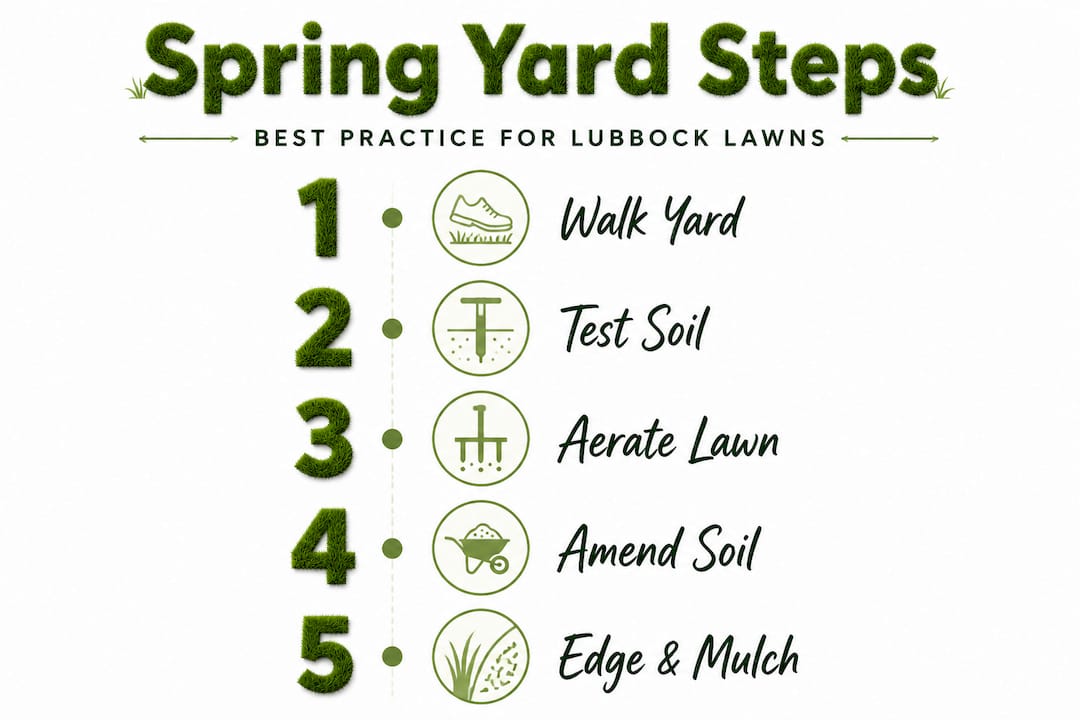
Pro Tip: Schedule a spring yard health check in late February before you do anything else. Walking the yard and noting dead spots, drainage issues, and thatch buildup takes 10 minutes and gives you a clear action plan so you're not fixing problems after the fact.
Let Only Mow make spring yard prep effortless
Ready to make all this simpler and get guaranteed great results? Spring preparation involves a real sequence of tasks that need to happen at the right time and in the right order. When one step gets delayed or skipped, the whole season can go sideways.

At Only Mow, we're a locally operated Lubbock team that understands clay soils, city water restrictions, and Bermuda grass quirks firsthand. We're also the official vendor for the City of Lubbock, which means our work meets a professional standard that's been independently verified. Whether you need a full spring cleanup, core aeration, flower planting, or consistent mowing all season, our Lubbock yard care services are built around what actually works here. Schedule your spring prep today and let our professional mowing and cleanup team handle the heavy work so your yard goes into summer in the best possible shape.
Frequently asked questions
What is the best month to prepare my yard for spring in Lubbock?
Late February through March is the ideal window, before grass fully greens up and while temperatures are still mild enough for compost and amendments to settle in before summer heat arrives.
How often should I aerate my yard in Lubbock?
Aerate once a year in early spring while the grass is actively growing to relieve compaction, improve drainage, and support stronger root development through the season.
Can I use winter rye grass with Bermuda lawns in Lubbock?
It's not recommended because winter rye competes with Bermuda grass directly, slowing spring green-up and weakening overall turf health when warm weather returns.
What are Lubbock's spring watering rules?
Watering follows an address-based schedule with permitted hours between midnight and 10am or 6pm and midnight, using deep, infrequent methods for established lawns to minimize waste and comply with city restrictions.
What is the AgriLife Extension and how does it help my yard?
The AgriLife Extension is a Texas A&M resource that diagnoses local lawn issues and recommends soil amendments specifically tailored to Lubbock's alkaline, clay-heavy conditions so you're not guessing at what your lawn actually needs.