TL;DR:
- Deep, infrequent watering promotes strong roots and drought resilience in Lubbock lawns.
- Timing irrigation during early morning or evening minimizes evaporation and disease risk.
- Adapting watering schedules to soil type, weather, and city restrictions ensures optimal lawn health.
Watering your lawn more does not mean watering it better. That single misconception leads Lubbock homeowners to waste thousands of gallons every summer while their grass still turns brown and brittle. The real factors driving a healthy lawn are timing, depth, and how you adapt your approach to Lubbock's semi-arid climate, where wind, heat, and sandy soils all work against you. This guide breaks down the evidence-backed methods that actually work, from the cycle and soak technique to soil-specific adjustments, so you can stop guessing and start seeing results.
Table of Contents
- Why irrigation is essential for lawn health
- Deep vs. shallow watering: The science and results
- Timing and scheduling: Lubbock-specific irrigation recommendations
- Expert fixes for edge cases: Drought, soil, and weather
- The uncomfortable truth most experts miss about lawn irrigation
- Enhance your lawn with expert irrigation and care
- Frequently asked questions
Key Takeaways
| Point | Details |
|---|---|
| Deep watering builds resilience | Watering to 6-8 inches encourages strong root systems that resist drought in Lubbock. |
| Cycle & soak method prevents waste | Short, repeated watering sessions minimize runoff and ensure efficient soil absorption. |
| Adapt irrigation to weather | Change watering schedules for rain, wind, or drought to boost lawn health and save water. |
| Timing impacts disease and efficiency | Early morning or evening watering reduces evaporation and keeps your lawn healthier. |
| Local restrictions guide best practices | Follow Lubbock's assigned irrigation days and methods to ensure compliance and sustainability. |
Why irrigation is essential for lawn health
Most people think of watering as a basic task. You turn on the sprinkler, the grass gets wet, and life goes on. But what's really happening underground is far more important than what you see on the surface. Grass roots need consistent soil moisture to pull nutrients up through the root system. Without that steady supply, roots become shallow, the grass weakens, and your lawn loses its ability to fight off drought, foot traffic, and pest pressure.
Lawn maintenance importance goes well beyond mowing and edging. Irrigation is the foundation. When soil moisture drops too low, roots stop absorbing nutrients like nitrogen and potassium, even when those nutrients are present in the soil. The result is a lawn that looks pale and thin despite regular fertilizing. Proper watering literally unlocks the nutrients already in your soil.
Turfgrass irrigation research confirms that deep, infrequent watering is the key methodology for maintaining root health, nutrient uptake, and resilience to stress and traffic. This is the opposite of the short daily sprinkle that most homeowners rely on.
Here are the core benefits that consistent, properly timed irrigation delivers:
- Root depth: Moisture drawn deep into the soil pulls roots downward, anchoring the plant and improving drought tolerance
- Nutrient flow: Water is the vehicle that carries dissolved nutrients from soil to root cells
- Heat resistance: A well-hydrated lawn handles Lubbock's summer heat far better than a drought-stressed one
- Traffic recovery: Lawns with deep root systems bounce back faster after foot traffic or pet activity
- Disease resistance: Properly watered grass maintains cell integrity, making it harder for fungal disease to take hold
"The goal of irrigation is not to keep soil wet. It's to keep roots healthy. Those are two very different targets, and confusing them is the most common mistake homeowners make."
Understanding lawn care essentials starts with recognizing that irrigation is not about surface appearance. It's about what's happening 6 to 8 inches below the surface where the real root growth occurs.
Deep vs. shallow watering: The science and results
Now that you have a sense of why just watering more isn't the solution, let's examine the science behind irrigation frequency and depth.
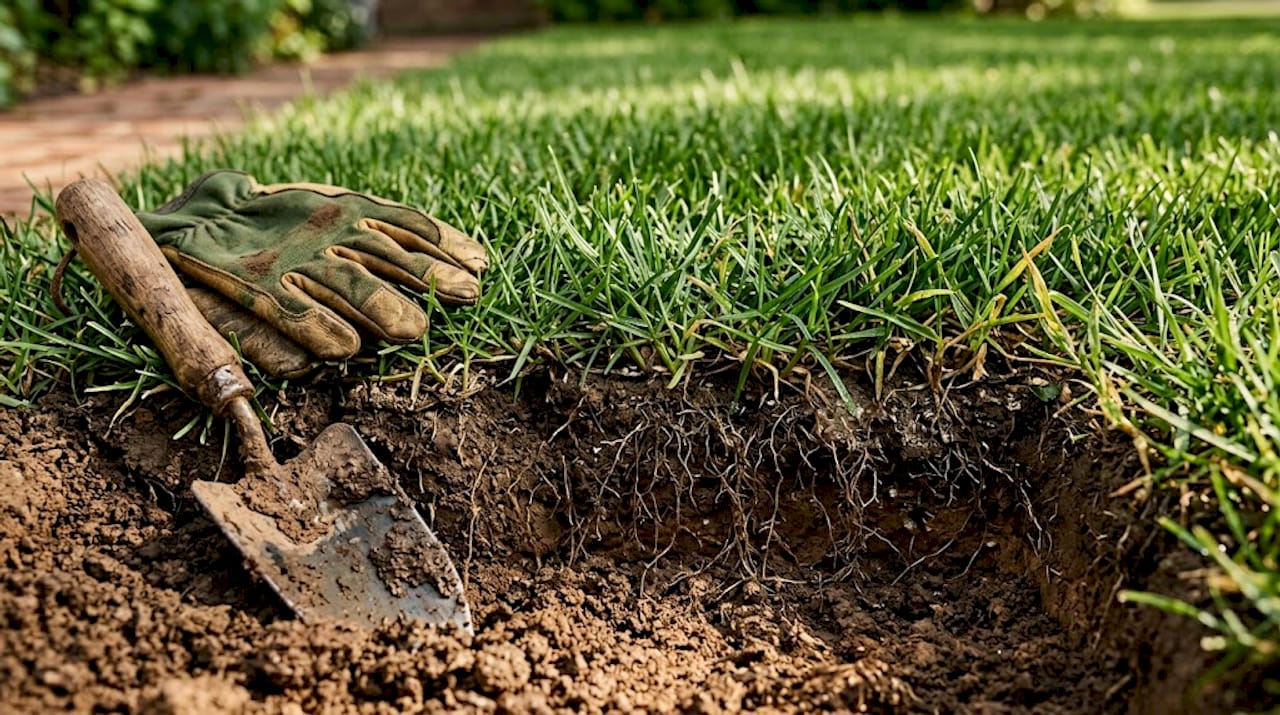
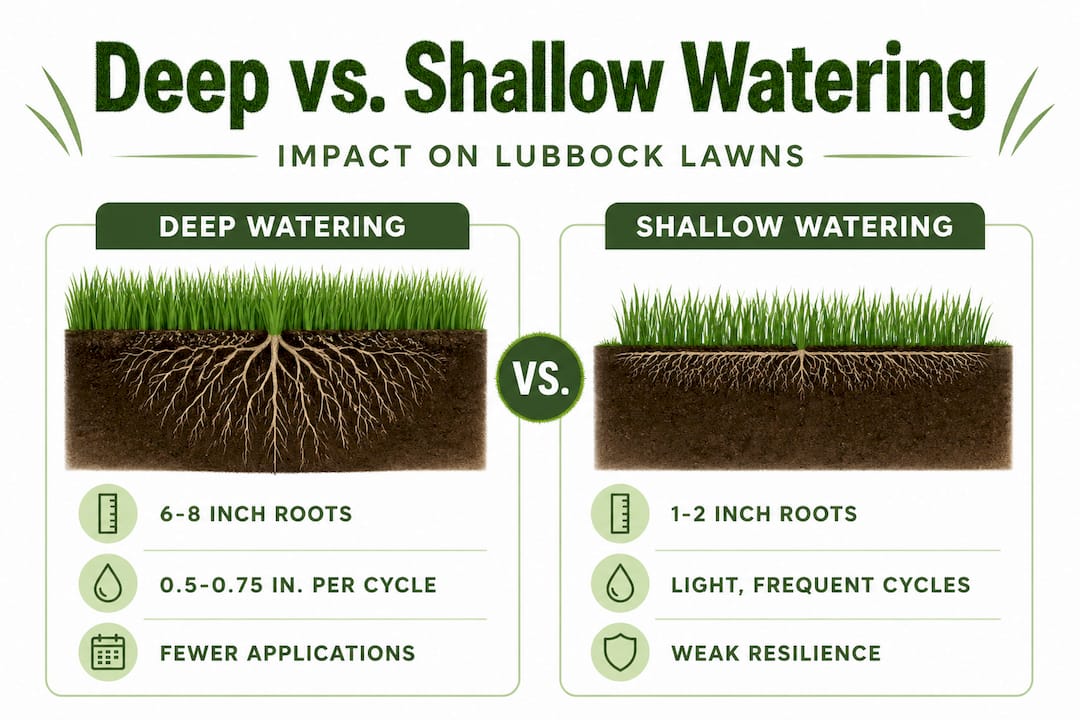
The difference between deep and shallow watering comes down to where the roots grow. When you apply a short burst of water, moisture only penetrates the top inch or two of soil. Roots follow moisture, so they grow where the water is. That means shallow watering literally trains your grass to develop a weak, surface-level root system. The moment a dry spell hits or temperatures spike, those shallow roots have nowhere to go.
Deep and infrequent irrigation of 0.5 to 0.75 inches per application promotes roots that reach 6 to 8 inches below the surface, significantly reducing drought susceptibility. Shallow, frequent watering does the opposite. It creates roots that sit just below the thatch layer, vulnerable to any disruption.
| Feature | Deep infrequent watering | Shallow frequent watering |
|---|---|---|
| Root depth | 6 to 8 inches | 1 to 2 inches |
| Drought tolerance | High | Very low |
| Water waste | Minimal | Significant |
| Disease risk | Low | Moderate to high |
| Soil structure | Preserved | Often compacted over time |
| Recommended frequency | 2 times per week | Daily (not recommended) |
The cycle and soak method is the most practical way to achieve deep watering without runoff. Instead of running your sprinklers for 12 to 15 minutes straight, you break that into multiple short cycles with rest periods in between. For example, you might run a zone for 3 to 4 minutes, pause for 30 to 45 minutes, and then repeat that 4 to 5 times. This gives the soil time to absorb water between cycles, allowing it to penetrate deeper rather than pooling on the surface or running off into the street.
Overwatering is just as harmful as under-watering. Excess irrigation causes nitrogen and phosphorus to leach out of the soil, creates conditions that favor fungal disease, and leaves roots weak and oxygen-deprived. On a broader scale, runoff from overwatered lawns carries nutrients into storm drains, contributing to algal blooms in local waterways.
Pro Tip: If you notice water pooling or running off your lawn before a zone cycle finishes, that's your signal to split the cycle into shorter segments. The soil is telling you it can't absorb water as fast as you're delivering it.
Before digging into the scheduling details, reviewing your lawn care checklist for the current season will help you align irrigation timing with fertilizing, mowing height, and other tasks that all interact with soil moisture. And if environmental impact matters to you, eco-friendly lawn care practices like deep watering and smart scheduling dramatically reduce the water and chemical inputs your yard requires.
Timing and scheduling: Lubbock-specific irrigation recommendations
Understanding the depth of water needed is vital, but it also matters when you water and how local conditions affect these choices.
Lubbock's climate is not forgiving. Summer temperatures regularly exceed 95°F, relative humidity stays low, and wind is almost constant. Each of those factors affects how efficiently your lawn absorbs irrigation water. Watering at the wrong time can mean losing up to 50% of what you apply to pure evaporation before it ever reaches the soil.
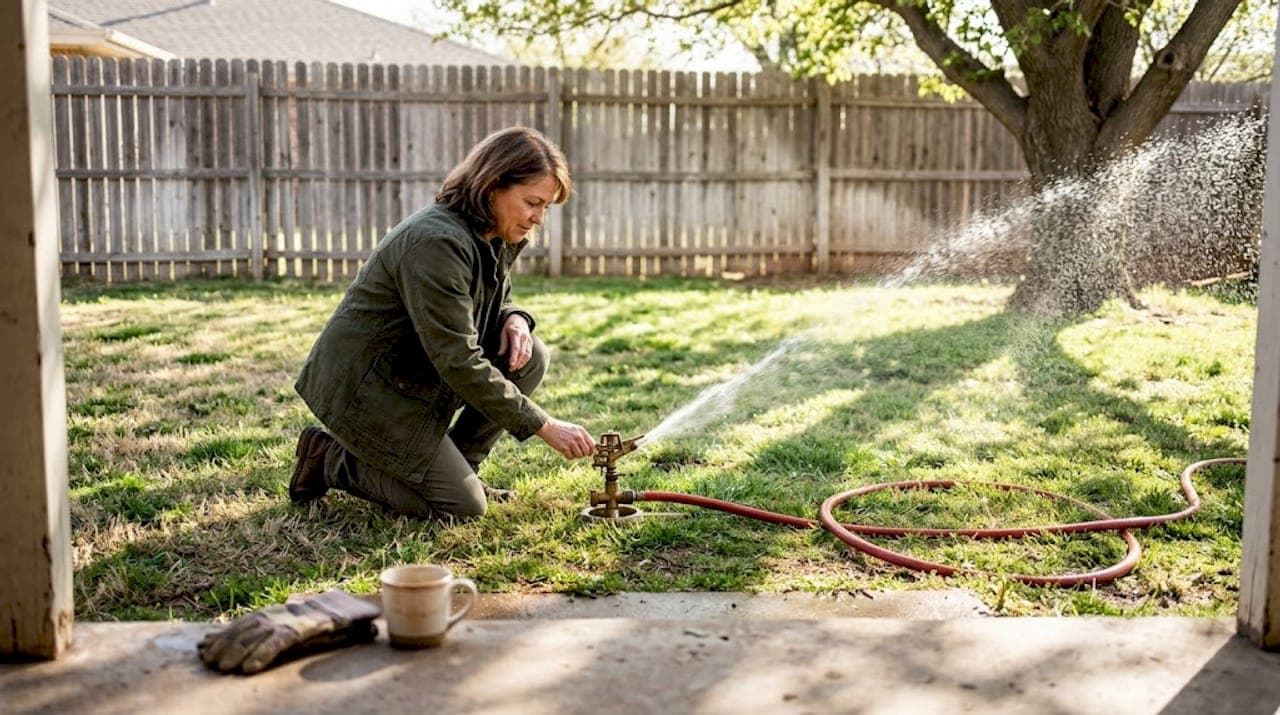
Early morning or evening watering minimizes evaporation and delivers the most water directly to the root zone. Midday watering, when the sun is at its peak, can lose half the applied water to evaporation before it soaks in. Nighttime watering avoids evaporation loss but extends leaf wetness, which increases the risk of fungal disease in humid conditions.
Lubbock also has specific watering restrictions that every homeowner needs to follow. Here is a quick reference for the current guidelines:
| Restriction | Details |
|---|---|
| Assigned watering days | Based on your address (odd/even) |
| No watering on Sundays | City-wide restriction |
| Allowed morning window | Midnight to 10:00 a.m. |
| Allowed evening window | 6:00 p.m. to midnight |
| Recommended weekly target | 1.5 inches per zone |
Lubbock lawns need 1.5 inches of water per zone per week during spring and summer. Using the cycle and soak method, that translates to running each zone for 12 to 15 minutes total, split into multiple 3 to 4 minute cycles repeated 4 to 5 times to prevent runoff and support deep root development.
Here's how to set up the cycle and soak schedule step by step:
- Identify your zone run time. Determine how long it takes your system to apply 0.5 inches per zone. A simple catch test using tuna cans placed in the spray pattern works well.
- Divide the total run time. Split the total target time into 3 to 4 minute segments for each zone.
- Add rest intervals. Program 30 to 45 minute breaks between each segment to allow absorption.
- Schedule within the allowed window. Start your first cycle early enough that all cycles complete before 10:00 a.m. or after 6:00 p.m.
- Adjust for soil type. Sandy soils drain fast, so shorter breaks between cycles are fine. Clay soils hold water longer, so extend the rest intervals.
- Check weekly totals. On rainy weeks, skip a session entirely. Your grass doesn't know the difference between rain and irrigation.
For spring lawn care tips specific to Lubbock, timing the first irrigation of the season correctly sets the tone for root development all the way through summer.
Expert fixes for edge cases: Drought, soil, and weather
Deciding when to irrigate is only half the story. Let's dig into real-world edge cases and advanced strategies for handling Lubbock's semi-arid climate.
Lubbock rarely gives you a predictable week. One day it's overcast and cool, the next it's 100°F with a 20-mph wind. Your irrigation schedule needs to flex with those conditions, not run on autopilot regardless of what the weather is doing.
Drought conditions are common in West Texas. When drought stretches beyond two or three weeks, the instinct is to water more often. The smarter move is to water deeply but less often, forcing roots to reach deeper into the soil where residual moisture exists. This builds a drought-hardy root system rather than a dependent one.
Rainy or overcast days are your gift. Skip irrigation entirely on days with measurable rainfall or significant cloud cover that keeps soil temperatures low. Running your sprinkler system during or right after rain wastes water and can push already-saturated soil past the point of absorption, increasing runoff and disease risk.
Compacted soil is one of the most overlooked problems in Lubbock yards. When soil compacts, water beads on the surface and runs off rather than soaking in. Aerating before irrigating breaks up that compaction and allows water to penetrate. The lawn aeration guide for Lubbock homeowners covers how and when to aerate for maximum benefit.
Soil type has a direct impact on how you should irrigate:
- Sandy soils in parts of Lubbock drain quickly, meaning you may need to water more frequently in shorter sessions to keep moisture in the root zone
- Clay soils hold water longer but can become waterlogged, so longer rest intervals between cycle and soak segments are essential
- Mixed or loam soils offer the best balance, but still benefit from the cycle and soak approach rather than long single-session watering
Wind is a factor that almost no irrigation guide talks about seriously. Lubbock averages wind speeds that can scatter sprinkler spray dramatically, reducing coverage uniformity and wasting water. Prioritizing low-wind conditions below 3 meters per second makes a measurable difference in irrigation efficiency. Early morning hours before the daily wind picks up are often the best window for this reason.
Pro Tip: Install a rain sensor on your irrigation controller if you haven't already. It automatically skips scheduled cycles after rainfall, preventing the unnecessary watering that wastes money and stresses your lawn.
For lawns that have already suffered from poor irrigation practices, lawn restoration steps can help you recover root depth, soil health, and turf density over a single growing season.
The uncomfortable truth most experts miss about lawn irrigation
Most irrigation guides written for Texas homeowners are technically accurate but practically incomplete. They tell you to water deeply and avoid midday heat. What they don't tell you is how dramatically local restrictions, wind patterns, and soil variability in Lubbock change those recommendations in real-world conditions.
Here's what we've seen working directly with Lubbock homeowners: the biggest irrigation failures don't come from people who are ignoring advice. They come from people who are following general advice without adapting it to what's actually in their yard. A homeowner on the west side of Lubbock dealing with sandy, fast-draining soil needs a completely different approach than someone on the south side with heavier clay. Applying the same 15-minute zone schedule to both lawns produces poor results for at least one of them.
Root resilience is also sacrificed more often than people realize. When homeowners hit a hot, dry stretch, the natural reaction is to water every day to keep the grass green. That feels like care. But what it actually does is train roots to stay shallow, because moisture is always available at the surface. When restrictions kick in or a real drought hits, those lawns collapse fast because the roots were never pushed to go deep.
The most successful Lubbock lawns we see belong to homeowners who treat their irrigation schedule like a dynamic system, not a set-and-forget program. They adjust for weather, track their weekly totals, and stay within city guidelines even when it feels inconvenient. They also understand that disease prevention strategies and irrigation practices are deeply connected. Overwatering is one of the leading causes of fungal disease in Lubbock lawns, and no amount of fungicide will fix a sprinkler schedule that runs too often.
The bottom line is that compliance, efficiency, and plant health are not competing priorities. When you get the timing, depth, and soil adaptation right, all three align naturally.
Enhance your lawn with expert irrigation and care
Knowing the right irrigation strategy is a strong start, but putting it into practice across a full growing season requires attention, equipment, and time that not every homeowner has available.

At Only Mow, we work with Lubbock homeowners every day to make sure their lawns get the care they actually need, not a one-size-fits-all treatment. As the official vendor for the City of Lubbock, we understand local restrictions, soil conditions, and seasonal patterns better than any national chain ever could. From scheduling irrigation-aligned lawn maintenance to full-service landscaping and yard restoration, we make it easy to protect the investment you've made in your property. If you're ready to connect with a local team that knows Lubbock's land, find a landscaper through our network and get started today.
Frequently asked questions
How much water does my Lubbock lawn really need per week?
Most lawns in Lubbock need about 1.5 inches per zone every week during spring and summer, ideally spread across two allowed watering days using the cycle and soak method.
When should I water to reduce evaporation and disease?
Water in the early morning or evening to minimize losses. Early morning watering is ideal because it reduces evaporation while allowing leaf surfaces to dry before nightfall, cutting disease risk.
Is deep infrequent watering always best for Lubbock lawns?
Deep infrequent irrigation is the preferred approach for building drought-tolerant roots, but sandy soils may require slightly more frequent sessions with shorter rest intervals to keep moisture in the root zone.
Should I aerate my lawn before irrigating if I have compacted soil?
Yes, absolutely. Aerating compacted soil before irrigation allows water to penetrate the surface instead of running off, making every drop you apply far more effective.
Does watering during windy conditions affect efficiency?
Wind significantly reduces how evenly and efficiently your sprinklers apply water. Scheduling irrigation when wind is below 3 meters per second improves coverage and reduces waste considerably.