
TL;DR:
- Lubbock enforces lawn codes through complaint-driven and scheduled neighborhood sweeps.
- Proper maintenance includes mowing, weed control, and clearing defensible space around structures.
- Keeping detailed records and proactive upkeep help prevent citations and ease enforcement issues.
Getting a citation from Lubbock code enforcement feels like an ambush when you weren't even aware your lawn was a problem. One overgrown patch, a cluster of nuisance weeds creeping past the curb, or dry brush left too close to your structure can trigger a fine, a forced cleanup order, or a follow-up visit that puts your property on a watchlist. Lubbock code enforcement targets nuisance weeds as a stated focus of neighborhood deployments, which means inspectors aren't waiting for your yard to become a disaster before they act. This guide gives you a clear roadmap so you're never caught off guard.
Table of Contents
- Understand Lubbock's municipal lawn codes and enforcement methods
- What you need before the inspection: Essentials and preparation
- Step-by-step: How to pass your municipal lawn inspection
- Troubleshooting and special cases: Avoid common mistakes and penalties
- A smarter approach to lawn inspection readiness in Lubbock
- Get expert help with Lubbock lawn inspections and compliance
- Frequently asked questions
Key Takeaways
| Point | Details |
|---|---|
| Know local rules | Familiarize yourself with Lubbock’s municipal lawn codes to avoid citations and confusion. |
| Prepare proactively | Keep your tools, photos, and routine maintenance steps ready before inspections happen. |
| Follow inspection steps | Use a systematic process to ensure lawns meet clearance, mowing, and watering rules every time. |
| Watch for special cases | Be extra careful with vacant lots and properties near wildland areas, which have stricter requirements. |
| Document everything | Keep records and photos of maintenance as proof if enforcement questions arise. |
Understand Lubbock's municipal lawn codes and enforcement methods
Now that you know why staying compliant matters, let's break down what Lubbock's codes actually require and how enforcement works.
The first thing every Lubbock homeowner or property manager should do is locate the official source. Lubbock's landscaping provisions live under Division 3.4: Trees, Landscaping, and Buffering in the city's eCode360 municipal code database. This section spells out requirements for trees near streets, approved ground cover, vegetation buffers between property types, and weed management. Reading this document even once gives you a huge advantage over neighbors who are guessing.
The code addresses several specific areas:
- Tree placement and clearance from sidewalks, utilities, and sight lines at intersections
- Landscaping requirements for ground cover that prevents soil erosion or unsightly bare patches
- Nuisance weeds defined as unmanaged or overgrown vegetation that creates unsafe or unsightly conditions
- Buffer zones between residential and commercial properties, requiring appropriate screening and vegetation management
- Dry brush and dead vegetation removal, especially near structures
Understanding how an inspection gets triggered is just as important as knowing the rules themselves. Enforcement deployments follow both a complaint-driven and a scheduled field-inspection model. A neighbor can file a complaint through the city's portal, and an inspector will visit your property, sometimes within days. But Lubbock also runs scheduled "deployment" programs in specific neighborhoods, where officers sweep entire blocks regardless of whether any complaint was filed. That's why even well-maintained yards sometimes get flagged during these sweeps if one detail falls outside code.
| Trigger Type | How It Works | Typical Response Time |
|---|---|---|
| Neighbor complaint | Filed online or by phone, inspector dispatched | 2 to 7 business days |
| Scheduled neighborhood deployment | Block-by-block sweep in targeted areas | Unannounced, seasonal |
| Field check | Officer spots violation during patrol | Same day or next visit |
| Follow-up after prior citation | Property placed on watchlist | 10 to 30 days |
What gets flagged most often? Nuisance weeds topping out above the permitted height, overgrown grass along fence lines and alleys, and vegetation too close to structures. Staying up to date with your Lubbock lawn care checklist is one of the most reliable ways to stay ahead of these common triggers. For a broader foundation, reviewing lawn care essentials specific to Lubbock's climate also helps you understand why some maintenance tasks matter more here than in other parts of Texas.
Keep in mind: Lubbock's code enforcement priorities can shift. Policies around notice periods, abatement timelines, and the types of violations being prioritized adjust periodically. Checking the city's official updates at least once per season keeps you current.
What you need before the inspection: Essentials and preparation
Understanding the rules is just step one. Here's how to get physically prepared for any inspection, planned or surprise.
One measurement that Lubbock homeowners often miss is the defensible space clearance requirement. Vegetation, dry grass, weeds, and brush must be cleared at least 30 feet around any structure. If your property falls within a wildfire-risk area, that distance extends to 100 feet. Given that much of West Texas has elevated fire risk during dry seasons, this isn't a technicality. It's a safety requirement with real enforcement teeth.
Here's a quick reference table for preparation tasks:
| Preparation task | Why it matters | Frequency |
|---|---|---|
| Mow to 4 inches or below | Keeps grass below nuisance threshold | Every 7 to 14 days in growing season |
| Edge along sidewalks and driveways | Prevents overgrowth into public space | With every mow |
| Clear 30-foot defensible zone | Fire code compliance | Monthly or after rainfall |
| Remove dead vegetation and brush | Reduces fire risk and visual violations | After each storm or dry spell |
| Document with dated photos | Evidence for disputes | Every maintenance visit |
| Print current code excerpt | Reference during prep | Once per season |
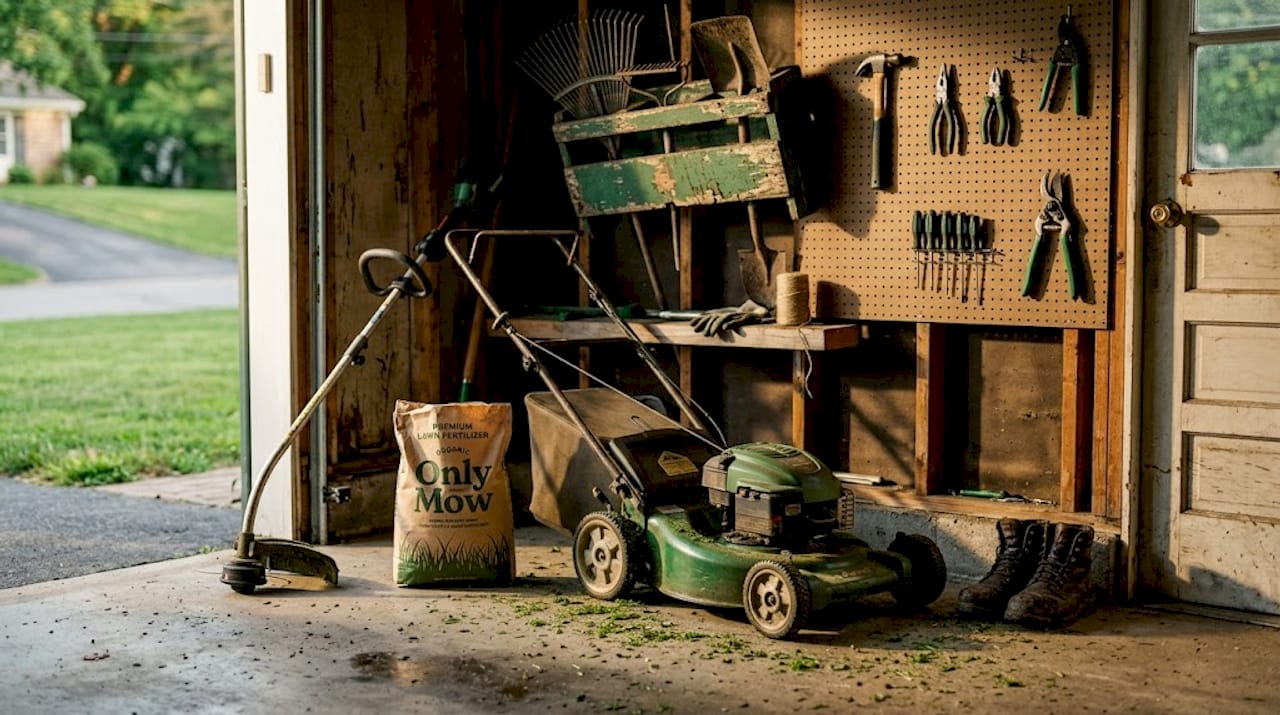
Beyond the tools and measurements, building a consistent routine is your strongest asset. A mower, a string trimmer, waste bags, gloves, and a copy of the relevant code sections printed and stored in a binder isn't overkill. It's exactly how experienced property managers stay inspection-ready without scrambling.
For a full breakdown of seasonal tasks, the outdoor maintenance guide covers Lubbock-specific timing for trimming, watering, and cleanup.
Your documentation habit matters as much as the physical work. Before you mow, take a photo. After you clear brush, take another. Date-stamped photos on your phone create a simple, credible record that can resolve disputes without a hearing.
Pro Tip: Pair your mowing schedule with your watering days. In Lubbock's climate, watering and mowing on alternating days keeps grass at a healthy height without letting it shoot up between maintenance visits, which is exactly when violations happen.
Step-by-step: How to pass your municipal lawn inspection
With your prep done and materials ready, follow these steps to ensure you meet or exceed what inspectors look for.
1. Baseline your entire property against the code. Walk your lot with a printed copy of Division 3.4 and measure the clearance zones. Note any tree branches hanging over the sidewalk, any dead vegetation within 30 feet of your home, and any areas where ground cover has thinned out and weeds have moved in. Write it all down.
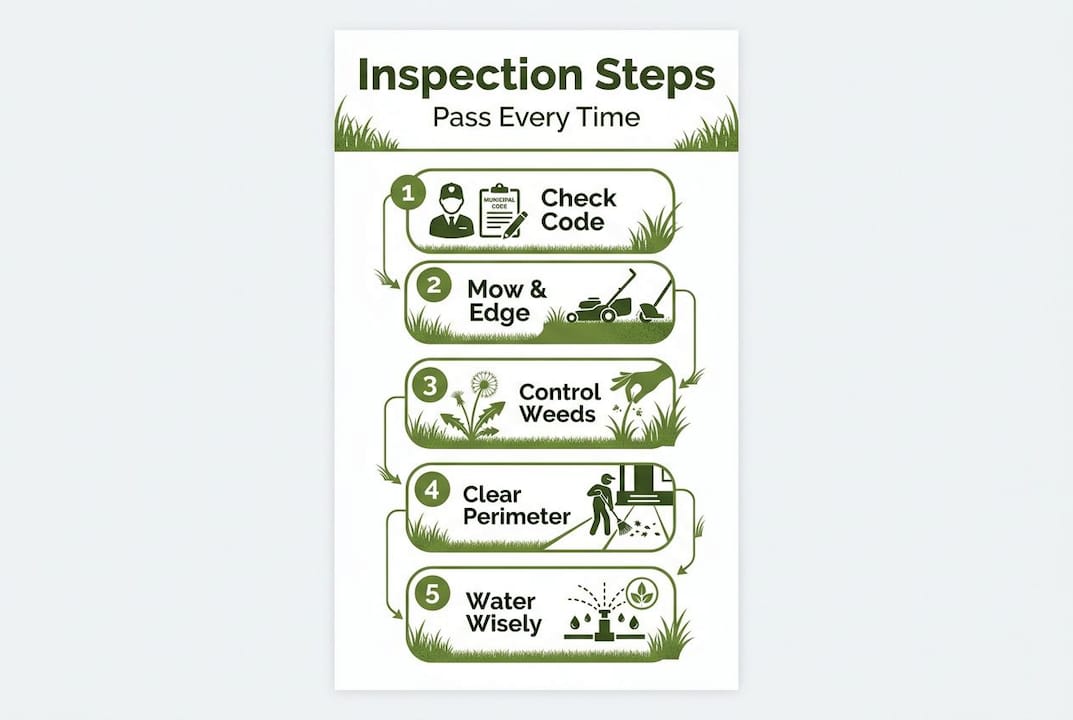
2. Mow and edge every visible boundary. Inspectors pay attention to edges because that's where lazy maintenance shows. Grass creeping over sidewalk edges, alley lines left ragged, or fence lines with tall weeds growing against them are all easy citations. Proper mowing for curb appeal addresses exactly these high-visibility zones, especially for rental properties where multiple people may notice a violation before you do.
3. Address weed control before the inspection window. Pre-emergent weed control applied in early spring significantly reduces the number of nuisance weeds that appear by summer. If weeds are already present, pull or treat them before they go to seed. A property with visible seed heads on weeds signals neglect to any inspector.
4. Verify the defensible space zone is clear. Walk the 30-foot perimeter around every structure. Remove dry grass clippings, dead shrub material, loose brush piles, and any wood debris. In wildfire-risk areas, extend this check to 100 feet.
5. Water appropriately to avoid drought penalty issues. Lubbock's water restrictions affect when and how often you can irrigate. Overwatering triggers different problems than underwatering, but bare, cracked, and compacted soil without vegetation can also draw an inspection flag for erosion or nuisance conditions. Follow the spring lawn care timing appropriate to Lubbock's climate zones to keep grass healthy without violating watering ordinances.
6. Create your recordkeeping file. After each maintenance session, add your dated photos and a short written note about what was done. Keep this file somewhere accessible. If an inspector files a citation and you believe it's inaccurate, your records are your first line of defense.
Compliance insight: The eCode360 compliance framework makes clear that the goal is a baseline that meets the strictest safety and defensible-space zone requirements, not just the minimum visible standard. Inspectors are trained to look at the full picture, not just what's in front of the house.
Most common violations in Lubbock: Nuisance weeds (especially along alleys and back fences), overgrown grass exceeding permitted height, dry brush within the defensible zone, and vegetation encroaching on public right-of-way.
Troubleshooting and special cases: Avoid common mistakes and penalties
Passing an inspection is one thing. Avoiding repeat issues or unexpected citations means being proactive about common mistakes and trickier situations.
Some properties are more vulnerable to enforcement activity than others. Vacant lots and properties with nuisance weeds frequently appear in scheduled code-enforcement deployments, and wildfire-risk areas can increase the required defensible-space distances beyond the standard 30-foot clearance. If you own a vacant lot, you're still legally responsible for its maintenance. An unmowed vacant lot can accumulate citations faster than an occupied property simply because no one is watching it day to day.
Special cases to plan for:
- Corner properties have two street-facing edges, which doubles the visible exposure to inspectors during patrols
- Wildland-urban interface properties near the city's edge may face stricter vegetation standards under fire code
- Rental properties where tenants manage the lawn require explicit lease language assigning maintenance responsibility, though the owner always bears legal liability
- Newly purchased properties often come with existing violations from the prior owner, which transfer to you on closing
Responding to neighbor complaints before they become official citations is smart property management. If a neighbor flags a concern directly to you, address it within a week and document what you did. Most code complaints escalate because the property owner ignored the initial conversation.
From the enforcement side: Cities adjust their abatement mechanics over time, focusing on how quickly properties return to compliance after notice rather than strictly maximizing fines. Acting fast after receiving any notice almost always results in a better outcome than waiting for re-inspection.
Understanding the nuances of public property landscaping standards helps property managers who oversee multiple units keep every site compliant without site-by-site guesswork. For landlords specifically, learning how to maintain rental lawns efficiently in Lubbock's climate creates a system that scales across your entire portfolio.
Pro Tip: Keep a maintenance log with dates, tasks performed, and photos for every property. If a citation arrives and your log shows service was performed that same week, you have a strong basis for contesting it or requesting a waiver.
A smarter approach to lawn inspection readiness in Lubbock
Here's an uncomfortable reality that most property guides won't tell you: most Lubbock homeowners who get cited for lawn violations weren't ignoring their yards. They were maintaining them on their own schedule, not on the city's schedule. That's the distinction that matters.
Lubbock's scheduled neighborhood deployments don't follow a public calendar. Your neighborhood can get swept in late spring when grass is at its fastest growth rate, or in late summer when dry conditions turn vegetation into a fire-code issue overnight. Waiting until your lawn looks bad to schedule maintenance is exactly the timing that gets properties cited. Proactive maintenance isn't just about aesthetics. It's a timing strategy.
There's also a community-awareness angle that nobody talks about in compliance guides. Neighbors who share information about when their street was last swept, or which blocks are seeing increased inspector activity, can adjust their maintenance windows accordingly. A quick conversation with a neighbor or a local neighborhood association message board gives you informal intelligence that no official resource provides.
The recordkeeping point deserves more emphasis than it typically gets. Cities refine their enforcement approach focusing on abatement speed rather than citation volume, which means that property owners who can show immediate corrective action and consistent maintenance history tend to resolve disputes quickly. A folder of dated maintenance photos, even a simple one on your phone, is genuinely your best compliance tool. Not the mower. Not the trimmer. The record.
The other thing to watch is how policy language evolves. Code enforcement priorities in Lubbock shift based on city council direction, seasonal risk conditions, and neighborhood-specific programs. A rule that was loosely enforced last year may be a deployment target this year. Checking the eCode360 portal at the start of each season takes ten minutes and can save you a fine that takes far longer to resolve.
Get expert help with Lubbock lawn inspections and compliance
If the process feels overwhelming or you want a guaranteed pass, local professionals can make compliance automatic.
Keeping up with Lubbock's lawn codes, defensible-space requirements, and seasonal enforcement windows is a real time commitment on top of everything else homeowners and property managers already handle. That's where working with a trusted, local lawn care team makes the difference.

Only Mow is Lubbock's official city vendor for lawn maintenance, which means we understand exactly what inspectors look for and when they're most active. Whether you need regular mowing, brush clearing, weed control, or a full pre-inspection cleanup, our team handles it on a schedule that keeps your property code-compliant year-round. Explore our full range of Lubbock lawn care services or connect with a local lawn care professional through our find a local landscaper tool to schedule your first visit and get ahead of the next enforcement cycle.
Frequently asked questions
What is considered a 'nuisance weed' under Lubbock's code?
Nuisance weeds in Lubbock are unwanted plants that are overgrown or unmanaged, commonly cited in code enforcement for creating unsafe or unsightly conditions on residential and commercial properties.
How often does Lubbock conduct neighborhood code enforcement deployments?
Lubbock schedules enforcement deployments based on complaints and seasonal growth cycles, with increased frequency during spring and summer when vegetation grows fastest.
What's the required distance to clear vegetation near a structure in Lubbock?
Defensible space clearance requires at least 30 feet of vegetation clearing around any structure, extending to 100 feet in designated wildfire-risk areas.
Can landlords or property managers be fined if tenants neglect lawn care?
Yes. Property owners bear full responsibility for municipal code compliance, meaning landlords can be cited and fined even when a tenant is the one who neglected the lawn.