TL;DR:
- Clear lease language on yard duties to prevent disputes and ensure compliance.
- Use drought-tolerant, native plants to reduce water costs and maintenance.
- Focus on simple, well-maintained landscaping for better tenant satisfaction and property value.
Balancing curb appeal, tenant satisfaction, and local regulations is one of the trickier parts of owning rental property in Lubbock. A neglected yard signals to prospective tenants that maintenance is an afterthought, and that perception costs you money. At the same time, many landlords take on landscaping responsibilities that legally belong to their tenants, or they invest in high-maintenance features that nobody wants to care for. This checklist cuts through the guesswork, walking you through your legal duties, Lubbock's specific code requirements, smart plant choices, and a seasonal care routine that keeps your property looking sharp all year.
Table of Contents
- Understand landlord vs. tenant landscaping duties
- Safety and compliance: Legal landscaping requirements for Lubbock landlords
- Choosing drought-tolerant, low-maintenance landscaping
- Seasonal maintenance: Year-round landscaping tasks for landlords
- A better way: Why less can be more in Lubbock rental landscaping
- Get expert help with Lubbock lawn care
- Frequently asked questions
Key Takeaways
| Point | Details |
|---|---|
| Clarify duties | Landlords and tenants share landscaping tasks according to the lease—define responsibilities clearly. |
| Follow Lubbock law | Meet fire safety, drainage, and permitting rules to avoid fines and protect your property. |
| Prioritize drought-resistance | Drought-tolerant plants and xeriscaping save money, time, and water for everyone. |
| Schedule seasonal tasks | Use a seasonal checklist to keep your yard appealing and address issues proactively year-round. |
| Less is more | Simple landscapes with native plants reduce stress and improve tenant retention and property value. |
Understand landlord vs. tenant landscaping duties
With the big picture in mind, let's examine who handles what outdoors. The line between landlord and tenant responsibilities often blurs when it comes to yard care, and that ambiguity is expensive. Disputes over who mows, who pays for dead trees, and who handles pest problems in the landscaping are common sources of conflict and even legal trouble.
In Lubbock, as in most of Texas, landlord-tenant yard maintenance typically follows this general rule: landlords handle major structural and systemic landscaping tasks, while tenants manage routine upkeep. But "typical" only holds up if your lease actually spells it out.
What landlords are generally responsible for:
- Irrigation and sprinkler system installation, repair, and seasonal inspection
- Large tree trimming, removal of dead or hazardous trees, and stump grinding
- Fence installation, major repairs, and replacement
- Pest control in the soil or lawn that could affect the structure or health of the property
- Initial landscaping installation and any major restoration work
What tenants are generally responsible for:
- Routine lawn mowing on a regular schedule
- Basic watering unless an automatic system is provided
- Weeding garden beds and clearing leaves and debris
- Light shrub trimming within reach
These responsibilities can always be renegotiated. Some landlords in Lubbock prefer to handle all lawn care and build the cost into rent, especially for maintaining rental lawns at multi-unit properties where consistency matters more than cost savings.
"Clear lease language about yard care is your best protection. Vague agreements lead to neglected yards and security deposit disputes."
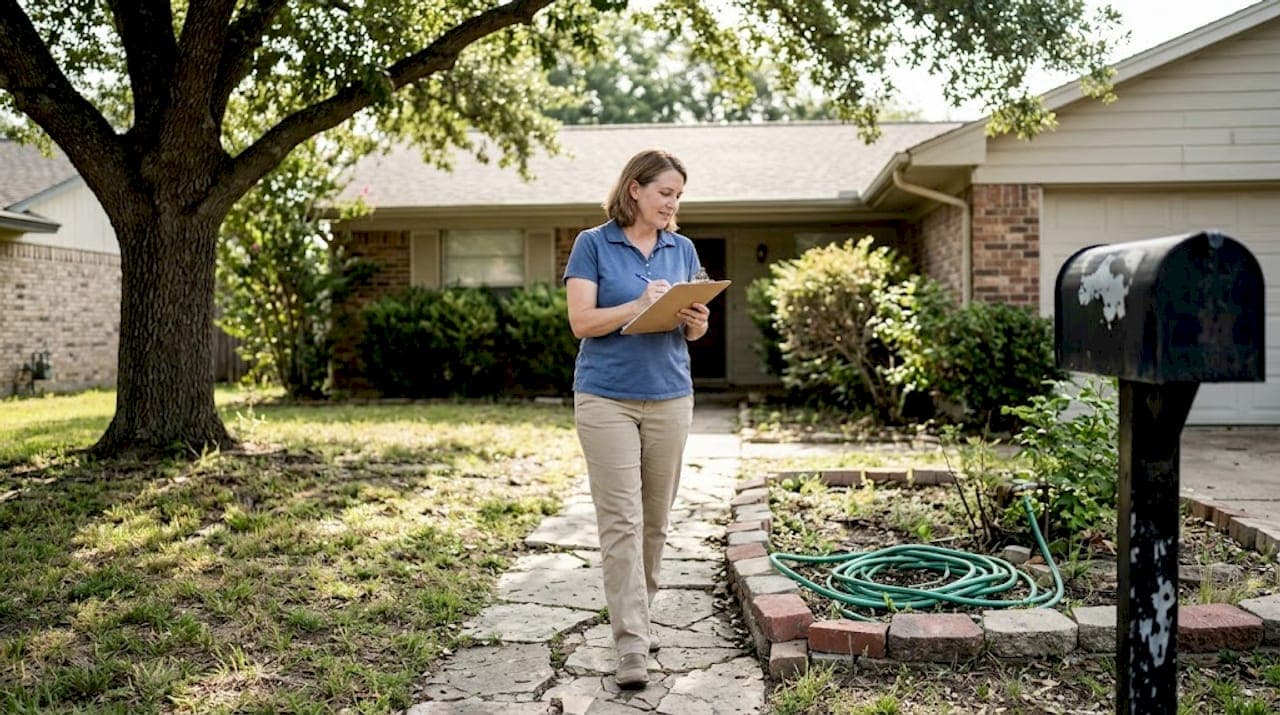
Pro Tip: Add a routine inspection schedule directly into your lease or property management process. A quarterly walkthrough that includes the yard gives you documented proof of condition and keeps tenants accountable without creating conflict.
If your lease does not explicitly assign a task, a court will likely look at what is "reasonable" given the lease price and property type. Do not leave that to chance.
Safety and compliance: Legal landscaping requirements for Lubbock landlords
Now that you know your basic duties, let's cover the local legal and safety requirements every Lubbock landlord must address. Failing to meet these standards does not just risk fines; it can create liability if a tenant or guest is injured.
Fire safety clearance is one of the most commonly overlooked requirements. Lubbock landlords must clear brush within 30 feet of buildings and prune all tree limbs at least 6 feet from the ground. In high-risk zones, that clearance extends to 100 feet. Dead vegetation, dry shrubs, and overgrown grass near structures are fire hazards and code violations.
Key compliance steps, in order of priority:
- Remove all dead or dying vegetation within the required clearance zone around your structure
- Prune tree limbs to at least 6 feet from ground level across the property
- Check drainage flow to confirm water runoff does not redirect onto neighboring properties
- Review city code for any sprinkler schedule restrictions during drought conditions
- Confirm that any large grading project or drainage redirection has the proper permits
On drainage: grading permits are required for projects that move significant volumes of soil or alter drainage patterns. Redirecting water onto a neighbor's property, even unintentionally, can result in legal action and costly repair orders. If you are planning any significant regrading, check with the City of Lubbock first.
Violating local landscaping codes can result in fines starting at $250 per occurrence in Lubbock, and repeat violations escalate quickly.
Familiarity with landscaping rules for managers helps you avoid these traps. Also, review lawn mowing tips that address height violations, since grass that grows above city limits can trigger nuisance citations.
Compliance is not glamorous, but one inspection notice from the city is enough to make most landlords wish they had handled it sooner.
Choosing drought-tolerant, low-maintenance landscaping
With compliance fundamentals set, choose landscaping that meets local needs and maximizes property value. Lubbock sits in a semi-arid climate where water is expensive and rainfall is inconsistent. Choosing the wrong plants creates a cycle of stress, dead patches, and tenant frustration.
The smarter move is designing landscapes that thrive on less. Xeriscaping cuts water use by up to 75%, and Texas law protects your right to install drought-tolerant landscapes even in HOA-governed communities. That is a significant cost reduction for a single design decision.
Top drought-tolerant options for Lubbock rental properties:
- Bermuda grass: Hardy, spreads well, tolerates heat and dry spells better than most turf
- Buffalo grass: Native to the Texas plains, needs minimal irrigation once established
- Texas sage (Leucophyllum): Blooms after rain, zero fuss, excellent curb appeal
- Agave and yucca varieties: Structural interest with almost no care requirements
- Decomposed granite or gravel mulch zones: Reduce watering areas without looking barren
| Feature | Traditional Landscaping | Drought-Tolerant Design |
|---|---|---|
| Annual water cost | High | Reduced by up to 75% |
| Tenant maintenance burden | High | Low to minimal |
| Replacement frequency | Every 1 to 2 seasons | Every 5 to 10 years |
| Curb appeal consistency | Weather-dependent | Year-round stability |
A solid Lubbock lawn care checklist will tell you that mulched beds around native shrubs do double duty: they lock in soil moisture and suppress weeds without much ongoing effort. Pair that with drip irrigation and you have a yard that almost manages itself.
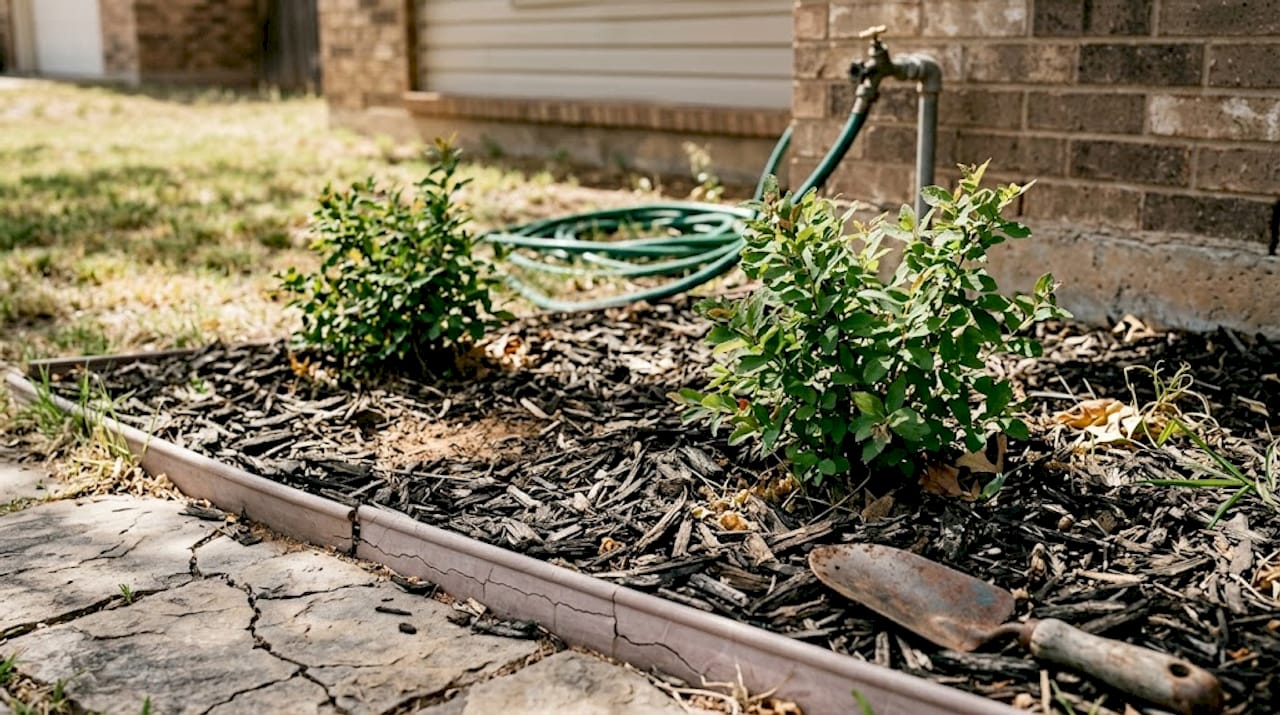
Pro Tip: Native plants already adapted to Lubbock's soil and rainfall patterns give you the best chance at a yard that looks intentional, not neglected, even during dry stretches. Review lawn care essentials before your next planting decision.
Seasonal maintenance: Year-round landscaping tasks for landlords
After selecting your landscape design, a seasonal checklist helps ensure year-round success. Lubbock's climate swings hard between seasons, which means what you do in April directly affects how your yard survives August.
Seasonal task breakdown:
- Spring: Mow once growth begins, aerate compacted soil, apply pre-emergent weed control, and test your irrigation system before summer heat arrives. Aerate compacted clay soil and overseed bare patches for best results.
- Summer: Water deeply but less often (2 to 3 times per week max), apply mulch 2 to 3 inches deep around beds, and stay on top of weeds before they set seed.
- Fall: Overseed warm-season grasses if needed, trim trees before winter winds arrive, and schedule leaf removal before wet leaves mat down and kill turf.
- Winter: Inspect fences, retaining walls, and irrigation shutoffs. Schedule dormant pruning for trees and large shrubs. This is also the time to plan and budget for spring improvements.
| Season | Landlord tasks | Tenant tasks |
|---|---|---|
| Spring | Irrigation check, aeration, fertilizing | Mowing, light weeding |
| Summer | Mulch refresh, pest inspection | Watering, weed pulling |
| Fall | Tree trimming, overseed | Leaf removal, mowing |
| Winter | Fence/structure inspection | None typically required |
Review spring lawn care tips and fertilizing tips to stay ahead of each season's demands. Timing fertilizer applications correctly in Lubbock's climate makes the difference between lush turf and a stressed yard that invites weeds.
Consistency is the real goal here. Tenants who see a landlord keeping up with the yard are more likely to respect and care for the space themselves.
A better way: Why less can be more in Lubbock rental landscaping
With your checklist in place, consider this alternative viewpoint from experience. Most landlords assume that impressive landscaping means more features: elaborate flower beds, multiple tree varieties, decorative stone paths, maybe a small water feature. In reality, complexity in a rental yard almost always backfires.
Here is what happens: tenants inherit a high-maintenance yard they were not consulted about, feel overwhelmed, and quietly let it go. Six months later, you have a property that looks worse than if you had planted nothing at all. We have seen this play out across Lubbock properties more times than we can count.
The landlords who get the best long-term results keep things simple and well-defined. A clean edge between lawn and beds, a few native shrubs, and a reliable irrigation timer do more for tenant satisfaction and retention than any ornate design. Prioritizing restoration over decoration resets the property's baseline and sets tenants up for success.
Lubbock's conditions reward consistency over complexity. A yard that looks good in July and January, with minimal input from anyone, is worth far more than a showpiece that needs constant attention.
Get expert help with Lubbock lawn care
If you want a simpler way to check every item off your list, here's how Only Mow can help.

Only Mow is Lubbock's trusted local lawn care provider, serving landlords and property managers across the area. As the official vendor for the City of Lubbock, we bring the same level of reliability and professionalism to every rental property we maintain. From routine mowing and seasonal cleanups to irrigation checks and pre-emergent weed control, we handle the tasks that keep your property code-compliant and visually competitive. When you are ready to stop juggling schedules and start getting consistent results, the Lubbock lawn care pros at Only Mow are ready to help. Request a quote online and let us take the yard work off your plate.
Frequently asked questions
Who is responsible for mowing and watering the lawn for rental properties in Lubbock?
Tenants typically handle mowing and watering unless the lease specifically assigns those duties to the landlord. Always write it into the lease to avoid disputes.
How can landlords reduce landscaping maintenance costs in Lubbock?
Switching to drought-tolerant plants and xeriscaping is the fastest way to cut costs, since xeriscaping reduces water use by up to 75% compared to traditional turf-heavy yards.
What are Lubbock's legal landscaping requirements for landlords?
You must clear brush 30 feet from all structures and keep trees limbed at least 6 feet from ground level; in high-risk fire zones, clearance extends to 100 feet.
Do I need a permit for major landscaping changes or grading in Lubbock?
Yes. If your project moves significant amounts of soil or alters drainage patterns, Lubbock requires a grading and drainage permit before work begins.