TL;DR:
- Regular lawn inspections detect invisible issues like thatch buildup and soil compaction early.
- Seasonal check routines help prevent costly turf problems by addressing them before visible damage occurs.
- Localized knowledge and tailored schedules are essential for effective lawn maintenance in Lubbock's climate.
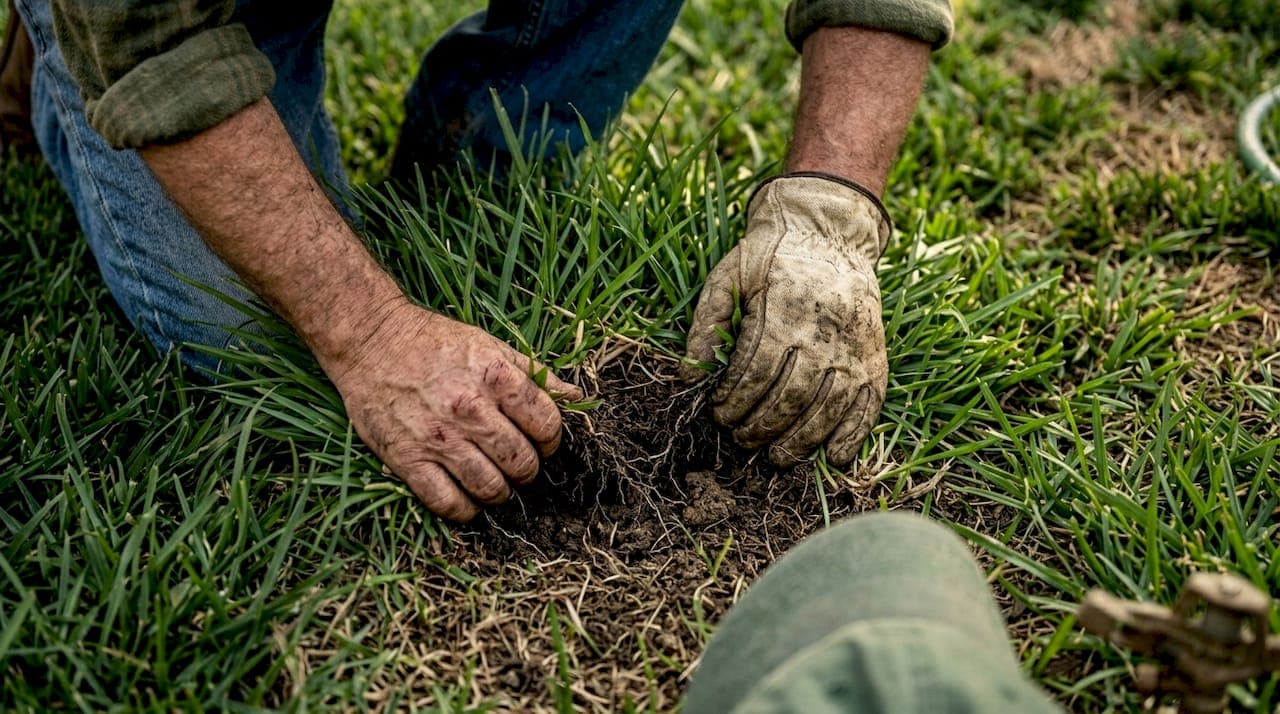
A lawn that looks lush and green can still be quietly falling apart beneath the surface. In Lubbock, where summer heat regularly pushes past 100°F and the soil tends toward clay and caliche, hidden problems like thatch buildup, soil compaction, and early weed pressure can develop without showing any obvious warning signs. By the time you notice the damage, you're already looking at a costly repair job. Regular lawn inspections change that equation entirely. They give homeowners and property managers a structured, proactive way to stay ahead of problems before those problems get expensive.
Table of Contents
- Unseen dangers: Why visual checks aren't enough
- Inspection frequency: What science and experts recommend
- Key inspection components: Turf health, mowing, and thatch
- Long-term benefits: Value, appearance, and peace of mind
- The real takeaway: What most lawn advice misses in Lubbock
- Get expert inspections and easy lawn care in Lubbock
- Frequently asked questions
Key Takeaways
| Point | Details |
|---|---|
| Visual checks miss hidden issues | Problems like thatch buildup can exist even in lawns that look healthy, making structured inspections vital. |
| Seasonal inspections boost turf health | Experts recommend seasonally scheduled checks to ensure weed resistance and vibrant grass in Lubbock. |
| Checklists improve results | Using structured guides and local recommendations helps homeowners catch issues early and maintain healthy lawns. |
| Routine inspections protect property value | Consistent maintenance boosts curb appeal and reduces long-term repair costs for homeowners and landlords. |
Unseen dangers: Why visual checks aren't enough
Most people assess their lawn the same way they assess a paint job: they look at it. If it's green and mostly even, they assume everything is fine. But that assumption can cost you. Some of the most damaging lawn conditions are invisible from a standing position or even a close inspection without the right tools.
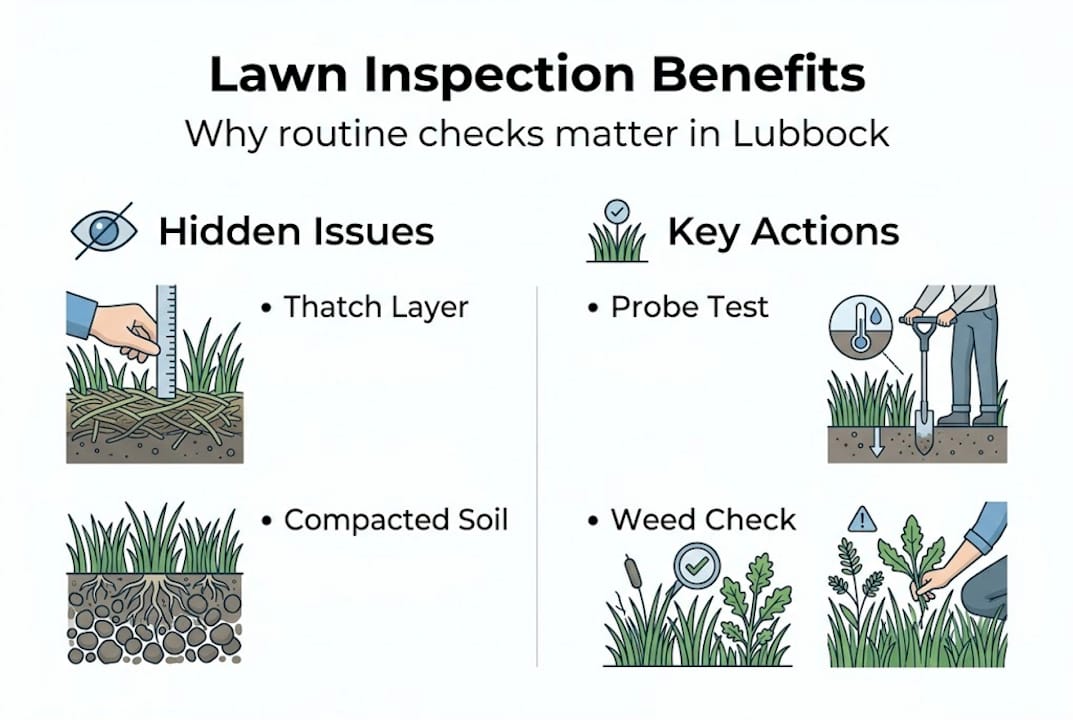
Take thatch, for example. Thatch is the layer of dead and living organic material that accumulates between the soil surface and the grass blades. A thin layer (under half an inch) is actually beneficial. But when it exceeds that threshold, it blocks water, oxygen, and nutrients from reaching the root zone. Your grass can look perfectly present from above while the roots are slowly suffocating below. According to thatch management research from Texas A&M AgriLife Extension, inspection-based maintenance should include turf-condition diagnostics like thatch buildup, because excessive thatch can cause problems even when grass looks healthy, making periodic checks essential.
Soil compaction is another silent offender. In Lubbock's heavy clay soils, foot traffic and equipment weight gradually compress the soil particles, leaving little room for root growth or water infiltration. The grass above might hold its color for a while before stress symptoms appear.
Here's a quick look at common hidden problems and how inspections catch them:
| Problem | Visual clue | How inspection reveals it |
|---|---|---|
| Thatch buildup | None until severe | Probe test measures layer depth |
| Soil compaction | Puddles after rain | Screwdriver or penetrometer test |
| Grub infestation | Brown patches | Peel turf to check soil beneath |
| Pre-emergent weed seeds | No visible weeds yet | Inspection timing aligns treatment |
| Root disease | Slight yellowing | Close examination of root samples |
Regular lawn inspection checklists help you build these diagnostic steps into a routine rather than reacting to damage that's already done.
The effects of skipping regular inspections compound over time:
- Thatch layers thicken and become difficult to remove without damaging the turf
- Compacted soil worsens each season as it gets less and less aeration
- Weed populations establish deep root systems that resist treatment
- Grub or insect damage reaches a tipping point where full lawn replacement may be necessary
- Irrigation inefficiencies go undetected, driving up water bills with nothing to show for it
"Excessive thatch can cause problems even when grass looks 'present,' so periodic checks are recommended for all warm-season turf types maintained in Texas climates." — Texas A&M AgriLife Extension, Thatch Management for Home Lawns
The point isn't to alarm you. It's to reframe how you think about lawn health. Appearances are a lagging indicator. By the time your lawn looks bad, the problem has usually been building for weeks or even months.
Inspection frequency: What science and experts recommend
Knowing that inspections matter is one thing. Knowing how often to inspect is where most homeowners struggle. The answer depends on your grass type, the season, and what's happened recently in terms of weather or use.
Texas A&M AgriLife Extension provides seasonal maintenance calendars for warm-season grasses that serve as reliable inspection anchors throughout the year. These calendars outline key turf care activities by month, including thatch checks, mowing adjustments, fertilization windows, and pest monitoring timelines.
For most Lubbock lawns, here's a practical inspection schedule by season:
- Spring (March to May): Full inspection. Check for winter damage, thatch depth, soil compaction, and any early weed emergence. This is your most critical inspection of the year.
- Summer (June to August): Monthly spot checks. Focus on irrigation coverage, mowing height stress, and signs of heat-related disease or grub activity.
- Fall (September to November): Mid-season inspection. Assess turf recovery from summer heat, overseed if necessary, and evaluate soil condition heading into dormancy.
- Winter (December to February): Light inspection before dormancy settles. Check for any late-season weed activity and verify drainage paths aren't blocked.
Pro Tip: Add inspection dates to your phone calendar right now as recurring events. A 15-minute walk through your yard with a checklist takes almost no time, but skipping it for three seasons in a row is how small problems become big ones.
The case for consistent seasonal inspection routines is backed by the simple math of prevention versus repair. Addressing thatch buildup early with dethatching costs a fraction of what full turf restoration costs after years of neglect. The same logic applies to every inspection category. The annual care checklist approach, where you review your lawn's needs across the full calendar year, gives you a strategic advantage over reactive lawn care.
Lubbock's weather adds a layer of unpredictability. Windstorms can drop debris and damage turf. Sudden hail events leave impact stress that isn't always obvious right away. Drought conditions in the Texas Panhandle can dry out root systems faster than most homeowners expect. After any extreme weather event, run a quick informal inspection even if it falls outside your regular schedule.
Key inspection components: Turf health, mowing, and thatch
A solid inspection isn't just a walk around the yard. It's a structured evaluation of several interconnected factors. When you address all of them together, you get a complete picture of your turf's health. When you miss even one, you may be solving the wrong problem.
Here's a numbered process you can use for any inspection:
- Check mowing height. Bermudagrass, the most common warm-season grass in Lubbock, performs best at 1 to 1.5 inches. Zoysiagrass can go slightly higher. Mowing too low stresses the plant; mowing too high encourages thatch and pest pressure.
- Measure thatch depth. Use a small hand trowel to remove a two-inch plug of turf. Measure the spongy layer between the soil and grass blades. Anything over half an inch warrants action.
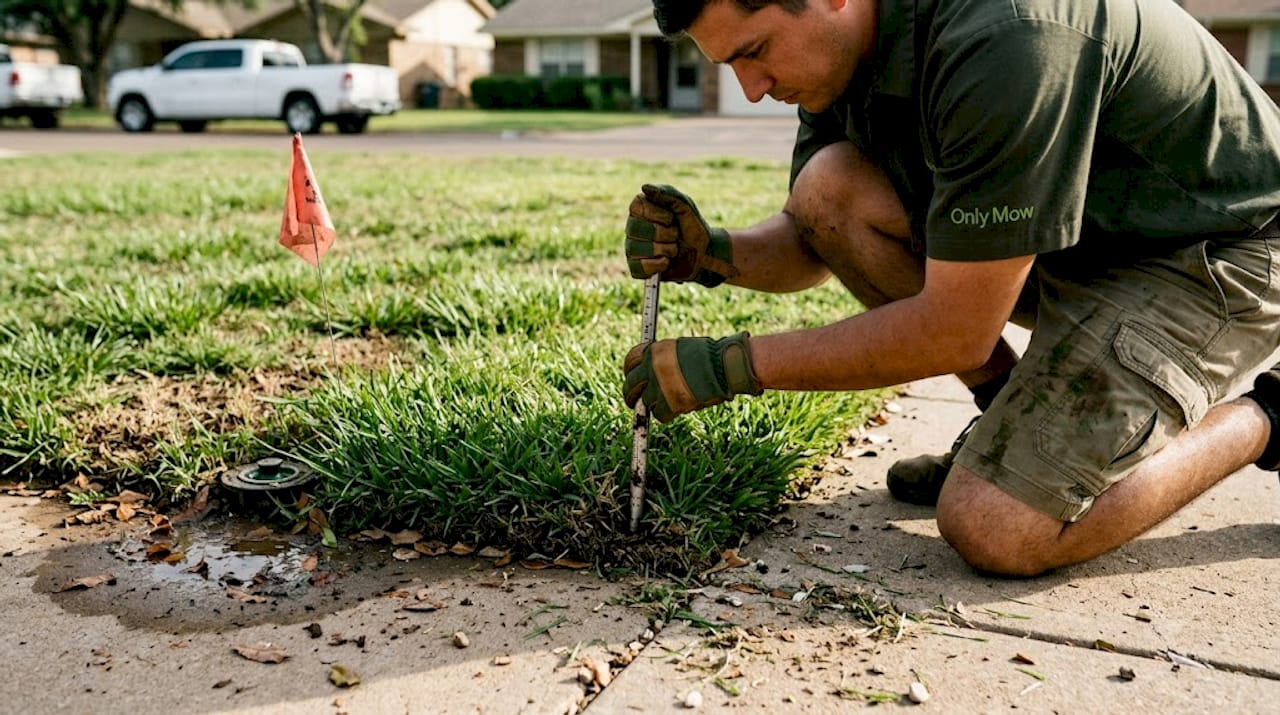
- Test soil compaction. Press a standard screwdriver into the soil. If you can't push it in to six inches with moderate pressure, your soil is compacted and may need core aeration.
- Scan for weeds and pests. Look at the base of grass plants, not just the surface. Early pest activity often shows up at soil level.
- Assess color and density. Note any thin patches, off-color areas, or areas with noticeably different growth rates. These are usually symptom zones pointing to a specific underlying issue.
- Evaluate irrigation coverage. Walk the yard after a watering cycle and note any dry spots or areas with pooling water.
According to mowing guidelines from Texas A&M AgriLife Extension, sound agronomic practices like correct mowing height and seasonally appropriate care directly support weed and pest resistance by keeping turf vigorous and dense.
Here's how inspections with benchmarks compare to uninformed visual checks:
| Factor | With benchmarks | Without benchmarks |
|---|---|---|
| Thatch detection | Caught early at measurable depth | Missed until symptoms appear |
| Mowing accuracy | Height adjusted by grass type and season | Guessed, often inconsistent |
| Pest response | Identified at soil level before damage spreads | Noticed after visible turf loss |
| Water efficiency | Irrigation adjusted based on coverage findings | Overwatered or underwatered sections |
| Overall turf vigor | Maintained proactively | Managed reactively |
Pro Tip: Look at the soil around your irrigation heads each time you inspect. Soil that's perpetually wet around a head, but dry three feet away, signals a coverage gap or a head that needs adjustment. It's a small thing that mowing best practices guides often overlook but that dramatically affects turf health over time. You can also pair inspections with seasonal clean-up strategies to maximize the value of each visit.
Long-term benefits: Value, appearance, and peace of mind
Regular lawn inspections aren't just about avoiding disasters. They build real, measurable value over time. Homeowners and property managers in Lubbock who maintain structured inspection routines end up with lawns that consistently outperform neglected ones in appearance, cost efficiency, and resilience.
The impact on property value is well-documented. Curb appeal is one of the first things buyers, tenants, and guests notice. A thick, evenly maintained lawn signals that the property is cared for. Conversely, a patchy, weed-riddled lawn sets a negative tone before anyone steps through the front door. For landlords managing multiple properties in Lubbock, this matters even more. Tenant retention is partially tied to how the property looks from the street.
Beyond appearance, the cost savings are real. Preventive maintenance almost always beats reactive repair in lawn care:
- Early thatch removal costs significantly less than full lawn renovation after root suffocation
- Spot weed treatment before populations establish is faster and cheaper than broad herbicide applications later
- Timely aeration preserves soil structure and avoids costly topsoil replacement
- Consistent mowing height keeps turf healthy and reduces the need for disease treatment
- Routine irrigation checks prevent overwatering that drives up utility bills and promotes fungal disease
For commercial property managers, the maintenance efficiency tips that come from structured inspections translate directly into lower contractor costs. When you know exactly what your lawn needs each season, you can schedule services efficiently rather than calling for emergency fixes.
"Keeping turf vigorous through proper maintenance and regular monitoring directly reduces vulnerability to weed encroachment and pest pressure, making inspections a fundamental part of any sound lawn care program." — Texas A&M AgriLife Extension, Mowing Recommendations
The peace of mind factor is harder to quantify but impossible to ignore. When you know your lawn has been inspected, treated appropriately, and documented, you stop worrying. You go from wondering "Why is that patch dying?" to knowing exactly what's happening and what to do next. That clarity is worth a great deal, especially for property managers juggling multiple responsibilities.
The real takeaway: What most lawn advice misses in Lubbock
Here's the thing most generic lawn care guides won't tell you: a checklist borrowed from a national lawn care brand is probably wrong for your yard. Lubbock's West Texas climate is punishing in ways that lawn care content written for the Southeast or Pacific Northwest simply doesn't account for. The wind alone is a desiccant. The caliche layer under Lubbock's soil can block water and root penetration in ways that completely change how you should approach aeration and irrigation.
Generic seasonal calendars recommend dethatching in April. In Lubbock, an unusually cold spring might push that to mid-May. A drought year might mean you're doing spot inspections every three weeks through July and August rather than monthly. A late-season storm might require a full reassessment in October that isn't on any standard calendar.
We've seen it happen repeatedly with homeowners who follow national advice to the letter and still end up with struggling turf because no one told them to account for the soil's local quirks or to adjust spring inspection tips based on actual conditions rather than a calendar date.
The takeaway is simple: your inspection routine needs to be rooted in local knowledge. Use Texas A&M AgriLife resources as your baseline. Then adapt based on your specific grass type, your yard's microclimate, and what the past season actually delivered in terms of rainfall, heat, and wind. A lawn professional who works in Lubbock every day knows those variables. That's knowledge you can lean on.
Get expert inspections and easy lawn care in Lubbock
If you've been relying on visual checks and hoping for the best, now is a good time to shift strategies. A structured inspection program tailored to Lubbock's climate is the most reliable way to protect your turf investment.

Only Mow offers professional Lubbock lawn care grounded in local expertise and backed by our role as the City of Lubbock's official lawn care vendor. From seasonal inspections to pre-emergent weed control, mowing, and landscape clean-up, we handle every aspect of turf health with a schedule built around West Texas conditions. Booking is simple through our online scheduling tool, and our team is ready to build a maintenance plan that actually fits your yard. Don't wait for visible damage to take action. Reach out today and let us keep your lawn healthy from the ground up.
Frequently asked questions
What problems does regular lawn inspection catch?
Regular inspections can identify issues like thatch buildup, soil compaction, weeds, and early signs of turf stress before they become serious and expensive to fix.
How often should I inspect my lawn in Lubbock?
Most experts recommend inspecting lawns once per season in Lubbock, using seasonal maintenance frameworks as anchors, and adjusting based on your specific grass type and recent weather patterns.
What signs indicate my lawn needs an inspection?
Look for thinning turf, discoloration, persistent weeds, or a spongy surface that bounces underfoot, as these are clear indicators that a closer turf condition check is overdue.
What's the best way to document my lawn inspection?
Use a checklist or calendar based on expert guidance for your grass type, following resources like the seasonal maintenance calendar from Texas A&M AgriLife Extension, to track findings from each inspection visit.
Can professional inspections save on repair costs?
Yes, catching problems early through inspections aligned with sound agronomic practices lets professionals recommend targeted interventions that prevent the kind of widespread damage requiring full turf replacement.