TL;DR:
- True turf restoration involves soil improvement plus reseeding or sod installation.
- Proper preparation like aeration, dethatching, and soil amendments is essential in Lubbock's clay soils.
- Spring is the best time for effective lawn renewal in West Texas conditions.
Turf Restoration: Restore Your Lubbock Lawn's Health
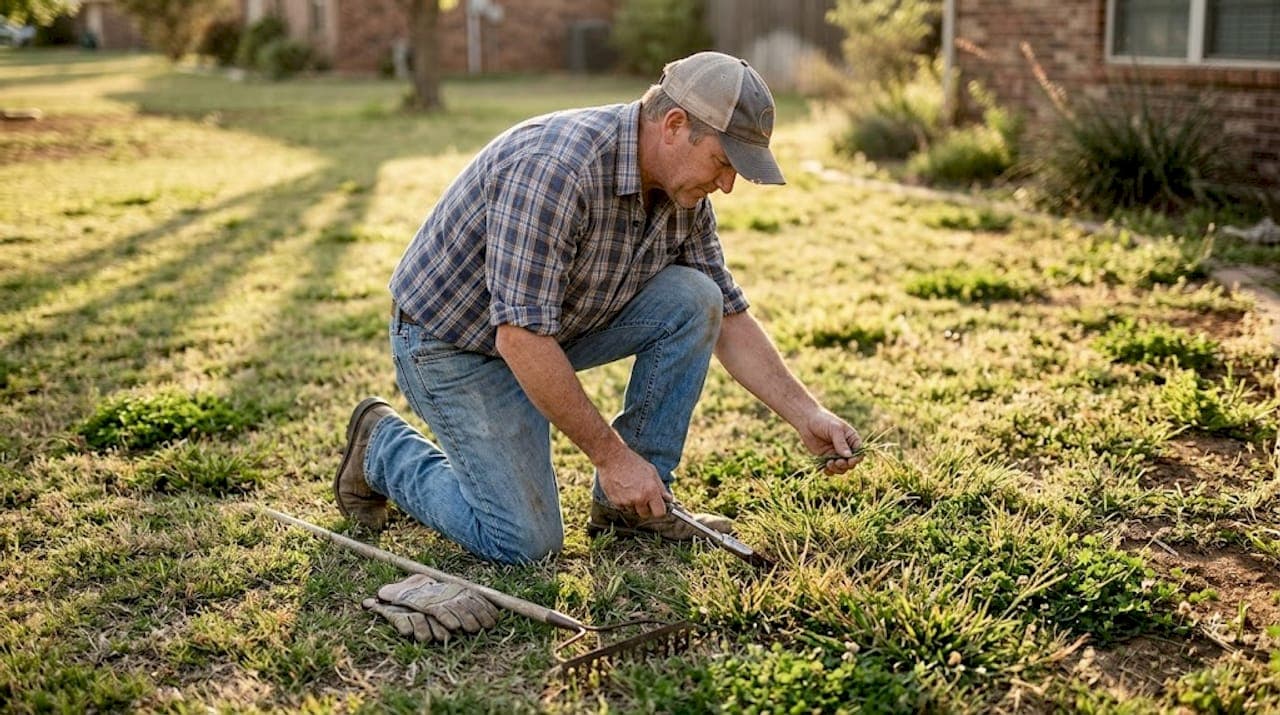
Tossing a bag of grass seed over a struggling lawn feels like the obvious fix, but in Lubbock it almost never works on its own. The real problem usually runs deeper than the surface, buried in compacted clay soil, a thick layer of dead thatch, or chronic drought stress that's been building for seasons. True turf restoration is a structured, systematic process that tackles all of those issues at once. This guide walks you through exactly what turf restoration means for Lubbock homeowners, how to assess your lawn's condition, which methods work best in our local climate, and how to protect your investment long after the last seed germinates.
Table of Contents
- What is turf restoration?
- Assessing and preparing your lawn for restoration
- Turf restoration methods: What works best for Lubbock lawns
- Expected timelines and common pitfalls
- Why soil, not seed, is the secret to Lubbock turf restoration
- Professional Lubbock turf restoration made easy
- Frequently asked questions
Key Takeaways
| Point | Details |
|---|---|
| Thorough turf restoration | Real improvement requires systematic steps targeting both surface and soil, not just reseeding. |
| Lubbock-specific approach | Clay soils and climate in Lubbock demand unique methods like aeration and compost or gypsum amendments. |
| Spring is ideal | Restoration works best in Lubbock in spring when warm-season grasses wake up after dormancy. |
| Soil prep matters more | Prioritizing soil amendments and testing leads to much better results than focusing on seed or sod quality. |
What is turf restoration?
Turf restoration is not the same as tossing seed on a bare spot and hoping for rain. According to the Royal Horticultural Society, turf restoration is the process of repairing and rejuvenating damaged, patchy, or worn lawns through methods like reseeding bare patches, patching with sod, aeration, dethatching, soil amendment, overseeding, and full renovation when more than 40 to 50 percent of the lawn is damaged.
That definition matters because it reframes the entire goal. You are not just adding grass. You are rebuilding the environment that grass needs to thrive, starting from the soil profile and working upward to the leaf blades.
For Lubbock homeowners, the distinction is especially important. Our soils are heavy, alkaline clay. They compact easily, drain poorly, and lock up nutrients in ways that make surface-level fixes short-lived. You can overseed a clay-compacted lawn every spring and still end up with patchy, thin turf by August because the underlying problem was never resolved.
A full turf restoration approach covers several interconnected steps:
- Reseeding or overseeding thin and bare areas with appropriate warm-season grasses
- Sodding sections where bare soil needs immediate cover and erosion control
- Aeration to break up compaction and let water, air, and nutrients reach the roots
- Dethatching to remove the built-up layer of dead organic material that blocks growth
- Soil amendment using compost, gypsum, or lime to improve structure and pH
- Full renovation when more than half the lawn is beyond simple repair
"Quick fixes fail because they treat the symptom, not the cause. If you skip soil preparation, you are planting into the same environment that killed your grass the first time."
Many Lubbock homeowners choose to prioritize lawn restoration once they understand how much compaction and clay-driven drainage problems undermine every other effort. Surface repairs will always underperform when the foundation is broken. Real restoration fixes both.
Assessing and preparing your lawn for restoration
Before you spend a single dollar on seed, sod, or equipment, you need an honest picture of your lawn's actual condition. The percentage of damage is the single most important factor in choosing your restoration method, and getting it wrong costs you time and money.
Here is a reliable step-by-step process, based on proven lawn renovation guidance:
- Walk the entire yard and flag dead, bare, or severely thinned sections using a simple marking spray or stakes.
- Estimate the damage percentage. If damaged areas cover less than 30 to 40 percent of the total lawn, spot repair and overseeding are the right tools. If damage exceeds 40 percent, plan for a full renovation.
- Mow the surviving grass as short as possible without scalping it. This exposes the soil surface and makes prep work more effective.
- Dethatch aggressively. Any thatch layer thicker than half an inch prevents seed-to-soil contact and blocks water penetration.
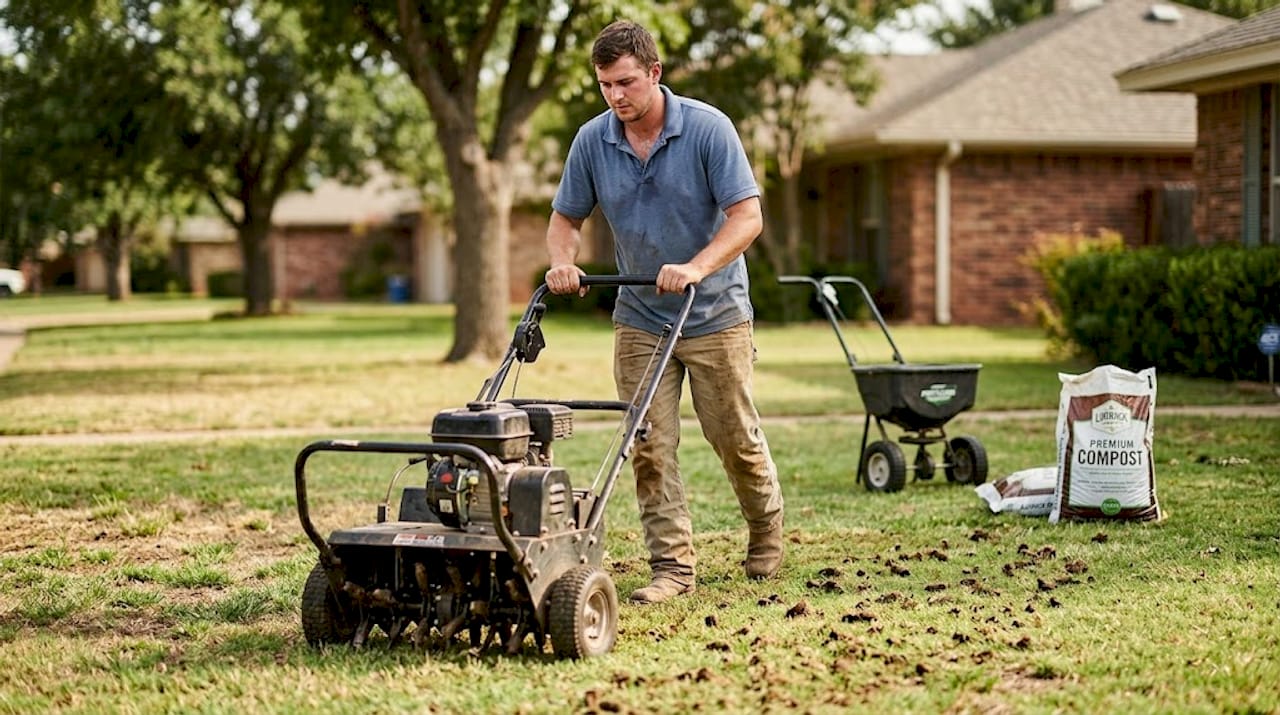
- Aerate the entire lawn. Core aeration, which pulls plugs of soil out of the ground, is essential in Lubbock's clay-heavy yards.
- Run a soil test. This is where most homeowners skip a critical step, and they pay for it later.
- Amend the soil based on your test results. Common additions for Lubbock lawns include gypsum to break up clay and compost to improve organic matter content.
- Seed or sod using the appropriate method for your damage level and the current season.
Poor preparation is the number one reason turf restoration fails. Homeowners eager to see green grass rush past dethatching, aeration, and soil work, then wonder why their new seed washed away or germinated in thin, uneven patches.
Pro Tip: Texas A&M AgriLife Extension offers affordable soil testing for Lubbock residents. A basic test costs very little and tells you exactly what your soil needs in terms of pH adjustment, nitrogen, phosphorus, and potassium. Skipping this test is like cooking without tasting. You might get lucky, but you probably won't.
For a detailed, local approach, review these Lubbock lawn restoration steps and cross-reference with a Lubbock lawn care checklist to make sure your timeline and tasks align with our regional growing calendar.
Turf restoration methods: What works best for Lubbock lawns
Once your lawn is assessed and prepped, the next decision is choosing the right restoration method. Each approach carries different costs, recovery times, and suitability for specific damage levels. Here is how the main options compare for Lubbock conditions.
| Method | Best for | Recovery time | Relative cost | Lubbock suitability |
|---|---|---|---|---|
| Overseeding | Thin, 10 to 30% damaged | 2 to 4 weeks | Low | Good for spring and early fall |
| Aeration + overseed | Compacted, 20 to 40% damaged | 3 to 6 weeks | Moderate | Excellent for clay soils |
| Patch sodding | Bare spots under 30% | 1 to 2 weeks | Moderate | Very effective for quick cover |
| Full resod | Over 40 to 50% damaged | 1 to 3 weeks | High | Best for severely degraded lawns |
| Full renovation | Over 50% damaged | 4 to 8 weeks | Highest | Necessary for chronic neglect |
For most Lubbock homeowners dealing with Lubbock's clay soils and drought, the aeration plus overseeding combination delivers the best return on effort. Aeration breaks compaction, opens channels for water and nutrients, and dramatically improves seed-to-soil contact. Without it, seed either washes away during irrigation or sits on top of the thatch layer and never establishes.
Here is what matters most for each method in our local climate:
- Warm-season grasses only. Bermuda grass (common variety) is the standard for Lubbock lawns because it handles heat, drought, and our clay-heavy soil better than cool-season alternatives.
- Aeration is non-negotiable. Even if you only plan to overseed, rent a core aerator first. It makes every other step more effective.
- Amend with gypsum and compost. Gypsum loosens clay particles without changing pH. Compost adds organic matter that improves drainage and feeds soil microbes. Both are widely available in Lubbock.
- Time your work to spring. February through April is the optimal window for warm-season turf establishment. Check out our spring lawn care tips for timing details.
Pro Tip: No matter which method you choose, the single biggest factor in success is seed-to-soil contact. Rake seeded areas lightly after broadcasting, roll if possible, and water immediately. Seed sitting on thatch or dry clay will not germinate at useful rates, no matter how premium the variety.
Pairing the right restoration method with the right fertilizer approach also matters. Our Lubbock fertilizing tips break down starter fertilizer timing and nutrient ratios for new turf establishment specifically in West Texas conditions.
Expected timelines and common pitfalls
After choosing your method, knowing what realistic progress looks like keeps you from making changes too early and undermining your own work.
| Restoration method | Visible results | Full recovery |
|---|---|---|
| Overseeding only | 2 to 4 weeks | 6 to 10 weeks |
| Aeration + overseeding | 3 to 6 weeks | 8 to 12 weeks |
| Patch sodding | 1 to 2 weeks | 3 to 5 weeks |
| Full resod | 1 to 2 weeks | 4 to 6 weeks |
| Full renovation | 4 to 8 weeks | 10 to 16 weeks |
According to Texas A&M AgriLife Extension, turfgrass establishment benchmarks show overseeding delivers visible results in 2 to 4 weeks, aeration combined with overseeding takes 3 to 6 weeks, and resodding shows green coverage in as little as 1 to 2 weeks. Germination rates improve significantly when aeration creates good soil contact, and Lubbock's clay soils specifically benefit from gypsum and compost to support adequate drainage during the establishment period.
Now, the mistakes. These are the pitfalls that undo months of good work:
- Skipping soil prep entirely. No aeration, no amendment, just seed on hard clay. Results are almost always disappointing.
- Overwatering new seed. New turf needs consistent moisture, but standing water drowns germinating seeds and promotes fungal disease. Deep, infrequent watering (about one inch every two to four weeks once established) is the right target.
- Restoring at the wrong time. Seeding warm-season grasses in fall or winter in Lubbock means starting into dormancy. Spring is the window.
- Using cool-season grass varieties. Fescue and ryegrass will not hold up through a Lubbock summer. Bermuda grass is the right call for most Lubbock yards.
- Mowing too soon or too short. New turf needs time to develop root depth before mowing stress is applied. Wait until the grass reaches at least three to four inches before the first cut, and never remove more than one-third of the blade.
"The most common timeline mistake is expecting sod results from seed. If you overseed, plan your schedule around a six-week minimum before the lawn looks presentable."
For ongoing maintenance once your turf is established, prioritize these practices:
- Mow high and consistently (three inches for Bermuda in summer).
- Water deeply but infrequently to encourage deep root growth.
- Aerate again each spring to prevent clay recompaction.
- Apply pre-emergent weed control in late winter before weed seeds germinate.
- Fertilize on a schedule matched to your grass type and local growing season.
Adopting eco-friendly lawn care tips alongside these practices helps reduce water waste and chemical input while keeping your restored turf healthy for years.
Why soil, not seed, is the secret to Lubbock turf restoration
Here is something most lawn care guides will not tell you directly: seed quality barely matters if your soil is wrong. We hear from homeowners regularly who spent significant money on premium Bermuda seed varieties, watered faithfully, and still ended up with patchy results. In almost every case, the soil was the problem.
Lubbock's clay soils create a unique challenge. Water pools on the surface instead of soaking in. Roots hit a hard pan and spread sideways instead of deep. Nutrients bind to clay particles and become unavailable to grass. No amount of premium seed overcomes those conditions.
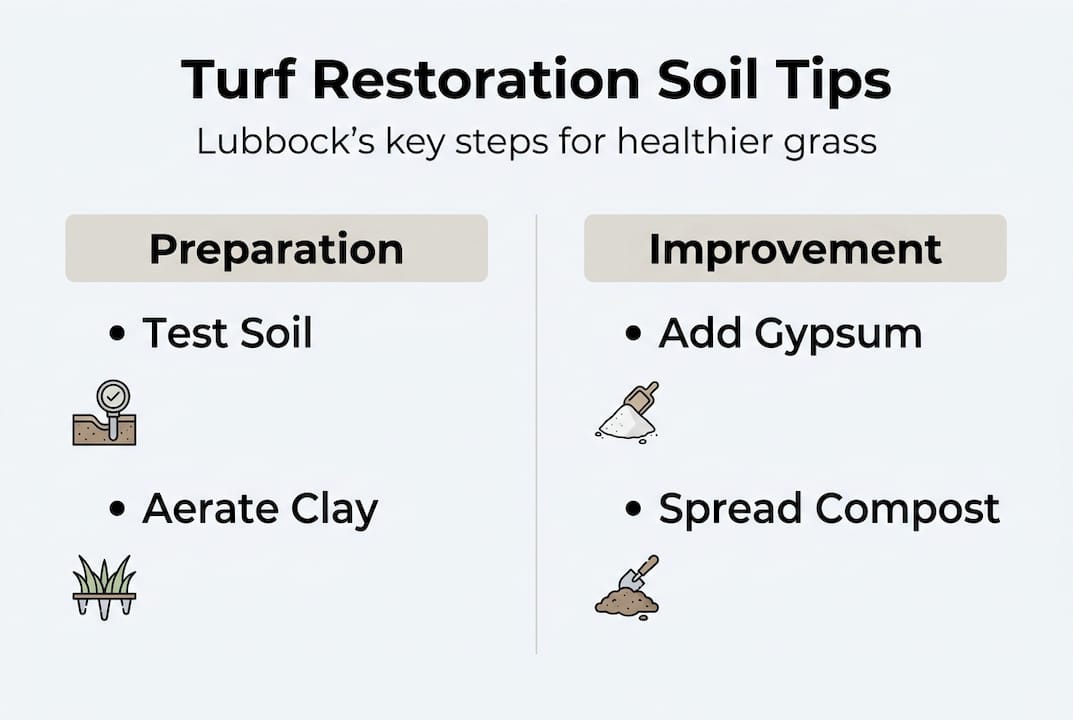
The real transformation happens when you focus on soil prep first. Aeration, gypsum application, and compost incorporation change the physical environment so grass can actually do what it is designed to do. AgriLife Extension soil tests give Lubbock homeowners an affordable and accurate starting point, and the investment is minimal compared to buying seed and sod you'll just have to replace again.
Our view, built from years of working Lubbock yards, is that the homeowners who get lasting results are the ones who treat soil improvement as the primary project, with grass establishment as the follow-up. That mental shift changes every decision in the process for the better.
Professional Lubbock turf restoration made easy
DIY turf restoration is absolutely achievable, but it takes equipment, timing, and local know-how that many homeowners simply don't have on hand. If you'd rather skip the learning curve and get it done right the first time, a local professional can handle soil testing, core aeration, amendment application, seeding, and sod installation as a coordinated package.

Only Mow is Lubbock's trusted lawn care partner and the official lawn care vendor for the City of Lubbock. Our team understands the clay soil challenges, the heat, and the tight seasonal windows that make West Texas lawn care unique. Whether you need a full turf renovation or targeted spot repair, we bring the right tools and local expertise to every job. Explore our complete Lubbock lawn care services and schedule a consultation to get your lawn on the right track this season.
Frequently asked questions
What is the difference between turf restoration and lawn repair?
Turf restoration is a process addressing widespread damage and underlying soil issues, while lawn repair typically targets small patches without fixing deeper problems like compaction or poor drainage.
What is the best time to restore my Lubbock lawn?
Spring is the optimal window, specifically February through April, because warm-season turf establishment in Lubbock depends on post-dormancy soil temperatures and the longer growing season ahead.
How long does turf restoration take in Lubbock?
Timeline depends on method: resodding shows results in 1 to 2 weeks, overseeding in 2 to 4 weeks, and aeration combined with overseeding can take 3 to 6 weeks before visible improvement is consistent.
Do I need to test my soil before turf restoration?
Yes, a soil test is strongly recommended because Lubbock's clay soils often have pH and drainage issues that will undermine restoration results if left unaddressed before you seed or sod.