TL;DR:
- Sustainable landscaping in Lubbock integrates design, soil, irrigation, and maintenance for long-term efficiency.
- Proper plant selection, soil improvement, and water-smart systems reduce resource use and maintenance needs.
- Adapting to local conditions and irrigation rules ensures a resilient, water-conscious yard.
Most Lubbock homeowners assume that swapping out their grass for a few drought-tolerant plants is all it takes to go "sustainable." That idea is understandable, but it misses the bigger picture by a wide margin. True sustainable landscaping is a full system, combining smart design, soil preparation, efficient irrigation, and ongoing maintenance into one coordinated approach. When all those pieces work together, you end up with a yard that's genuinely easier to maintain, uses far less water, and holds up better against Lubbock's harsh climate. This guide will walk you through what that really looks like in practice.
Table of Contents
- What is sustainable landscaping?
- Key elements of a sustainable landscape in Lubbock
- Designing and maintaining for maximum sustainability
- Water conservation and Lubbock's irrigation restrictions
- Beyond the basics: Operationalizing sustainability in your yard
- Want a greener yard? Let the experts help
- Frequently asked questions
Key Takeaways
| Point | Details |
|---|---|
| Not just plant selection | Sustainable landscaping is a system approach combining design, water management, and ongoing care. |
| Local climate matters | In Lubbock, matching plants and irrigation to local conditions saves the most water and work. |
| Follow local regulations | Adhering to Lubbock’s watering rules ensures compliance and keeps your yard thriving. |
| Low effort, high payoff | Smart landscaping reduces your long-term time, costs, and resource use while looking great. |
What is sustainable landscaping?
Sustainable landscaping is not a trend or a buzzword. It's a practical, proven approach to managing your outdoor space so it demands fewer resources over time while still looking great and functioning well. At its core, the goal is to reduce how much water, fertilizer, pesticide, and time your yard consumes without letting it go to ruin.
Here in Lubbock, the stakes are especially high. We deal with hot summers, unpredictable rainfall, persistent winds, and soils that can swing between sandy and caliche-heavy depending on what part of town you're in. Those conditions make resource-heavy landscaping genuinely costly, and not just for the environment. Your water bill reflects every extra minute your sprinklers run, and your weekend reflects every unnecessary maintenance task your yard demands.
"Sustainable landscaping is a design and maintenance approach that aims to minimize environmental impact while keeping the landscape attractive, functional, and maintainable with fewer resource inputs, especially water, fertilizer, pesticides, and energy and time."
That definition matters because it centers the entire approach on reduction and balance, not sacrifice. You're not giving up a beautiful yard. You're building one that's more resilient and less demanding.
One of the biggest misconceptions is that sustainable landscaping is exclusively about plant choice. Pick the right cactus, add a yucca or two, and call it done. In reality, you can plant every drought-tolerant species in the Lubbock nursery catalog and still end up with a resource-hungry yard if your irrigation system is wasteful, your soil isn't amended properly, or your design doesn't match how you actually use your outdoor space.
Here's what sustainable landscaping actually addresses:
- Water use: Designing the entire landscape to reduce irrigation demand, not just planting less thirsty plants
- Soil health: Building soil structure so it holds moisture and nutrients naturally
- Chemical reduction: Minimizing synthetic fertilizers and pesticides by creating conditions where plants thrive on their own
- Energy and time: Reducing the ongoing maintenance burden through smart design choices
- Local fit: Choosing plants, materials, and layouts that actually suit Lubbock's climate and soil
When you approach sustainability as a system rather than a single fix, the results are dramatically different and far more durable over time.
Key elements of a sustainable landscape in Lubbock
With the basics defined, let's explore what goes into a truly sustainable landscape in Lubbock. For Texas homeowners, sustainable landscaping overlaps significantly with xeriscaping, which means planning to reduce irrigation demand, improving soil, selecting drought-tolerant and native plants, using efficient irrigation, and applying mulching and maintenance strategies that conserve water.
Here are the core elements you need to address in order:
- Site analysis first. Before you plant or install anything, map out your yard's sun exposure, drainage patterns, soil type, and how your family uses the space. A shaded corner needs completely different plants than a south-facing slope that bakes in afternoon sun.
- Plant selection that fits the site. Choose plants that are native or adapted to West Texas conditions. Buffalo grass, Texas sage, black-eyed Susans, and lantana are popular examples. They've already proven they can handle Lubbock's heat, wind, and occasional drought with minimal assistance.
- Efficient irrigation from the start. Drip irrigation delivers water directly to the root zone, cutting evaporation losses dramatically compared to overhead sprinklers. Smart controllers that adjust watering schedules based on real weather data add another layer of efficiency.
- Soil improvement. Lubbock's soils often need organic matter added to improve water retention and drainage simultaneously. Compost worked into beds before planting makes a measurable difference in how well plants establish.
- Mulching. A 3-inch layer of organic mulch around plants and in beds slows evaporation, moderates soil temperature, and suppresses weeds. In Lubbock's summer heat, mulch can be the difference between a plant that thrives and one that wilts every afternoon.
Here's a quick comparison of how traditional and sustainable landscaping stack up in Lubbock's environment:
| Factor | Traditional landscaping | Sustainable landscaping |
|---|---|---|
| Water use | High (frequent overhead irrigation) | Low (drip systems, drought-adapted plants) |
| Fertilizer needs | High (synthetic inputs regularly) | Low (healthy soil, native plants) |
| Maintenance time | High (frequent mowing, edging, pruning) | Lower (design reduces ongoing tasks) |
| Plant survival in drought | Poor without extra irrigation | Good (plants matched to site) |
| Long-term cost | Higher ongoing costs | Lower over a 3-5 year horizon |
| Ecosystem value | Low (turf monocultures) | High (supports pollinators, birds) |
You can learn more about putting these ideas into practice by exploring eco-friendly lawn care in Lubbock approaches that are already being applied by homeowners across the area.
Pro Tip: Don't try to convert your entire yard at once. Pick one zone, implement all five elements in that area, and watch it perform over a full season before expanding. The lessons from one zone will save you money and mistakes in the next.
Designing and maintaining for maximum sustainability
Understanding the essential elements paves the way for hands-on implementation. According to Colorado State University Extension, sustainable landscaping starts with site-appropriate design that considers use patterns, site conditions, and budget, then continues with efficient irrigation, correct plant selection for the local environment, and reducing high-input areas like overirrigated turf.
Follow this step-by-step process to turn those principles into a functioning yard:
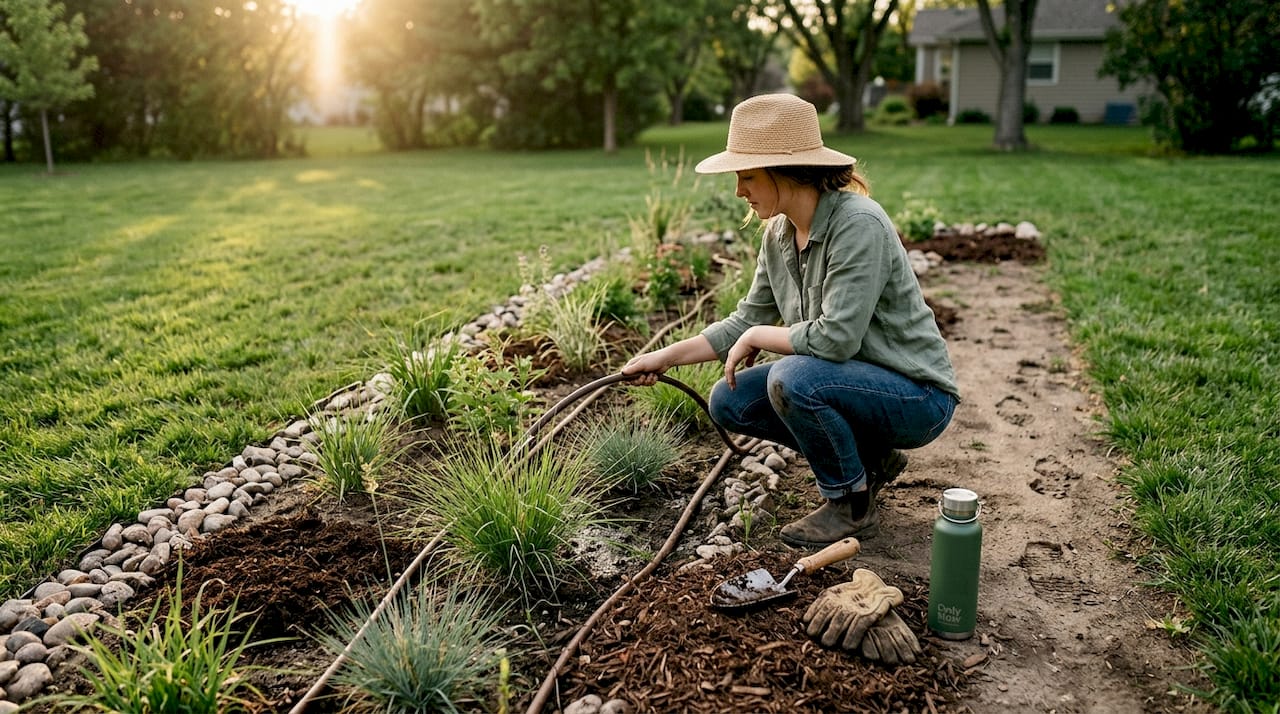
- Plan your zones. Divide your yard into high-use areas (where kids play, where you entertain), moderate-use areas (visible beds and borders), and low-use areas (side yards, back corners). Each zone gets a different level of investment and water.
- Prepare your soil before planting. Test your soil or at minimum add 2 to 4 inches of compost and work it in 6 to 8 inches deep. This step is almost always skipped, and it's almost always why plants struggle later.
- Install your irrigation system before you plant. Layout matters enormously. Drip lines go in when the beds are empty, not after you've already filled them with plants. Getting coverage right from the start prevents dry spots and overwatered zones.
- Install plants at the right time. Fall planting is often better than spring in Lubbock because plants establish roots during the cooler months before facing summer heat stress.
- Mulch immediately after planting. Don't wait. Bare soil in Lubbock loses moisture fast, especially in windy conditions.
- Follow an establishment maintenance schedule. For the first season, newly planted native and adapted plants still need consistent watering while they develop root systems. Sustainability isn't instant, it's built over 1 to 2 seasons of proper care.
Staying consistent with your maintenance calendar is easier when you have a solid framework. A Lubbock lawn care checklist can help you keep track of seasonal tasks without letting anything fall through the cracks.
When it comes to chemical inputs, the simplest strategy is to build soil health and plant-to-site matching first. When plants are in the right place and the soil supports them, pest and disease pressure drops naturally. If you do need to treat, spot treat rather than blanket spray your yard. Targeted application reduces runoff into Lubbock's storm drainage system and cuts down on the collateral damage to beneficial insects.
Pro Tip: One of the most common DIY mistakes is overwatering newly planted drought-tolerant species. Those plants are adapted to dry conditions once established, but during the first 6 to 8 weeks, their root systems haven't developed enough to pull moisture from deep soil. Water deeply but infrequently, and taper off gradually as the plants settle in.
Water conservation and Lubbock's irrigation restrictions
Once you've set up a sustainable system, it's crucial to comply with local rules while protecting your investment. Lubbock's sustainable landscaping plan has to work within local irrigation restrictions and seasonal rules that limit watering days and times to prevent evaporation and runoff.
Here's a summary of how the 2026 rules affect Lubbock homeowners:
| Rule category | Details |
|---|---|
| Watering days | Based on your address (even/odd scheduling) |
| Allowed hours | Early morning (before 10 a.m.) or evening (after 6 p.m.) recommended |
| Purpose | Reduce evaporation losses during peak heat hours |
| Applies to | All residential outdoor water use |
| Year-round awareness | Even outside peak restrictions, waste is discouraged |
Working within these restrictions is much easier when your landscape is already designed for low water demand. Here are specific steps to stay compliant while keeping your yard healthy:
- Map your irrigation zones by plant water need. Group plants with similar needs together so each zone runs only as long as those specific plants require.
- Use the cycle-and-soak method. Run your irrigation in two shorter cycles with a break between them. This lets water soak into the soil rather than run off, especially important in Lubbock's compacted or caliche soils.
- Adjust your controller with the seasons. What your yard needs in April is completely different from what it needs in August. Most smart controllers can sync with local weather stations to do this automatically.
- Check for system leaks monthly. A single broken drip emitter or a slightly misaligned spray head wastes significant water over a season.
- Reduce turf in areas where it never gets used. Lawn in a side yard that no one walks through is just an irrigation bill with no return.
Staying on top of seasonal changes in your yard is much more manageable with the right preparation. Reviewing spring lawn care tips before the growing season starts gives you a head start on adjusting your irrigation schedule before the heat arrives.
The real advantage of a well-designed sustainable landscape is that it naturally fits within Lubbock's water restrictions. When your plant selection and irrigation system are matched correctly, you're not scrambling to cut water use on a schedule that doesn't fit your landscape. The compliance is built in.
Beyond the basics: Operationalizing sustainability in your yard
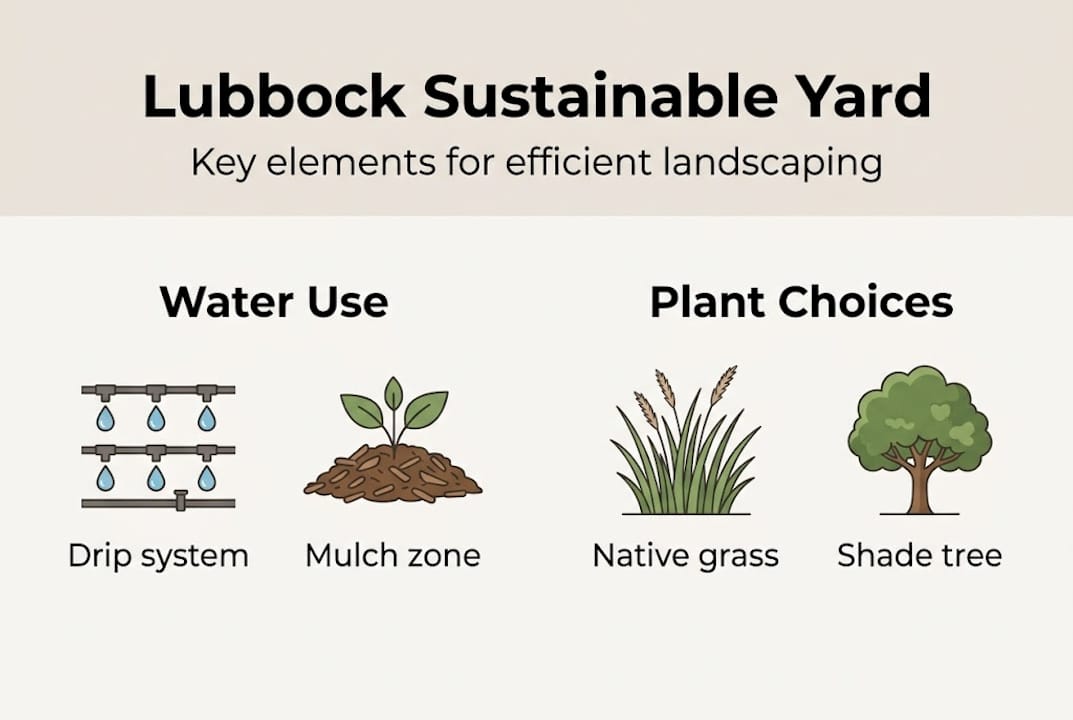
Let's step back and consider what homeowners often miss when pursuing sustainability in their yards. After working with Lubbock homeowners across a wide range of properties, the pattern is clear: most people focus almost entirely on what they plant and almost not at all on how their system delivers water and nutrients.
Swapping your turf for drought-tolerant plants and then leaving your old spray sprinkler system in place is like buying a fuel-efficient car and leaving it idling all day. The plant is not the problem. The system is. Colorado State University Extension makes this point clearly: reducing input demand means pairing plant selection with correct irrigation system design, including coverage and uniformity, and with watering practices that genuinely avoid waste.
Sustainability is also not a one-time installation. Lubbock's weather doesn't cooperate on a predictable schedule. We get late freezes, summer droughts, and occasional flooding rains within the same calendar year. A truly sustainable yard adapts. That means seasonal irrigation adjustments, yearly mulch refreshing, and honest assessment of which plants are performing and which ones need to be reconsidered.
The homeowners who get the best long-term results treat their yard like a living system, not a landscaping project that's finished when the last plant goes in. If you're looking to build that kind of foundational approach, exploring lawn care essentials for Lubbock is a good place to start building that broader perspective.
Want a greener yard? Let the experts help
Putting all of these principles into practice takes time, planning, and a clear understanding of what Lubbock's specific conditions demand. Professional support can dramatically shorten that learning curve and help you avoid the costly mistakes that slow most DIY projects down.

Only Mow is Lubbock's trusted local lawn care provider and the official vendor for the City of Lubbock, which means we understand these conditions from the ground up. Whether you're looking for regular maintenance to protect your sustainable setup or need help getting started with a full yard redesign, we're ready to help. Explore all available Lubbock lawn care services or connect with a professional by visiting our page to find a landscaper in Lubbock who can bring these principles directly to your yard.
Frequently asked questions
What are the top benefits of sustainable landscaping for Lubbock homeowners?
You'll save water, spend less on chemicals, and enjoy healthier, easier-to-maintain outdoor spaces. Sustainable landscaping minimizes resource inputs while keeping your yard attractive, functional, and manageable year-round.
Can sustainable landscaping still look beautiful in Lubbock?
Yes, sustainable landscapes use local native and adapted plants for color, texture, and seasonal interest while conserving water. Texas A&M AgriLife highlights many outstanding Texas landscape plants for xeriscapes that are both native and visually striking.
Is xeriscaping the same as sustainable landscaping?
Xeriscaping is a type of sustainable landscaping focused primarily on water conservation, but sustainability also covers soil health, maintenance practices, and waste reduction. Both Earth-Kind and xeriscape practices fall under the broader sustainable landscaping umbrella.
How do Lubbock water restrictions affect my landscaping choices?
Local rules limit watering days and times, so choosing drought-tolerant plants and efficient irrigation systems is essential for compliance. Lubbock's spring/summer irrigation restrictions are address-based and apply to all residential outdoor watering.
Do I have to give up my lawn for a sustainable yard?
No, you can keep a smaller, purposeful lawn area and use planted beds and native species elsewhere to conserve resources. CSU Extension recommends limiting irrigated turf to high-use areas rather than eliminating it altogether.