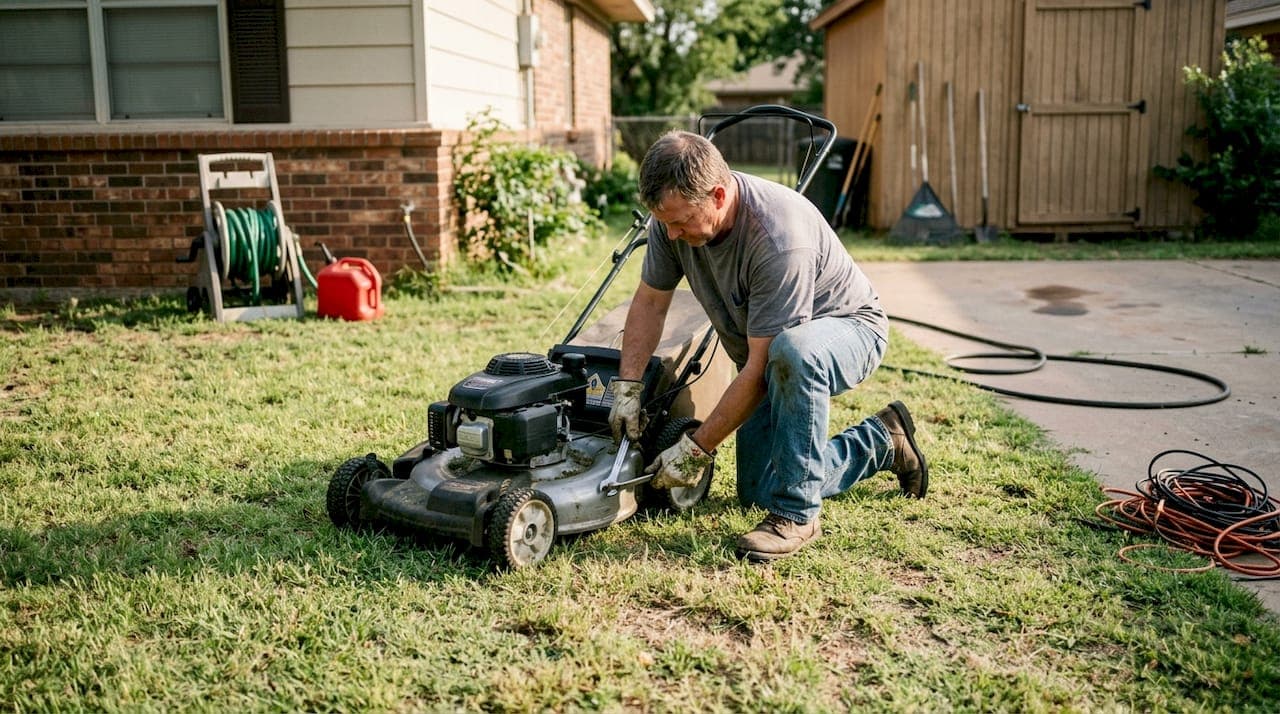
TL;DR:
- Proper mowing technique involves choosing the right mower, setting optimal height, and using correct patterns.
- Mowing when grass reaches 1.5 times the target height prevents turf damage and promotes health.
- Professional lawn care emphasizes routine equipment maintenance and strategic mowing practices for best results.
Picture your lawn on a Saturday morning: crisp edges, uniform height, and those satisfying stripes that make your neighbors slow down as they drive by. Most Lubbock homeowners want that look but end up with patchy, uneven grass that seems to get worse with every mow. The gap between a home mowing job and a professional result is not luck or expensive equipment. It comes down to technique, preparation, and a few expert habits that change everything. In this guide, we walk you through exactly what the pros do, from tool selection to mowing patterns, so you can get real results in your own yard.
Table of Contents
- Essential tools and preparation for professional mowing
- Optimal mowing heights, patterns, and deck settings
- Mowing techniques for efficiency and lawn health
- Choosing and maintaining the right mower for Lubbock properties
- Why most home mowing routines fall short of professional standards
- Upgrade your lawn with Lubbock's finest mowing services
- Frequently asked questions
Key Takeaways
| Point | Details |
|---|---|
| Prep for safety | Always mow dry grass, check weather, and wear protective equipment to avoid accidents and achieve clean results. |
| Use professional patterns | Alternating mowing directions and using tested patterns like stripes or spiral layouts prevent compaction and enhance curb appeal. |
| Maintain mower efficiency | Choose the right mower for your property, keep blades sharp, and track maintenance for long-term savings and better lawn health. |
| Adopt expert routines | Switch to growth-based mowing, deck pitch adjustments, and buffer passes for outcomes that rival professional services. |
Essential tools and preparation for professional mowing
Before you pull the mower out of the garage, the right setup makes the difference between a clean cut and a frustrating afternoon. Professionals never start without knowing their equipment and their lawn.
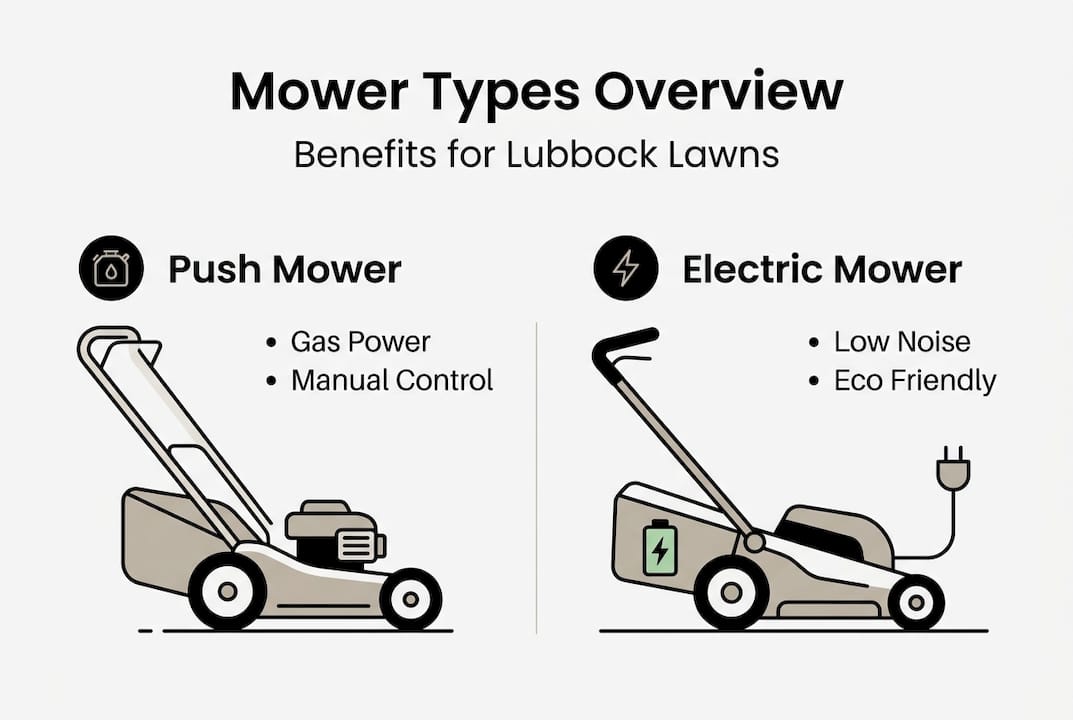
Mower types at a glance
| Mower type | Best for | Key advantage |
|---|---|---|
| Push mower (gas) | Small to mid-size yards | Power and control |
| Riding mower | Large properties | Speed and comfort |
| Electric push mower | Residential lots | Low maintenance, quieter |
| Zero-turn mower | Complex layouts | Precision around obstacles |
Choosing the right mower for your property size saves time and reduces wear on both the machine and your grass. Electric models have improved dramatically and work well for most Lubbock residential lots. Gas-powered push and riding mowers still lead for larger or more demanding properties.
Beyond the mower itself, you need a few basics every time:
- Sharp blades: Dull blades tear grass instead of cutting it, leaving ragged edges that turn brown and invite disease.
- Eye and ear protection: Rocks and debris become projectiles at mower speed.
- Sturdy boots: Slip protection matters, especially on slopes.
- Fuel or charged battery: Check before you start, not halfway through.
- A clear yard: Walk the lawn first and remove sticks, toys, hoses, and rocks.
One of the most important prep steps is also the most overlooked. Mowing wet grass clumps, smothers turf, clogs mowers, and increases slip risk, so always mow dry grass only. This single rule prevents more problems than almost anything else.
For a full checklist on getting your property ready before a service visit, the guide on preparing for lawn service covers what to handle ahead of time.
Pro Tip: Schedule mowing for overcast days when possible. Direct sun and heat stress freshly cut grass, and you will notice the lawn recovers faster and looks greener when mowed in cooler, cloudy conditions.
Inspect your mower blades before every session. A blade that cuts cleanly instead of tearing is the single biggest factor in how your lawn looks 48 hours after mowing.
Optimal mowing heights, patterns, and deck settings
Once your tools are ready, the next layer of professional technique is understanding height and pattern. These two factors shape how your lawn looks and how healthy it stays over time.
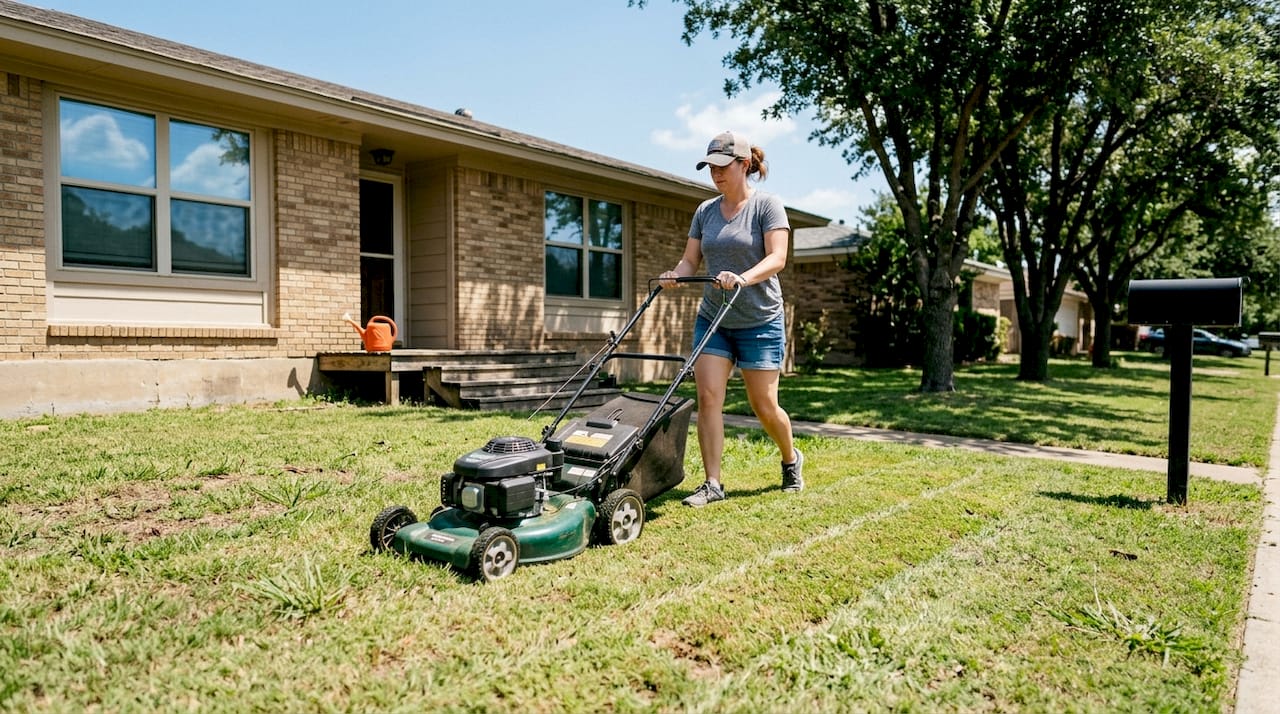
Recommended mowing heights by grass type
| Grass type | Ideal height | Mow when it reaches |
|---|---|---|
| Bermuda | 1 to 2 inches | 1.5 to 3 inches |
| Buffalo grass | 2 to 3 inches | 3 to 4.5 inches |
| St. Augustine | 2.5 to 4 inches | 3.75 to 6 inches |
| Zoysia | 1 to 2.5 inches | 1.5 to 3.75 inches |
Bermuda is the most common grass in Lubbock, and it thrives when kept between one and two inches. Never remove more than one-third of the blade in a single mow. Cutting too much at once shocks the plant and weakens the root system.
Deck pitch is a detail most homeowners skip entirely. Setting the front of your deck about 1/8 to 1/4 inch lower than the rear creates a slight forward lean that produces a cleaner cut and better airflow under the deck. This is a professional mowing technique that dramatically improves cut quality without changing anything else.
Mowing patterns are where the visual magic happens. Here is how to rotate them effectively:
- Stripes: Mow in straight parallel lines, alternating direction each pass. This creates the classic striped look and prevents the grass from leaning one way.
- Spiral or concentric: Start at the outer edge and work inward in a rectangle. This minimizes turns and works well for open, obstacle-free lawns.
- Zoning: Divide the yard into sections around trees, beds, and structures. Mow each zone separately with its own pattern.
- Rotate each session: Change the overall direction by 90 degrees every time you mow. Varying mowing direction each time prevents grass leaning, soil compaction, and ruts.
For more on how patterns affect curb appeal mowing patterns, the visual impact is significant and worth understanding before your next mow. You can also follow a full walkthrough of Lubbock lawn mowing steps for a local-specific approach.
Pro Tip: Stop mowing on a fixed weekly schedule. Instead, mow when your grass reaches 1.5 times your target height. Growth-based mowing produces healthier turf because you are responding to the plant, not the calendar.
Mowing techniques for efficiency and lawn health
With your settings dialed in, the actual mowing sequence is where efficiency and quality come together. Professionals follow a specific order that saves time and protects the lawn.
Here is the step-by-step sequence used by experienced crews:
- Edge first: Use a string trimmer or edger along sidewalks, driveways, and beds before mowing. This lets the mower clean up any trimmings.
- Run a buffer pass: Make two passes around the perimeter of the lawn. This buffer zone gives you room to turn and creates a clean frame for the main pattern.
- Mow the main area: Use your chosen pattern (stripes, spiral, or zoned) for the interior. Keep rows tight and overlapping slightly so you do not miss strips.
- Handle obstacles with care: For trees, beds, and posts, make two passes around obstacles to create a clean buffer before entering the main pattern.
- Finish with cleanup: Blow clippings off hard surfaces and back onto the lawn if needed. Short clippings left on grass return nitrogen to the soil.
Alternating directions is not just about looks. Changing mowing direction each session prevents grass from leaning in one direction, reduces soil compaction from repeated wheel paths, and eliminates ruts over time.
For landlords managing multiple Lubbock properties, the landlord mowing tips resource covers how consistent technique protects rental value. And if you are curious about the financial side, the connection between property value from mowing and regular professional care is well documented.
Pro Tip: Plan your mowing route before you start. Map out where you will turn, which zones you will tackle first, and how you will exit without crossing freshly mowed areas. This small habit cuts mowing time by 10 to 15 percent and reduces wear on turf from repeated passes.
Choosing and maintaining the right mower for Lubbock properties
Mastering technique means nothing if your equipment is not up to the job. Choosing and maintaining the right mower protects your investment and keeps results consistent.
Electric vs. gas mower comparison
| Factor | Electric mower | Gas mower |
|---|---|---|
| Energy use | 0.038 Wh per sq ft | 1.093 Wh per sq ft |
| Energy savings | 84% more efficient | Baseline |
| Maintenance | Battery, blade, filter | Oil, spark plug, air filter, fuel |
| Best for | Residential lots | Large or demanding properties |
| Noise level | Low | High |
Electric mowers use dramatically less energy than gas models, making them a smart choice for most Lubbock homeowners with standard residential lots. For those managing larger acreage or tougher terrain, gas and zero-turn models still hold an advantage in raw power and runtime.
Maintenance is where most homeowners lose money without realizing it. Here is what to stay on top of:
- Sharpen blades every 20 to 25 hours of use, or at least once per season.
- Clean or replace air filters every season to keep the engine running efficiently.
- Check fuel and oil before each use on gas models.
- Inspect and charge batteries after every use on electric models to extend battery life.
- Track operating hours in a simple log to schedule preventive maintenance before problems develop.
Equipment costs range from $3 to $10+ per hour when you factor in depreciation, fuel, and maintenance, with zero-turn mowers running at the higher end. Tracking these costs helps you decide when repair no longer makes sense versus replacing the unit.
For homeowners interested in reducing their environmental footprint, the guide on eco-friendly mower choices breaks down the options clearly. And for keeping equipment in top shape between seasons, seasonal mower upkeep is a practical starting point.
Why most home mowing routines fall short of professional standards
Here is something we see constantly in Lubbock: homeowners who care deeply about their lawn but still end up with mediocre results. The problem is almost never effort. It is approach.
Most home routines are built around the calendar. Mow every Saturday, regardless of what the grass is actually doing. But growth-based mowing, where you cut when the grass hits 1.5 times your target height, produces noticeably healthier turf because it works with the plant's growth cycle instead of ignoring it.
Lubbock's climate adds another layer of complexity. Hot, dry summers can slow growth dramatically, while a good rain in spring can push grass to double its height in days. A fixed schedule fails both scenarios.
The details that separate professional results from average ones are small but cumulative. Deck pitch, pattern rotation, dry-grass-only rules, and sharp blades each contribute a few percentage points of improvement. Together, they add up to a lawn that looks genuinely different. If you want to understand how this connects to long-term boosting property value, the case is straightforward: consistent, expert care compounds over time.
Upgrade your lawn with Lubbock's finest mowing services
Applying every technique in this guide takes practice, the right equipment, and time you may not always have. That is where Only Mow comes in.

As Lubbock's official City vendor for lawn care, Only Mow brings the same professional standards covered in this article to every property we service. From precise mowing heights to pattern rotation and equipment maintenance, our crews handle it all so you get consistent, high-quality results without the guesswork. Whether you are a homeowner looking for reliable weekly service or a contractor ready to join a growing local operation, we have a path for you. Explore Lubbock mowing services to get started, learn about Lubbock franchisee info, or go straight to contractor sign up today.
Frequently asked questions
What is the best mowing pattern for my Lubbock lawn?
Stripes and alternating directions work best for most Lubbock lawns. Rotating your pattern each session prevents compaction, reduces ruts, and keeps grass standing upright for a cleaner, more uniform appearance.
How often should I mow based on grass growth?
Mow when your grass reaches 1.5 times your target height rather than on a fixed schedule. This growth-based approach keeps turf healthier and avoids the shock of cutting too much at once.
Are electric mowers suitable for large properties?
Electric mowers are highly efficient and handle most residential lots well, using 84% less energy than gas models. For large acreage or heavy-duty terrain, a gas-powered riding or zero-turn mower will serve you better.
How do I avoid mower ruts and soil compaction?
Change your mowing direction each session and always mow dry grass only. Wet conditions combined with repeated wheel paths in the same direction are the two biggest causes of ruts and compaction in Lubbock lawns.
What are typical mowing equipment costs per hour?
Mower operating costs run from $3 to $10+ per hour when you include fuel, depreciation, and maintenance. Zero-turn models sit at the higher end, while electric push mowers are the most cost-effective option for standard residential use.