TL;DR:
- Lubbock yards struggle with drought, clay soil, and weather, requiring tailored restoration strategies.
- Soil testing, proper prep, and matching methods to damage level are crucial for success.
- Native plants and hybrid turf/native approaches save water, reduce maintenance, and improve resilience.
Lubbock yards take a beating. Between the relentless West Texas sun, clay-heavy soil that cracks in summer and floods in winter, and drought cycles that seem to get longer every year, it's no surprise that so many homeowners are staring at brown patches, weeds, and bare dirt where green grass used to be. The good news is that a worn-down yard doesn't have to stay that way. Whether your lawn needs a classic turf overhaul or a bold switch to drought-tolerant native plants, the right restoration approach can dramatically improve your curb appeal, lower your water bill, and even raise your property value. This article walks through real Lubbock yard transformations and the practical steps behind them.
Table of Contents
- How to assess and prepare your Lubbock yard for restoration
- Traditional turf restoration: Before-and-after examples in Lubbock
- Going native: Local prairie and xeriscape yard restoration examples
- Choosing the right yard restoration for your needs: A comparison
- Expert perspective: What most homeowners overlook in Lubbock yard restoration
- Transform your Lubbock yard with local restoration experts
- Frequently asked questions
Key Takeaways
| Point | Details |
|---|---|
| Assess first | Start with soil testing and yard evaluation before any restoration activity for best results. |
| Match method to damage | Choose overseeding, aeration, or full resod based on how much of your lawn is affected. |
| Go native for savings | Switching to native grasses and plants saves water and can reduce flood risks. |
| Professional help pays off | Expert yard restoration often delivers faster, longer-lasting results than DIY approaches. |
How to assess and prepare your Lubbock yard for restoration
Now that you have a sense of what can be achieved with yard restoration, let's start at the beginning: evaluating and prepping your lawn the right way.
Before you spend a single dollar on seed, sod, or plants, you need an honest assessment of what you're working with. Walk your yard and look for the obvious warning signs: dry, discolored patches, weeds taking over thin grass, soil that feels hard as concrete underfoot, or low spots that collect water after rain. These clues tell you not just that your yard is struggling, but why it's struggling. That distinction matters more than most homeowners realize.
Once you've done a visual sweep, the next step is a soil test. Lubbock's clay-heavy soil creates drainage problems and nutrient imbalances that no amount of watering can fix on its own. A soil test reveals pH levels, compaction, and deficiencies so you can amend smartly rather than guess. Soil prep tips from Texas AgriLife Extension confirm that weed control, soil amendment, and grading are non-negotiable before any new turfgrass goes in.
Here's a practical sequence to follow before any restoration work begins:
- Walk the yard and photograph problem areas, noting weed type, soil texture, and drainage patterns.
- Test your soil using a kit or a local extension service to check pH and nutrient levels.
- Remove debris including dead thatch, old mulch, and any weeds that have gone to seed.
- Aerate compacted areas using a core aerator, which pulls plugs of soil out and allows water, air, and nutrients to reach the roots.
- Grade low spots to prevent standing water, which invites disease and mosquitoes.
The level of damage determines the method. Light damage like thin turf responds well to overseeding alone. Moderate damage needs aeration plus overseeding. Severe bare patches almost always require resodding or a more significant landscape change. Lubbock lawn restoration steps break this down with a 5-step framework that covers soil testing, aerating, and matching the method to damage level.
Pro Tip: Aerate in early fall for cool-season grasses or late spring for warm-season grasses like Bermuda. Timing aeration right makes the difference between strong establishment and wasted effort.
Traditional turf restoration: Before-and-after examples in Lubbock
Once your soil is prepared and you've chosen the right approach, it's important to see what these methods look like in practice.
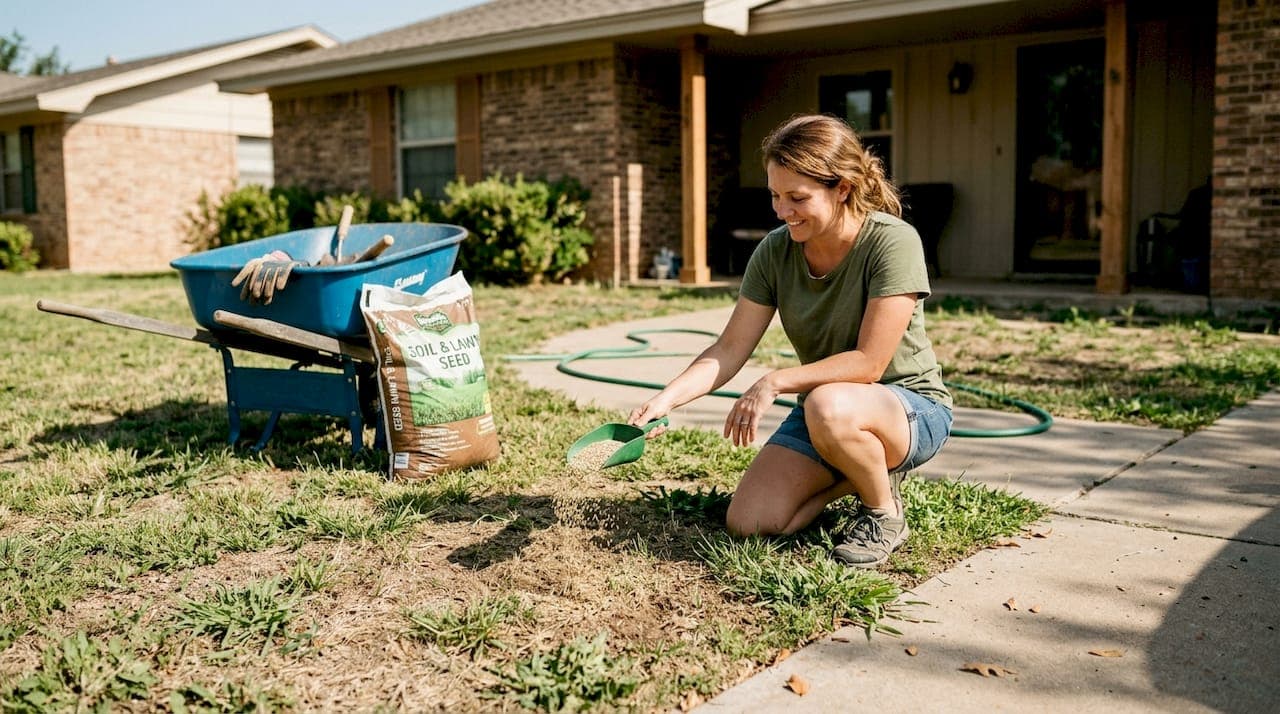
Traditional turf restoration in Lubbock typically falls into three categories: overseeding, aeration combined with overseeding, or full resodding. Each one fits a different level of damage, and knowing which applies to your yard saves you both time and money.
Overseeding alone works when at least 50% of your existing turf is still alive and growing. You spread new grass seed over the existing lawn after mowing it short and raking out dead material. For heavier damage, combining core aeration with overseeding lets seed fall into the holes left by the aerator, giving it direct soil contact and far better germination rates. For yards that are mostly bare or have severe weed infestations, resodding is the fastest path forward.
Here's a quick comparison of the three methods:
| Method | Best for | Timeline to results | Relative cost |
|---|---|---|---|
| Overseeding | Light to moderate damage | 2 to 4 weeks | Low |
| Aeration + overseeding | Moderate damage, compacted soil | 3 to 5 weeks | Medium |
| Full resodding | Severe damage, large bare areas | 1 to 2 weeks | High |
A well-documented Texas front yard project shows exactly what's possible: after removing a large oak, repairing a 5-zone irrigation system, and overseeding with Bermuda grass, the yard showed visible green-up within six weeks. Bermuda overseeding is a proven strategy for Texas climates, and Lubbock's long warm seasons make Bermuda one of the most reliable choices available.
Key outcomes to expect at each stage:
- Week 3: New grass blades visible in overseeded areas; sod edges starting to knit together
- Week 6: Coverage filling in significantly; color shifting from pale to rich green
- Beyond week 6: Root establishment deepens; lawn ready for regular mowing schedule
"The biggest mistake we see is homeowners skipping irrigation repair before overseeding. You can plant the best seed in Lubbock, but without consistent moisture in those first critical weeks, germination stalls."
Understanding why lawn restoration matters goes beyond looks. A restored lawn holds soil better, absorbs more rainfall, and reduces the heat island effect around your home. Pairing restoration with eco-friendly lawn care practices keeps those gains going without spiking your water bill.
Going native: Local prairie and xeriscape yard restoration examples
While traditional turf lawns offer a familiar look, many Lubbock homeowners are discovering striking results by going native.
Native yard restoration means replacing traditional turf with plants that evolved in West Texas conditions. These plants are already adapted to Lubbock's clay soil, wind, heat, and drought, so they need far less maintenance once established. The result often looks different from a conventional lawn, but it's no less beautiful and it performs better in extreme conditions.
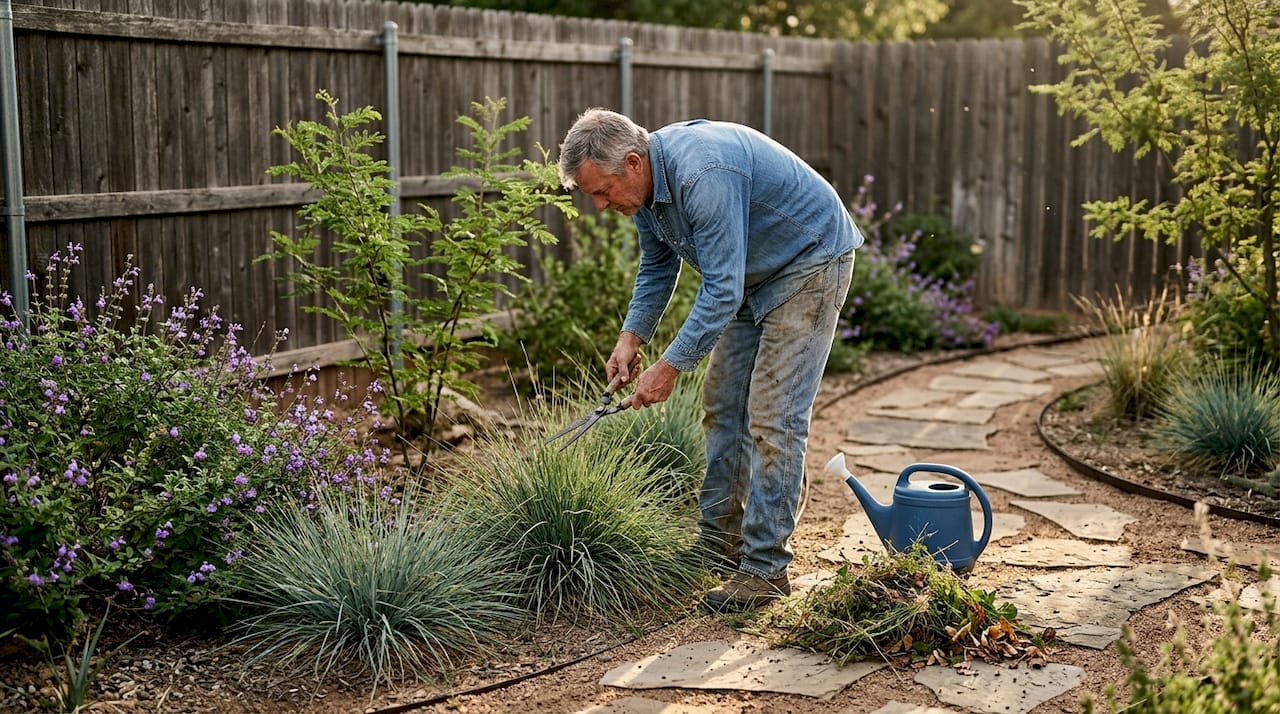
One of the most compelling local examples is the Mesquite Mile project, which used over 100 mesquite trees and local native grasses to transform a stretch of Lubbock yards. The project wasn't just about looks. It actively helped with flood control by improving soil absorption and slowing runoff, while also expanding local biodiversity by creating habitat for birds and pollinators.
Here's a snapshot of popular native options for Lubbock yards:
| Plant | Water needs | Best use | Benefit |
|---|---|---|---|
| Buffalograss | Very low | Full lawn replacement | Native, drought-hardy |
| Mesquite | Low | Shade and structure | Flood control, wildlife |
| Zoysia | Low to moderate | Transitional turf mix | Dense, weed-resistant |
| Blue grama grass | Very low | Prairie-style planting | Erosion control |
The benefits of going native stack up quickly:
- Dramatically less water use once plants are established after the first season
- Reduced flooding risk as native root systems improve soil drainage and absorption
- Improved biodiversity by attracting native bees, birds, and beneficial insects
- Lower long-term maintenance with minimal fertilizer and no regular overseeding
Native options like Buffalograss and Zoysia are specifically recommended for Lubbock's soil and drought conditions, giving homeowners a real alternative that holds up without constant care.
Pro Tip: You don't have to convert your entire yard at once. Start with one native planting bed along a fence or walkway, let it establish, and expand from there. This approach is easier on your budget and lets you see results before committing fully.
For more visual inspiration, eco-friendly landscaping and native landscaping ideas show how Lubbock homes have made this shift beautifully.
Choosing the right yard restoration for your needs: A comparison
With multiple restoration paths available, making the right decision comes down to clear comparison and understanding your goals.
There's no single "best" restoration method. The right choice depends on your budget, your HOA rules, how much water you want to use, and how your yard looks today.
| Factor | Traditional turf | Native landscape |
|---|---|---|
| Water needs | High, especially in summer | Low after establishment |
| Maintenance frequency | Weekly mowing, regular feeding | Minimal, seasonal cleanup |
| HOA compatibility | Generally approved | Check local rules first |
| Upfront cost | Medium to high | Low to medium |
| Long-term cost | Higher (water, fertilizer) | Lower |
| Flood/erosion control | Limited | Strong |
Traditional turf like Bermuda requires consistent watering and fertilizer to stay green through Lubbock summers. Native choices like mesquite and Buffalograss thrive in drought conditions but may raise questions with HOAs or neighbors used to conventional lawns.
Things to consider when choosing:
- HOA rules: Always verify what plant types and lawn appearances your HOA allows before starting any native conversion.
- Soil condition: Severely compacted clay benefits from native deep-root systems more than shallow turf roots.
- Watering setup: If your irrigation system needs expensive repairs, native plants eliminate that cost almost entirely.
- Neighborhood look: A mixed approach using turf in the front yard and natives in the back satisfies both HOA requirements and water-saving goals.
Pro Tip: Mixing turf and native zones is a smart middle ground. Keep Bermuda or Zoysia in high-visibility areas and convert back or side yards to native planting. You get the curb appeal of a traditional lawn with significantly lower overall maintenance.
Restoration enhances curb appeal and value most effectively when it's professionally managed with attention to Lubbock's specific soil and water conditions. Explore yard service options and real curb appeal improvements to see what's possible in your neighborhood.
Expert perspective: What most homeowners overlook in Lubbock yard restoration
After weighing different approaches, it's worth considering what the conventional advice typically misses.
Most articles about lawn restoration focus on what to plant. The real challenge in Lubbock is when to plant, how to prepare the soil beforehand, and whether your local ordinances will allow what you're planning. These three factors determine whether your investment lasts five years or five months.
We've seen homeowners invest in beautiful native plantings only to receive HOA citations because they didn't verify approval first. We've also seen expensive resodding fail because the clay soil underneath was never properly aerated or amended. Lubbock's clay soil and drought conditions demand professional-level aeration, careful grass variety selection, and precise timing for results that actually hold.
The best outcomes we observe come from homeowners who blend turf and native elements rather than going all-in on one approach. This kind of mixed strategy respects HOA guidelines, conserves water, and delivers a yard that looks intentional rather than accidental. A thorough step-by-step Lubbock restoration plan accounts for your yard's microclimate, drainage quirks, and soil chemistry from the start. That foundation is what separates a transformation from a temporary fix.
Transform your Lubbock yard with local restoration experts
Having explored what works for real Lubbock yards, discover how local pros can help you achieve these results quickly and efficiently.
Knowing the right method is one thing. Executing it correctly in Lubbock's unforgiving climate is another. A professional evaluation takes the guesswork out of soil prep, grass selection, and irrigation setup, so you don't waste money on approaches that won't hold up through a West Texas summer.

At Only Mow, we've helped Lubbock homeowners restore everything from dry, cracked front yards to entire properties overwhelmed by weeds. As the official vendor for the City of Lubbock, we bring local credibility and hands-on experience to every project. Whether you want a step-by-step yard restoration plan or a full-service landscape overhaul, our Lubbock lawn care experts are ready to help you get started with a custom quote today.
Frequently asked questions
What is the best grass for restoring lawns in Lubbock, Texas?
Drought-tolerant grasses like Bermuda, Buffalograss, and Zoysia work best for Lubbock's clay soil and dry climate. These varieties handle the heat and limited rainfall far better than cool-season alternatives and require less water once established.
How long does it take to see results from yard restoration?
Overseeding shows results in 2 to 4 weeks, sod replacement in 1 to 2 weeks, and native plantings typically fill in across one full growing season. Timing and consistent watering during establishment speed up the process significantly.
Are native yard restorations allowed by HOAs in Lubbock?
Some HOAs restrict native landscaping, particularly plants like mesquite that may conflict with local weed ordinances, so always verify your HOA's specific guidelines before starting any conversion. A mixed approach often satisfies both HOA requirements and sustainability goals.
Is DIY yard restoration effective in Lubbock?
DIY works for mild surface damage, but professionals handle the harder variables like clay soil compaction, grading issues, and precise timing for aeration that most homeowners underestimate. For severe damage, professional help almost always delivers faster and longer-lasting results.